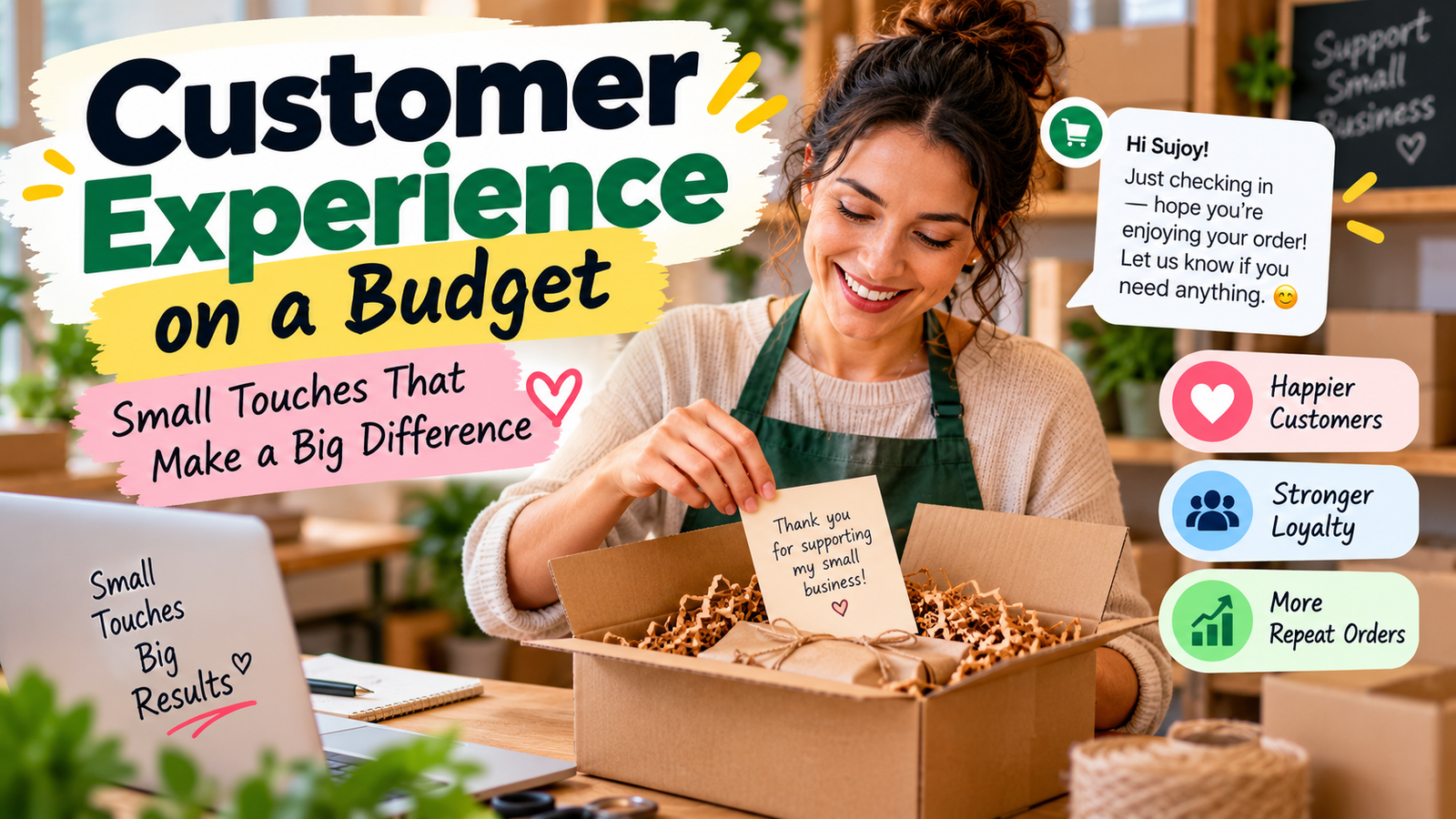
You don’t need a customer experience on a budget to feel like a compromise. Most small businesses assume good customer experience means expensive software, a dedicated support team, or perks they simply can’t afford.
In reality, the moments customers remember most — a fast reply, a handwritten thank-you, someone recognizing them by name — cost little to nothing. They just take intention. This post walks through the small touches that make the biggest difference, and how to build them into your business without spending money you don’t have.
Table of Contents
Why Customer Experience on a Budget Still Works
Customers don’t rate experiences against a competitor’s budget — they rate them against how they felt. A quick, warm reply from a two-person business can outperform a slow, automated one from a company ten times its size. Research from CX firms consistently shows the same pattern: consistency and responsiveness drive loyalty more than scale or spend. For a small business, that’s good news — it means the advantage is available to anyone willing to be consistent.
Personalize Every Interaction You Can
Personalization doesn’t require a CRM with a five-figure price tag. It can be as simple as:
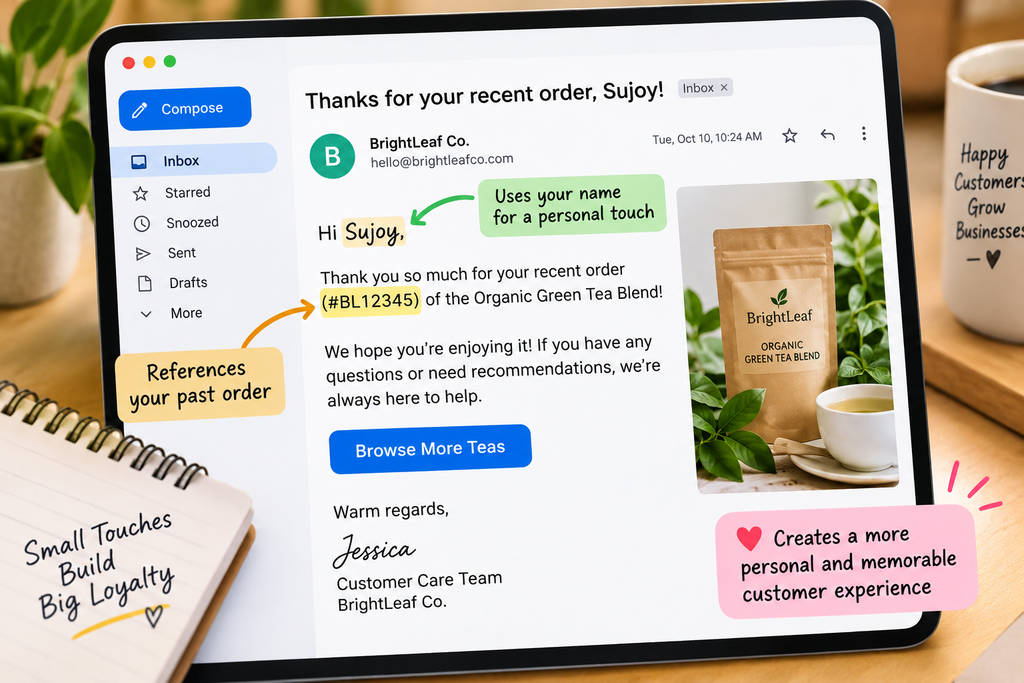
- Using the customer’s name in emails and replies
- Referencing their last order or request
- Remembering a preference they mentioned once
A free spreadsheet or a basic email tool with tags can hold this information just as well as expensive software. The goal isn’t the tool — it’s that the customer feels known.
Respond Faster Than Customers Expect
Speed is one of the cheapest, highest impact touches available. Most small businesses lose customers not because of poor service, but because of slow replies. Set a simple standard for yourself:
- Reply to messages within a few hours, not days
- Use auto-replies to confirm receipt when you can’t answer immediately
- Check your inbox and DMs at set times so nothing slips through
None of this costs money. It costs attention.
Say Thank You in Writing
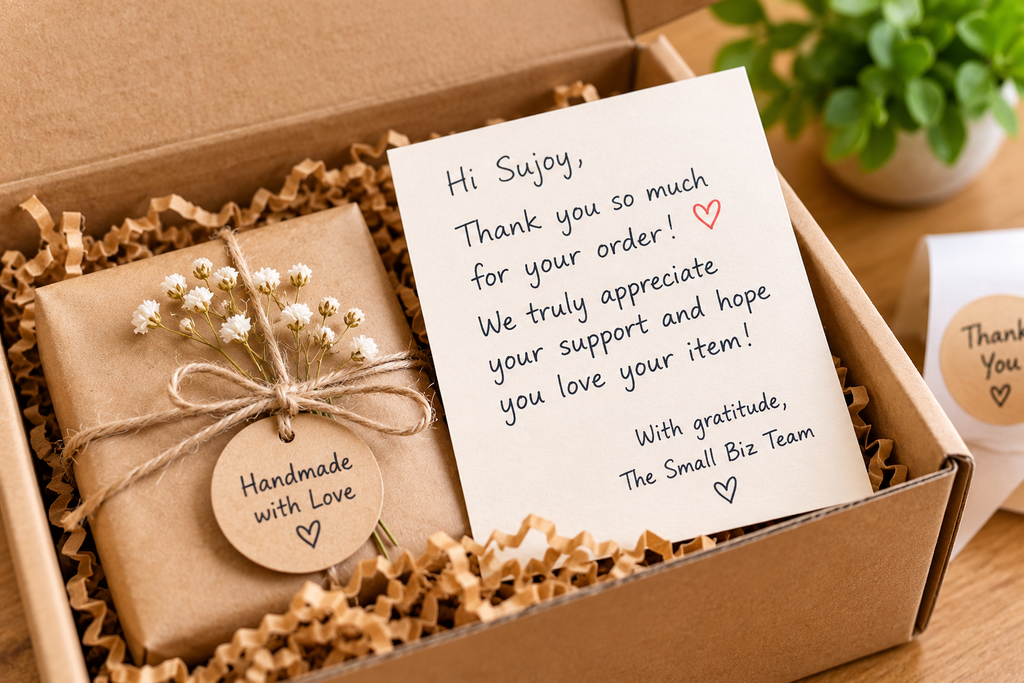
A short thank-you note — email, text, or an actual handwritten card — is one of the least expensive ways to improve customer experience on a budget, and one of the most remembered. It signals that the sale wasn’t just a transaction. For physical products, a printed card costs cents. For services, a two-line follow-up email does the same job.
Make It Easy to Reach You
Friction kills experience faster than almost anything else. Customers shouldn’t have to dig to find a way to contact you. Keep it simple:
- One clear contact method listed everywhere (website, social bios, receipts)
- A short FAQ page that answers the questions you get most
- A clear return or refund policy stated up front, not buried
This removes the uncertainty that makes customers anxious — and anxious customers rarely come back.
Remember the Small Details
Noticing details — a birthday, a past complaint that got resolved, a product they mentioned wanting — turns a one-time buyer into a repeat one. You don’t need software to do this well at a small scale. A simple note in a spreadsheet next to a customer’s name is enough:
- “Asked about size L — follow up in 2 weeks”
- “Mentioned anniversary is in October”
- “Had a shipping issue in March — resolved, check in”
At scale, this kind of tracking is exactly where a lightweight AI tool earns its keep — more on that below.
Follow Up After the Sale
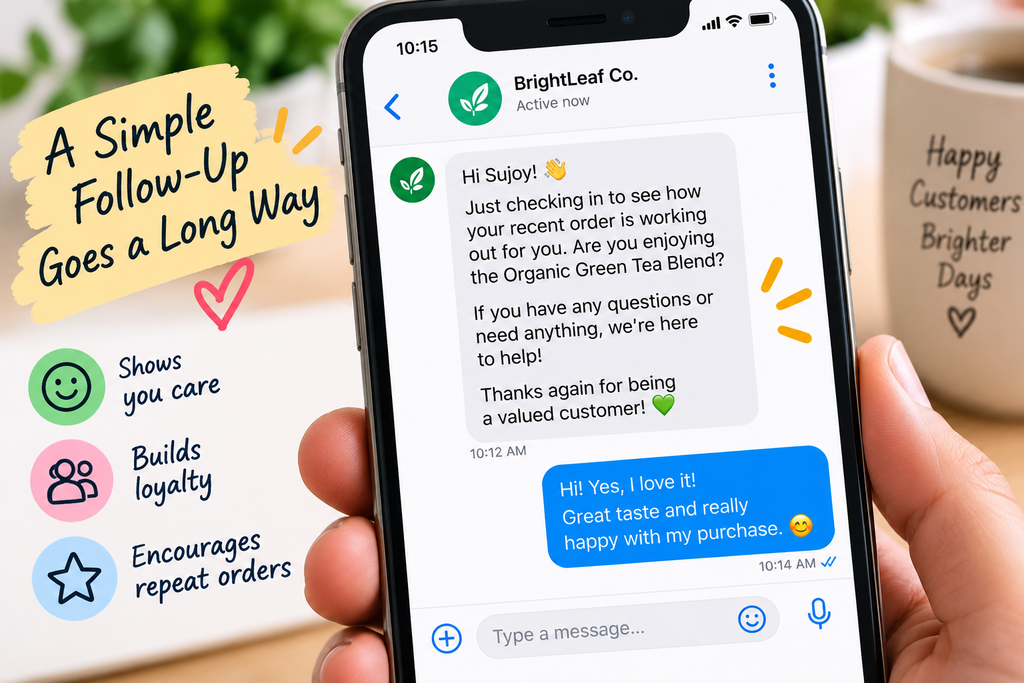
Most small businesses stop the moment the sale closes. A short follow-up — “How’s everything working out?” — costs nothing and does two things: it catches problems before they turn into bad reviews, and it reminds the customer you’re still there. This single habit is one of the most underused, lowest-cost customer experience ideas for small business owners.
Use AI Tools to Stay Consistent Without Extra Hours
The hardest part of customer experience on a budget isn’t knowing what to do — it’s doing it consistently when you’re also running the rest of the business. This is where a simple AI-powered system helps more than expensive software ever would.
If you want a structured way to keep these touches from slipping — follow-ups, personalization notes, response-time habits — the SmallBiz AI Checklist lays out exactly which AI tools and habits to put in place so none of this depends on memory alone. It’s built for small businesses doing this without a team, not enterprise CX departments.
Final Thoughts
Customer experience on a budget comes down to a handful of small, repeatable habits: personal touches, fast replies, genuine thank-yous, easy access, remembered details, and a follow-up after the sale. None of it requires a big spend — it requires consistency. Pick two or three from this list, build them into your routine this month, and let the rest follow once they’re habits.