Retaining Your Best Employees Without a Corporate Budget: What Actually Works
Retaining your best employees without a corporate budget is possible — and it doesn’t require deep pockets, fancy perks, or a full HR department. It just requires knowing what actually keeps people around and being intentional about it.
If you run a small business, you’ve probably felt the sting of watching a great employee walk out the door to a bigger company offering better pay. It’s frustrating, and it’s expensive. Studies consistently show that replacing an employee can cost anywhere from 20% to 200% of their annual salary once you factor in recruiting, training, and lost productivity. For a small business, even one departure can throw off an entire quarter.
The good news: most of what makes employees stay has very little to do with money.
Table of Contents
Why Retention Matters More Than You Think
When a small business loses a key employee, it’s not just the cost of hiring someone new. It’s the knowledge that walks out the door, the extra workload dumped on the remaining team, and the ripple effect on morale. Customers notice the dip in service too, especially in client-facing roles.
Retention isn’t a “nice to have.” For a lean team, it’s one of the most cost-effective things you can focus on — arguably more cost-effective than chasing new customers.
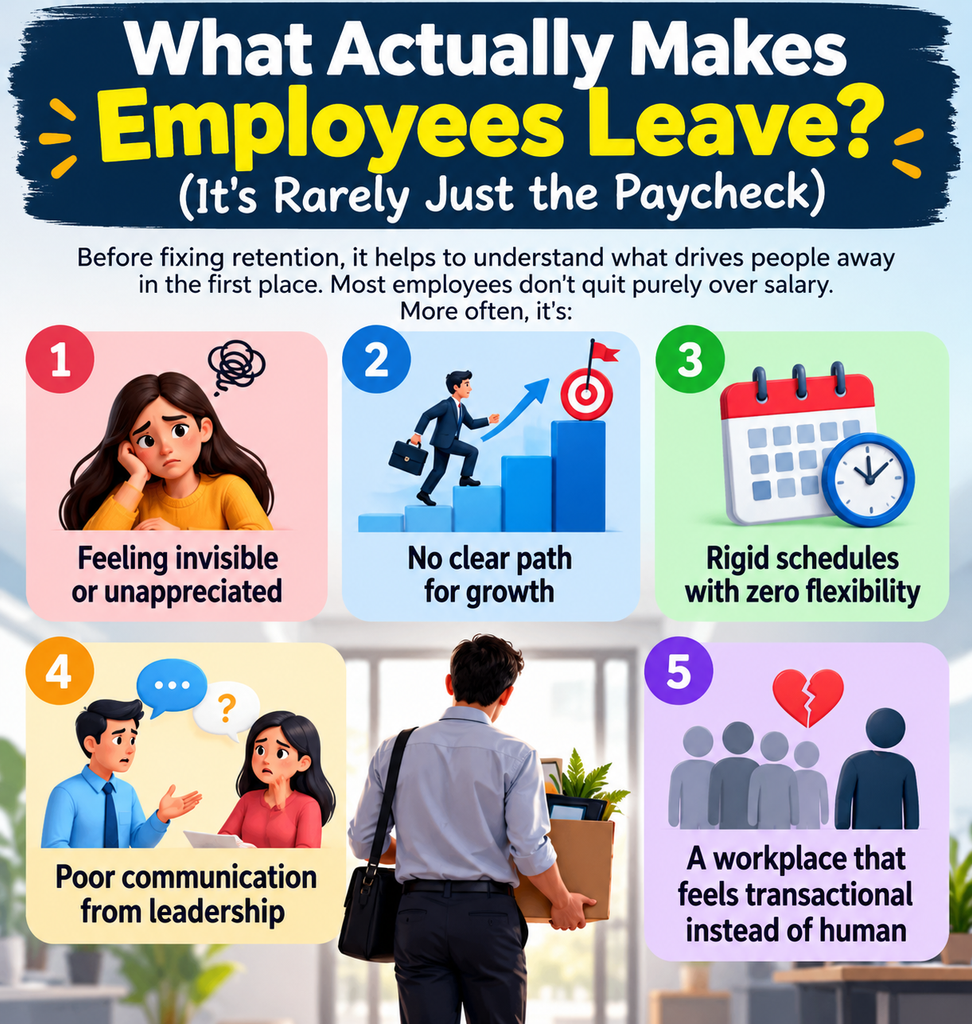
What Actually Makes Employees Leave (It’s Rarely Just the Paycheck)
Before fixing retention, it helps to understand what drives people away in the first place. Most employees don’t quit purely over salary. More often, it’s:
- Feeling invisible or unappreciated
- No clear path for growth
- Rigid schedules with zero flexibility
- Poor communication from leadership
- A workplace that feels transactional instead of human
This is actually good news for small businesses. None of these require a corporate-sized budget to fix.
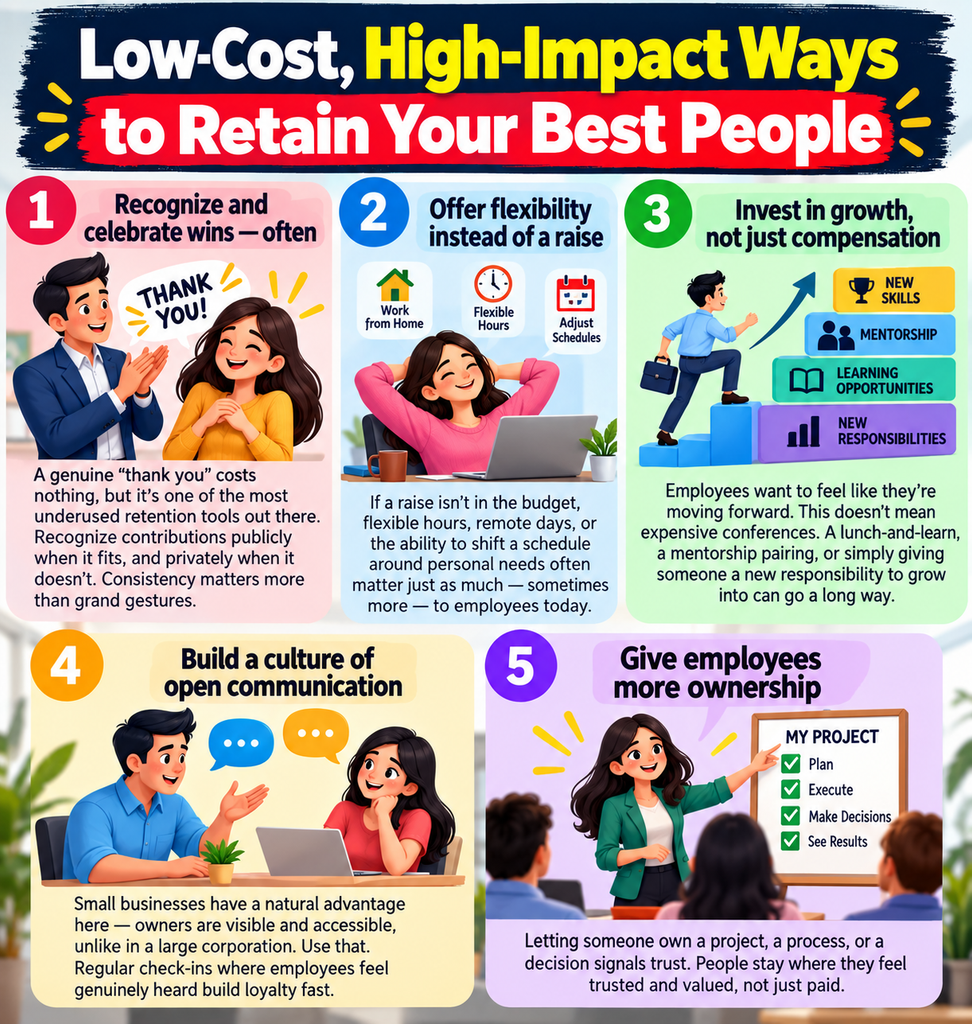
Low-Cost, High-Impact Ways to Retain Your Best People
1. Recognize and celebrate wins — often
A genuine “thank you” costs nothing, but it’s one of the most underused retention tools out there. Recognize contributions publicly when it fits, and privately when it doesn’t. Consistency matters more than grand gestures.
2. Offer flexibility instead of a raise
If a raise isn’t in the budget, flexible hours, remote days, or the ability to shift a schedule around personal needs often matter just as much — sometimes more — to employees today.
3. Invest in growth, not just compensation
Employees want to feel like they’re moving forward. This doesn’t mean expensive conferences. A lunch-and-learn, a mentorship pairing, or simply giving someone a new responsibility to grow into can go a long way.
4. Build a culture of open communication
Small businesses have a natural advantage here — owners are visible and accessible, unlike in a large corporation. Use that. Regular check-ins where employees feel genuinely heard build loyalty fast.
5. Give employees more ownership
Letting someone own a project, a process, or a decision signals trust. People stay where they feel trusted and valued, not just paid.
Use Smart Systems to Make Retention Easier
One thing that trips up a lot of small business owners isn’t a lack of good intentions — it’s a lack of structure. Recognition, check-ins, and growth conversations tend to fall through the cracks when you’re juggling everything else.
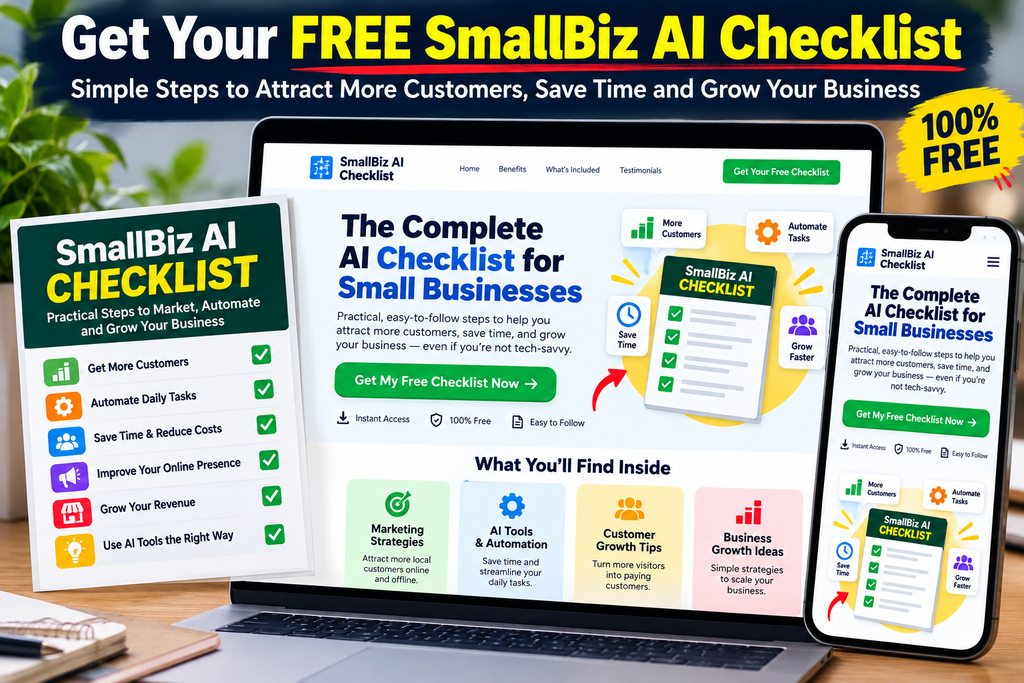
This is where having a simple system helps. If you want a ready-made way to keep your operations (including how you manage and support your team) organized without adding more to your plate, the SmallBiz AI Checklist is worth a look. It’s built specifically for small business owners who want to run leaner, smarter operations using AI tools they likely already have access to — which frees up more time to actually focus on your people instead of admin work.
Track What’s Working
You don’t need fancy HR software to measure retention. A simple spreadsheet tracking turnover rate, average tenure, and exit reasons (when someone does leave) will tell you a lot. Revisit it quarterly and adjust your approach based on what you see.

Final Thoughts
Retaining your best employees without a corporate budget comes down to consistency, not cash. Recognition, flexibility, growth opportunities, and genuine communication cost little to nothing — but they’re exactly what keeps good people from walking out the door. Put a simple system behind it, and you’ll spend far less time replacing employees and far more time growing your business with the people who already know it best.