How to Price Your Products When Costs Rise: A 6-Step Framework
If you’ve been searching for how to price your products when costs rise, you already know the problem: the moment you settle on a number, a supplier raises rates, shipping goes up, or a software subscription jumps another 10%. For small business owners, pricing isn’t a one-time decision anymore. It’s an ongoing balancing act between staying profitable and staying fair to your customers.
The good news is that you don’t need to guess. A few simple habits — knowing your real costs, picking the right pricing method, and reviewing prices on a schedule — can keep your margins healthy even when the market underneath you keeps shifting.
Table of Contents
Why Pricing Gets Harder When Costs Keep Moving
Pricing used to be something you set once a year and forgot about. That doesn’t work anymore. Materials, freight, labor, and software costs can all move within the same quarter, and each one chips away at your margin if your price stays frozen.
The businesses that struggle most are the ones that treat pricing as a “set it and forget it” task. The ones that stay healthy treat it as a small, recurring part of running the business — like checking a bank balance.
A few reasons pricing has become harder to manage:
- Suppliers pass on their own cost increases with little warning
- Shipping and fuel surcharges change month to month
- Wages and staffing costs have risen in most industries
- Software, tools, and subscriptions renew at higher rates each year
- Customers compare prices instantly online, so silent increases get noticed fast
Step 1: Know Your Real Costs Before You Touch Your Price
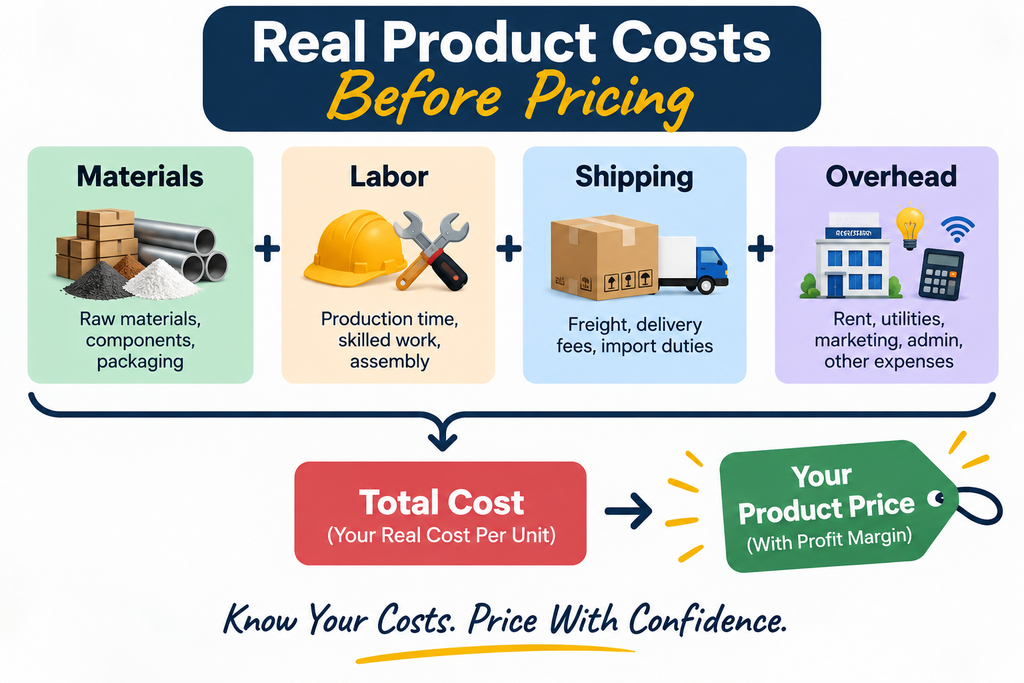
The first move in learning how to price your products when costs rise is knowing your real costs today, not six months ago. Before adjusting any price, rebuild your cost picture from scratch.
Include:
- Direct costs — materials, packaging, production, or the time it takes to deliver a service
- Indirect costs — rent, utilities, software, insurance, admin time
- Variable costs — shipping, payment processing fees, commissions
- Your own time — if you’re a service provider, your hourly value counts as a cost too
Many small business owners underprice simply because they forgot to count their own labor or a “small” recurring tool cost. Once your real numbers are up to date, everything else in your pricing strategy becomes easier to calculate accurately.
Step 2: Choose the Right Pricing Method for Your Business
There’s no single “correct” way to price. What matters is picking the method that fits your business model, then applying it consistently. Three approaches cover most small businesses:
Cost-plus pricing Add a fixed markup on top of your total cost. It’s simple and protects your margin, but it doesn’t account for what customers are actually willing to pay.
Value-based pricing Price based on the outcome or result your product or service delivers to the customer, not just what it costs you to make. This works well for services and specialized products where the result matters more than the materials.
Competitor-based pricing Set your price relative to similar products or services in your market. Useful for staying competitive, but risky if you copy a competitor’s price without knowing their cost structure.
Most small businesses do best blending two of these — for example, using cost-plus as a floor price you’ll never go below, then adjusting upward based on value or competitor positioning. Getting this part right is one of the biggest factors in how to price your products when costs rise without second-guessing every decision.
Step 3: Build a Buffer Into Your Price, Not Just Your Costs
One of the biggest small business pricing mistakes is calculating a price that only covers today’s costs. If your supplier raises prices again next month, you’re back to square one.
Instead, build a small buffer — typically 5–10% — into your margin so minor cost increases don’t force an immediate re-pricing. This buffer isn’t extra profit sitting idle; it’s what keeps your pricing strategy stable and is one of the most overlooked parts of how to price your products when costs rise without constantly renegotiating your numbers.
This step pairs well with keeping a cash reserve set aside specifically for rising costs, so a cost spike never forces a rushed, poorly thought-out price change.
Step 4: Decide How Often You’ll Review Prices
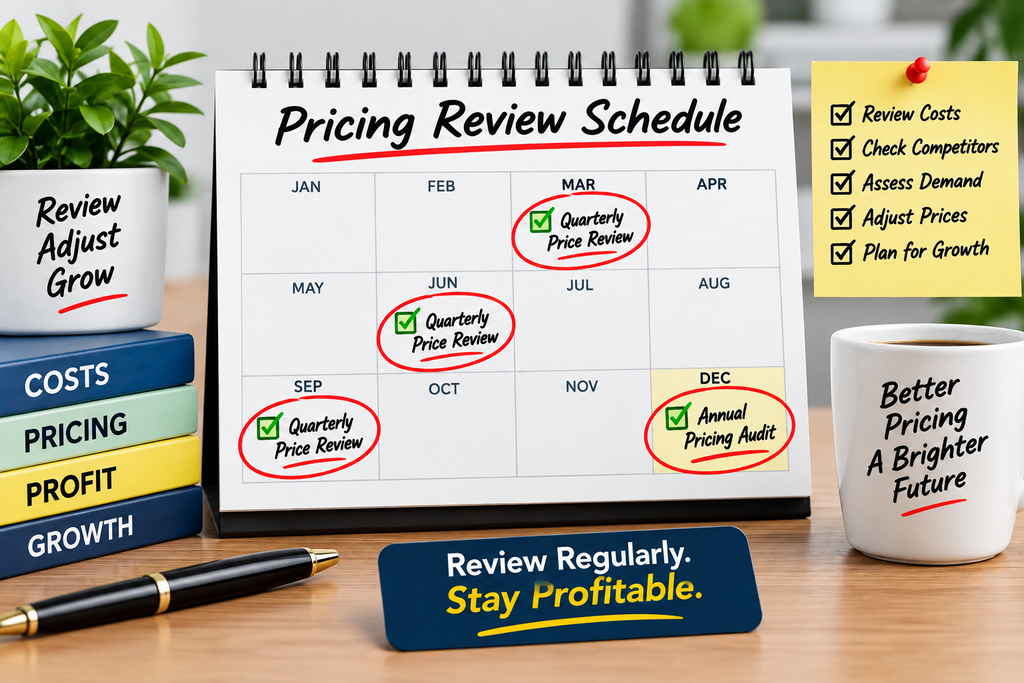
Reactive pricing — only changing prices when you’re forced to — almost always means you’re raising prices too late and by too little. A set review schedule fixes this.
A simple approach:
- Quarterly — check costs against your current prices
- Annually — do a full pricing strategy review, including competitor and market checks
- Immediately — for any cost increase larger than your built-in buffer
Putting this on your calendar turns pricing into routine business maintenance instead of a stressful, last-minute scramble.
Step 5: Raise Prices Without Losing Customers
Raising prices feels risky, but most customers accept reasonable increases when they’re communicated clearly. What damages trust isn’t the increase itself — it’s silence, or an increase that feels sudden and unexplained.
A few things that make price increases land better:
- Give advance notice, even if it’s just a few weeks
- Briefly explain the reason (rising material, shipping, or labor costs)
- Keep the increase proportional — don’t overcorrect all at once
- Highlight the value or improvements customers are already getting
- Apply increases consistently across similar products or clients, not randomly
Customers rarely leave over a fair, well-explained price increase. They’re far more likely to leave over feeling blindsided by one. Communicating an increase well is just as important to how to price your products when costs rise as the number itself.
Step 6: Use Tiered or Segmented Pricing to Protect Margins
Not every product or customer needs the same price increase. Segmented pricing lets you protect margins on the items most affected by rising costs, without disrupting your entire price list.
Options worth considering:
- Tiered pricing — offer a basic, standard, and premium version so cost-sensitive customers still have an option
- Bundle pricing — combine products or services so a cost increase on one item is absorbed across the bundle
- Selective increases — raise prices only on items where your costs have actually gone up, instead of a blanket increase across everything
This approach protects your margins where it matters most while keeping your pricing feel intentional rather than arbitrary.

When to Absorb a Cost Increase (and When Not To)
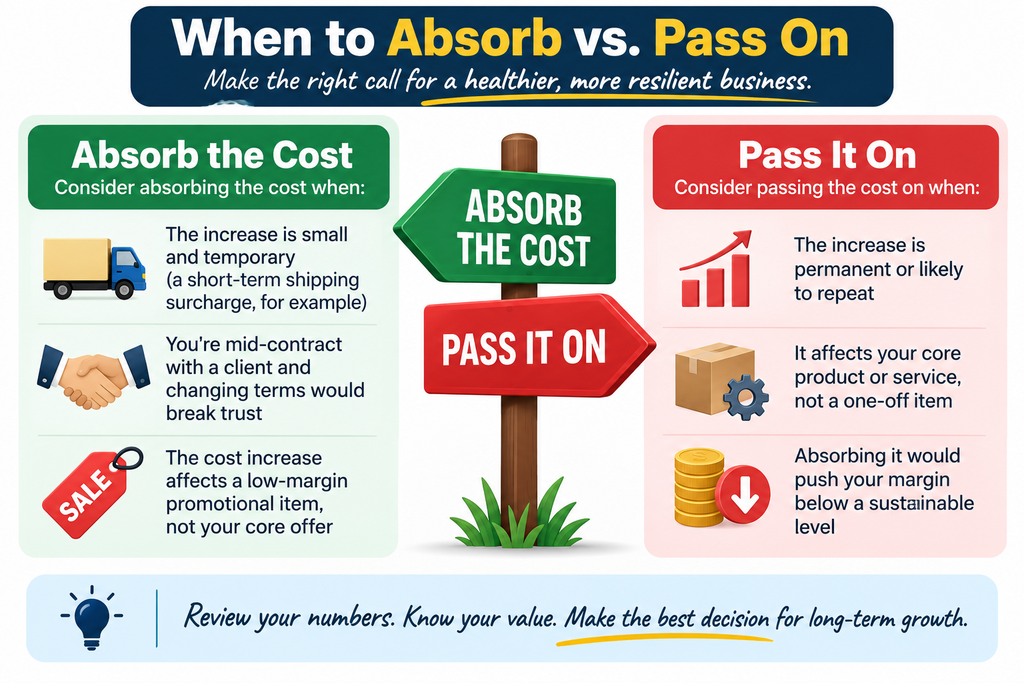
Not every cost increase needs to be passed on immediately. Sometimes absorbing a small, temporary cost bump protects a customer relationship or market position better than a price change would — part of learning how to price your products when costs rise without overreacting to every fluctuation.
Generally, absorb the cost when:
- The increase is small and temporary (a short-term shipping surcharge, for example)
- You’re mid-contract with a client and changing terms would break trust
- The cost increase affects a low-margin promotional item, not your core offer
Pass the cost on when:
- The increase is permanent or likely to repeat
- It affects your core product or service, not a one-off item
- Absorbing it would push your margin below a sustainable level
Common Pricing Mistakes to Avoid
Even once you understand how to price your products when costs rise, it’s easy to slip into small mistakes that quietly eat away at your margin:
- Pricing off old cost data — always recheck current costs, not last year’s
- Ignoring your own time as a service provider
- Copying competitor prices without knowing their cost structure or margins
- Raising every price by the same percentage, regardless of actual cost impact
- Waiting too long to review prices, then needing a large, jarring increase all at once
- Never explaining increases to customers, which creates unnecessary friction
Final Thoughts
Pricing during a period of rising costs isn’t about finding one perfect number and locking it in. It’s about building a repeatable process for how to price your products when costs rise: know your real costs, choose a pricing method that fits your business, build in a buffer, review on a schedule, and communicate clearly when a change is needed.
Small businesses that treat pricing as an ongoing habit — rather than a one-time decision — are the ones that protect their margins without losing customer trust, no matter how often costs shift underneath them.