Why Payroll Compliance for Small Business Owners Is Harder Than It Looks
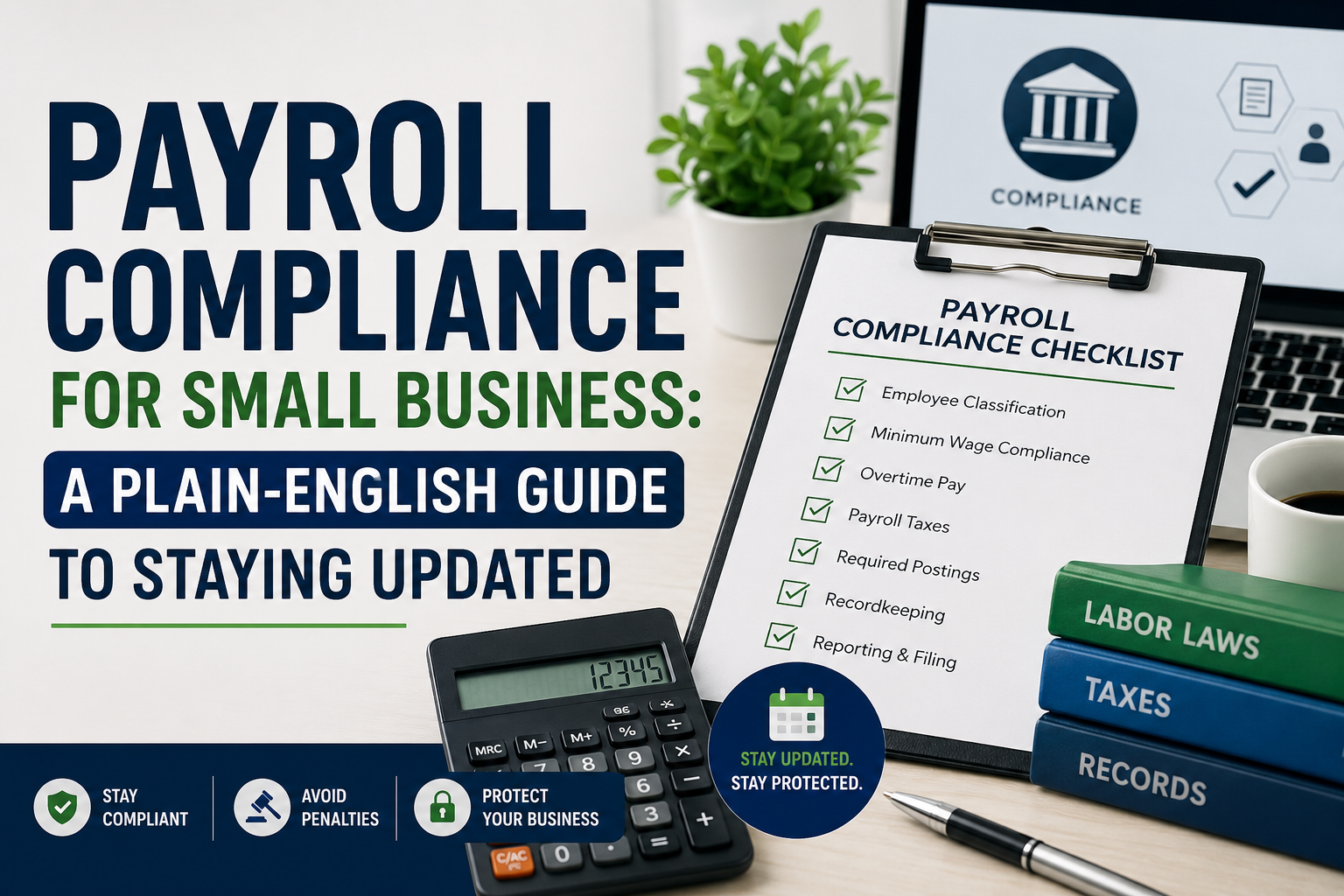
Payroll compliance for small business owners isn’t just about paying people on time — it’s about keeping up with a moving target of federal, state, and local rules that change more often than most owners realize. Miss an update and you’re not just risking a clerical error; you’re risking fines, back pay claims, and audits. This guide breaks down what actually matters, in plain English, without the legal jargon.
Table of Contents
Why Payroll Compliance Keeps Changing
Payroll rules aren’t set once and forgotten. Minimum wage rates, overtime thresholds, tax brackets, and paid leave mandates get revised on a rolling basis — sometimes annually, sometimes mid-year. A rule that was fine last quarter can be out of date today. For a small business owner already wearing five hats, tracking every change is nearly impossible without a system for it.
That’s the real problem this guide solves: not just “what are the rules,” but “how do I stop this from becoming a surprise every few months.”
The Core Areas of Payroll Compliance
1. Wage and Hour Rules (FLSA)
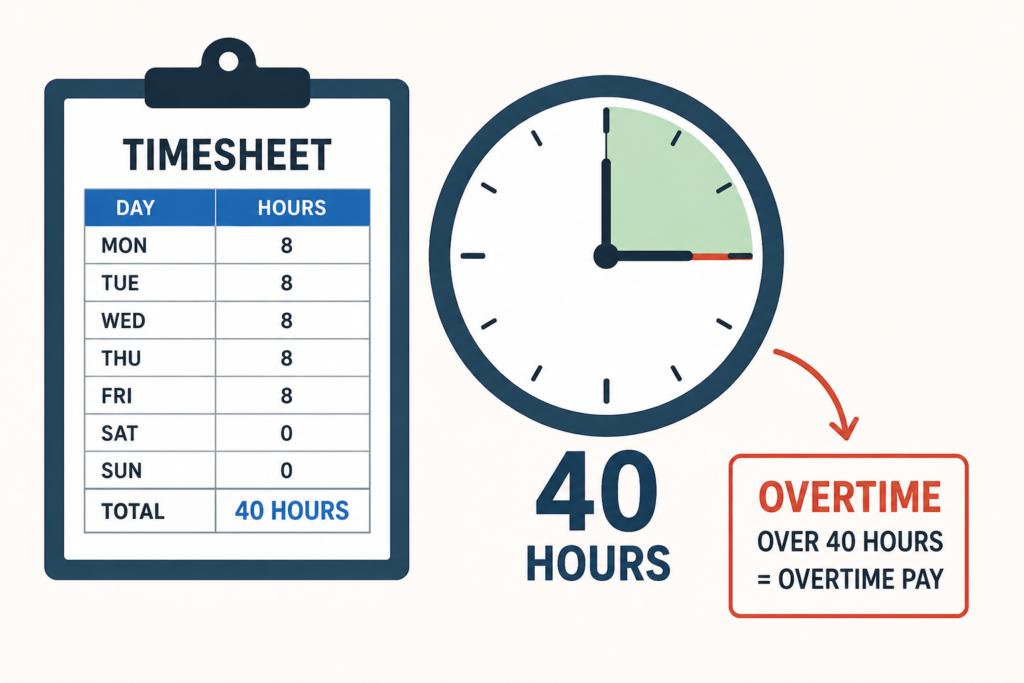
The Fair Labor Standards Act sets the baseline for minimum wage and overtime pay. Non-exempt employees who work more than 40 hours in a week are entitled to 1.5x pay for the overtime hours. The salary threshold for who counts as “exempt” from overtime gets revisited periodically, so a role that was exempt last year may not qualify this year if pay hasn’t kept pace.
2. Tax Withholding and Filing
This covers federal income tax withholding, Social Security and Medicare (FICA), federal unemployment tax (FUTA), and the corresponding state versions. Deadlines for forms like the 941 (quarterly federal tax return), 940 (annual FUTA return), and year-end W-2s and 1099s are fixed by the IRS, and penalties for late or incorrect filing add up fast.
3. Worker Classification
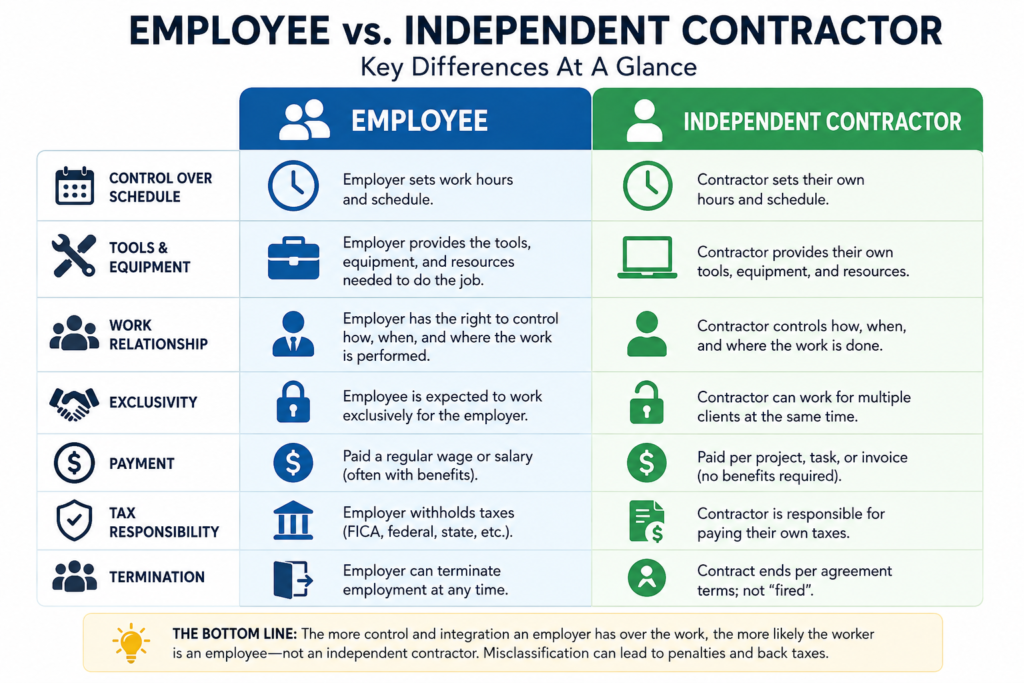
Whether someone is an employee or an independent contractor isn’t your choice to make freely — it’s determined by how much control you have over their work. Misclassifying an employee as a contractor to skip payroll taxes is one of the most common (and costly) compliance mistakes small businesses make, especially with more workers doing freelance or gig-style work.
4. State and Local Variations
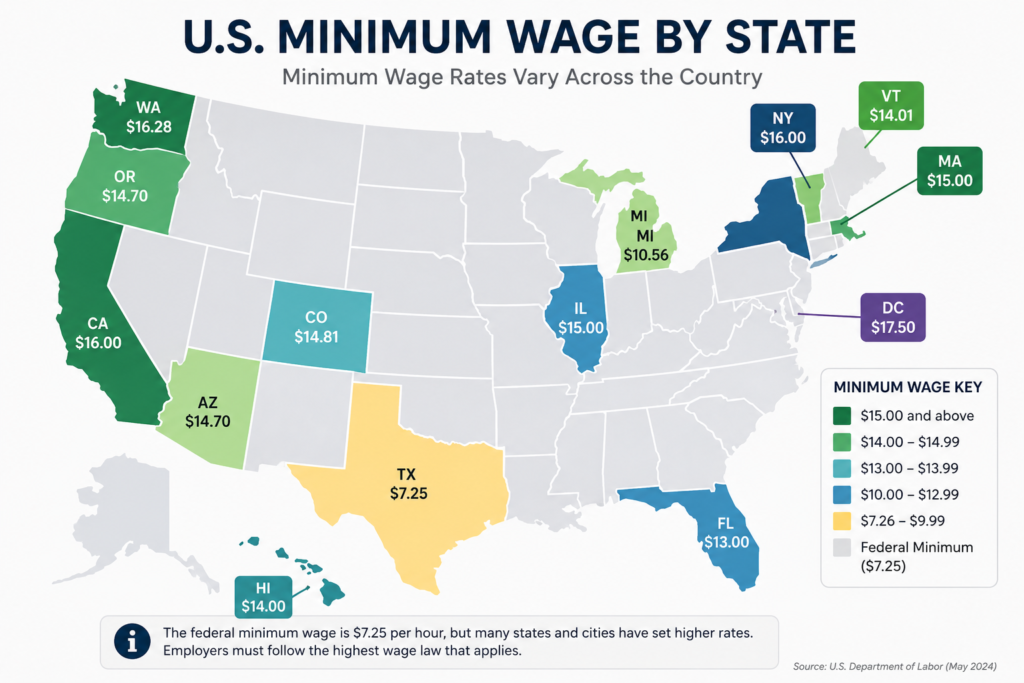
Federal law sets the floor, not the ceiling. States and even individual cities can set higher minimum wages, mandate paid sick leave, require specific pay stub disclosures, or add their own overtime rules. If you have remote employees or operate in more than one state, you’re subject to each state’s rules for where the employee actually works — not just where your business is registered.
5. Recordkeeping Requirements
Most payroll-related records — timesheets, pay rates, tax filings, I-9 forms — need to be kept for a set number of years (often three to seven, depending on the record type and agency). If you’re ever audited, having organized, retrievable records is what separates a quick resolution from a drawn-out headache.
Common Payroll Compliance Mistakes Small Businesses Make
- Treating payroll compliance as a “set it and forget it” task instead of an ongoing process
- Missing a state-level law change because attention stays focused on federal updates
- Misclassifying workers to save on payroll tax in the short term
- Falling behind on recordkeeping until an audit or dispute forces a scramble
- Relying on memory instead of a recurring review habit

Building a Habit, Not Just a Checklist
Here’s the part most guides skip: payroll compliance isn’t a one-time project, it’s a recurring operational task — the same category as reviewing your finances or checking your marketing numbers. Business owners who stay compliant long-term aren’t the ones who read one article and move on. They’re the ones who’ve built a repeatable system for reviewing their back-office operations on a regular cadence.
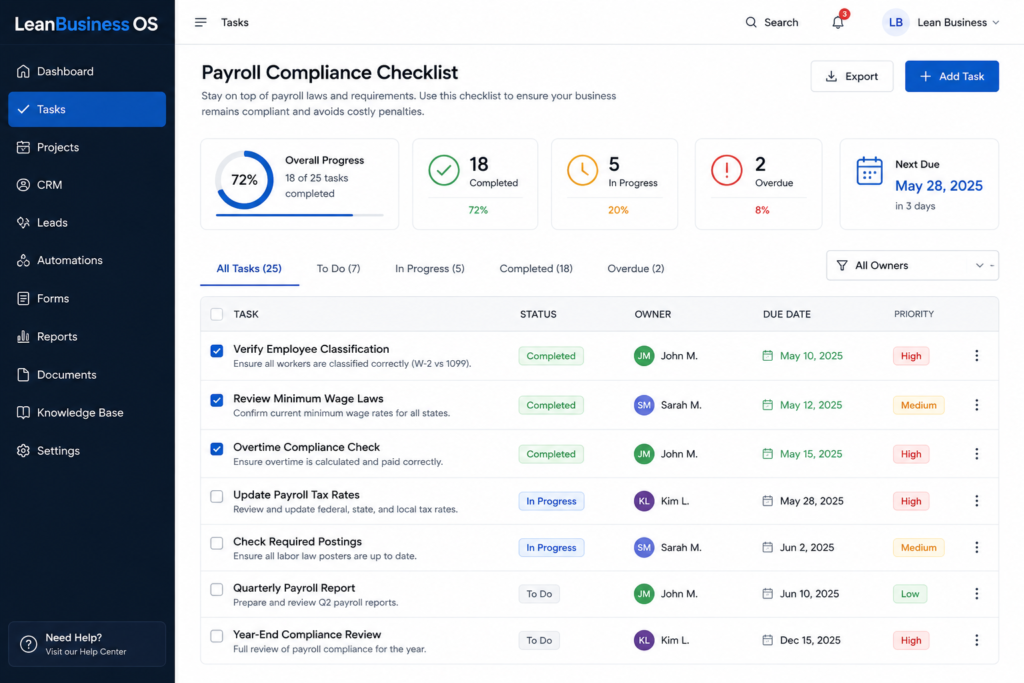
If you’re already trying to systemize the rest of your business — content, marketing, customer follow-up — it’s worth applying that same operator mindset to compliance. This is where a tool like LeanBusiness OS can help, not as a payroll-specific compliance service, but as a broader operating checklist that pushes you to review and automate the recurring, easy-to-forget parts of running a small business — the category payroll compliance falls squarely into. Pairing a general systems checklist with a standing reminder to review payroll and labor law updates is a simple way to stop compliance from becoming a fire drill.
A Simple Cadence to Stay Current
- Quarterly: Check for federal wage, overtime, and tax filing deadline changes
- Twice a year: Review your state’s minimum wage, paid leave, and pay stub disclosure rules
- Whenever you hire: Re-confirm worker classification before onboarding
- Annually: Audit your recordkeeping — confirm you can locate timesheets, tax filings, and I-9s without digging
Final Thoughts
Payroll compliance for small business owners will never be a “learn it once” task — it’s a moving target that rewards owners who build a review habit rather than those who react after a penalty notice arrives. Start with the core areas above, put a recurring check on your calendar, and treat compliance the same way you treat any other recurring business system: something to automate and revisit, not something to fear.