Why the Right Tools for Small Business Owners Matter in 2026
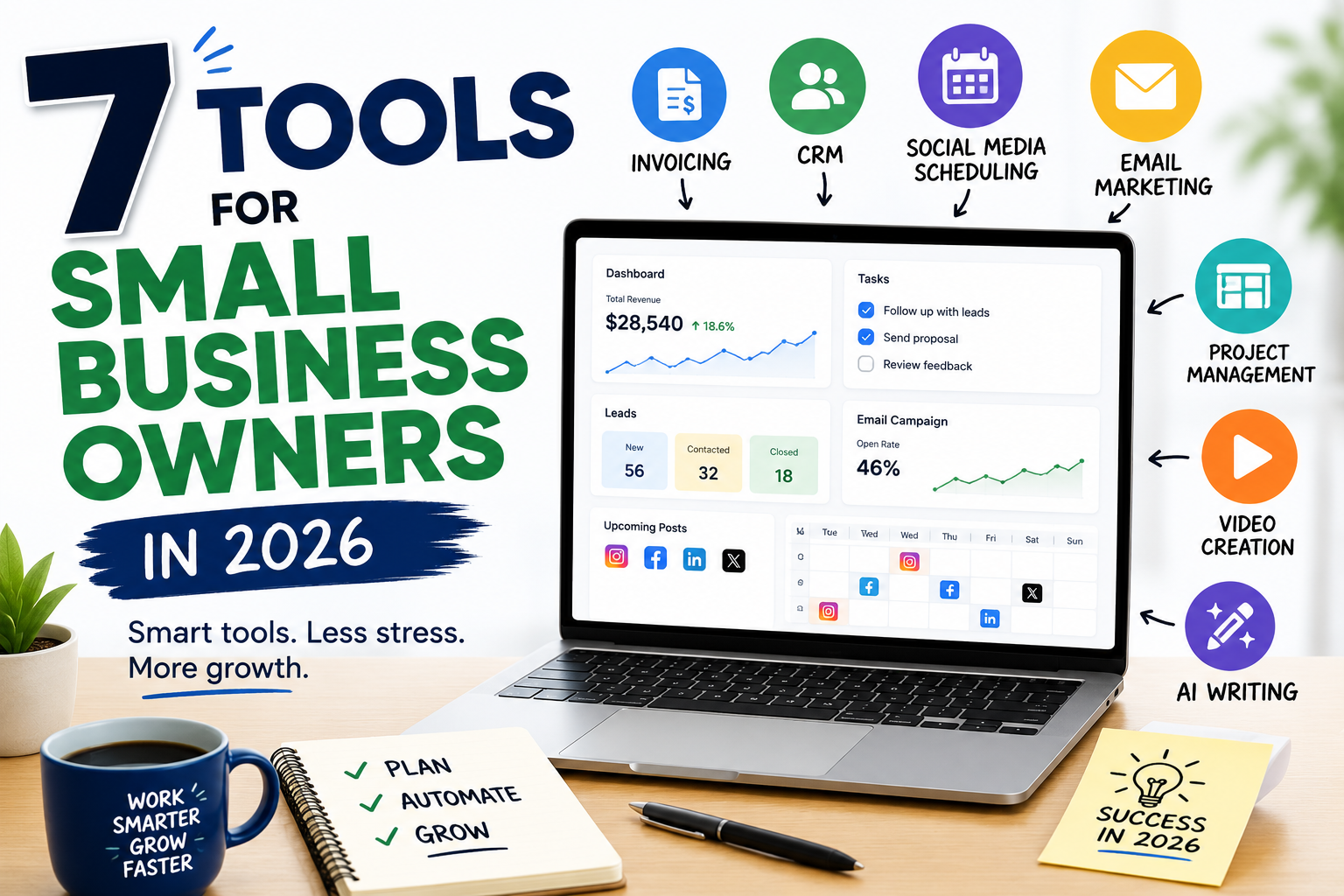
If you’re searching for the right tools for small business owners, you already know the problem: there are thousands of apps out there, and most of them promise to change your business overnight. In reality, you don’t need thirty tools — you need the right seven. The ones that save you hours every week, keep your finances in order, and help you look professional without hiring a full marketing team.
In 2026, small business software has gotten smarter, cheaper, and easier to use than ever, which means even a solo founder or a two-person team can run operations that used to require a whole department. Below are the seven tools worth adding to your stack this year, what each one actually does for you, and why it matters.
Table of Contents
1. Accounting & Invoicing Software
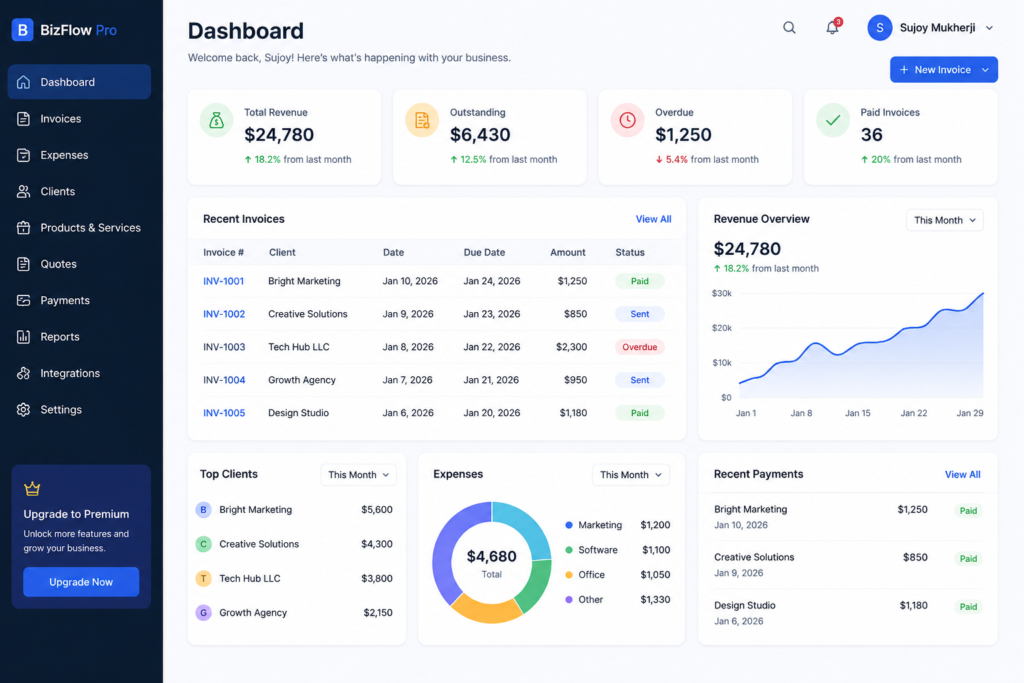
Bookkeeping is the tool most small business owners put off — and the one that causes the most stress at tax time. A good accounting tool tracks income and expenses automatically, sends professional invoices, and gives you a real-time picture of your cash flow instead of a shoebox of receipts.
What to look for:
- Automatic bank and card syncing
- One-click invoice creation and payment reminders
- Simple profit-and-loss reports you can actually understand
Even free or low-cost options (Wave is a popular starting point) can replace a spreadsheet entirely and save several hours a month.
2. A Customer Relationship Management (CRM) Tool
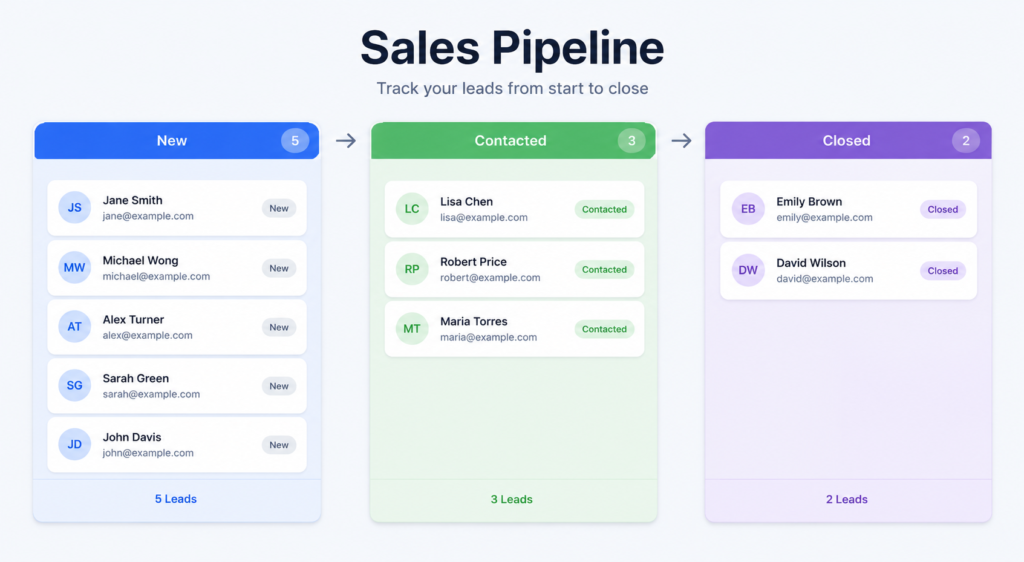
Once you have more than a handful of customers or leads, memory stops being a system. A CRM tool keeps every contact, conversation, and follow-up date in one place, so nobody falls through the cracks.
What it does for you:
- Stores customer details and purchase history
- Reminds you when to follow up
- Shows you which leads are close to converting
Many CRMs (HubSpot’s free plan is a good example) now come with built-in email tracking and simple automation, so you’re not manually chasing every lead.
3. A Social Media Scheduling Tool
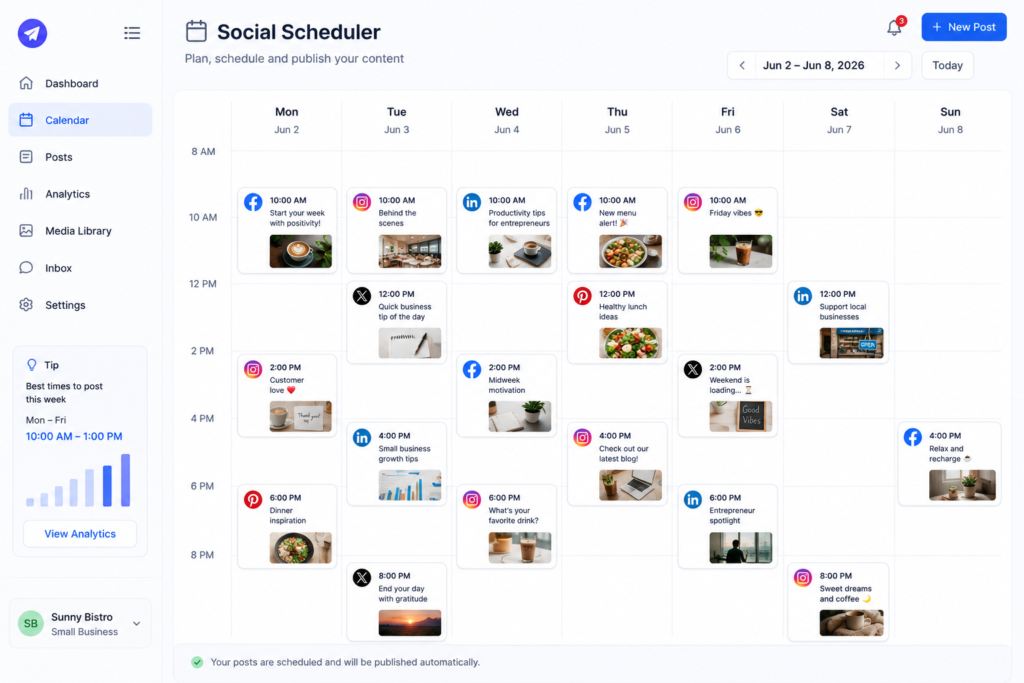
Posting consistently is one of the biggest levers for small business visibility — and one of the easiest things to fall behind on. A scheduling tool lets you plan a week or month of content in one sitting instead of scrambling daily.
Why it matters:
- Batch-create content once, publish automatically
- Post to Instagram, Facebook, LinkedIn, and TikTok from one dashboard
- See basic performance data to learn what’s working
Tools like Buffer or Later are built specifically for small teams that don’t have time to log into five apps a day.
4. An Email Marketing Platform
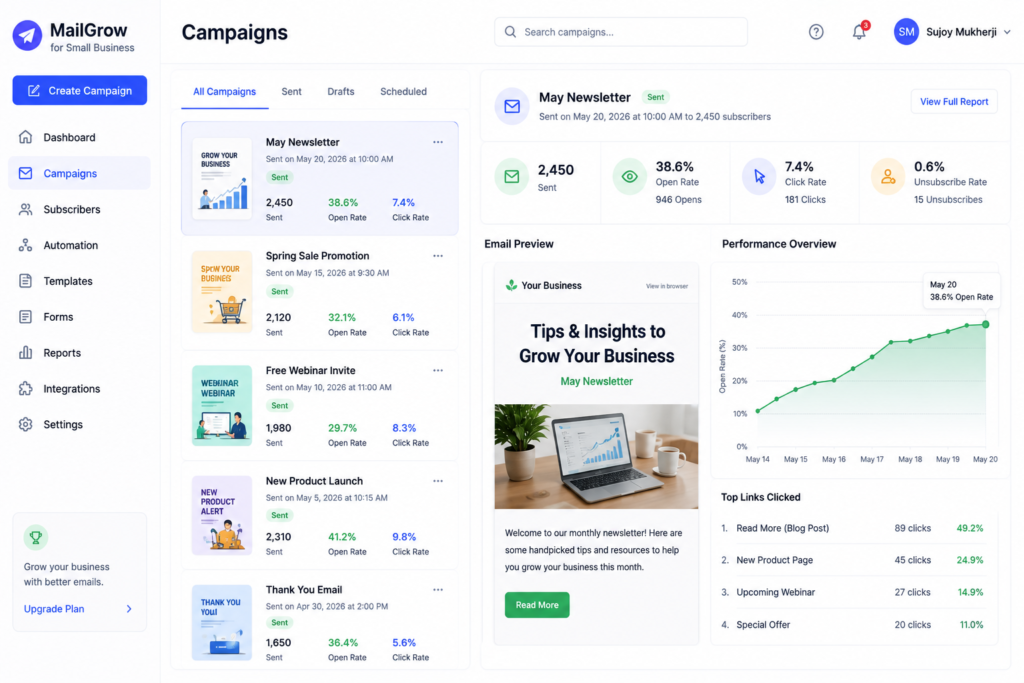
Social media reach comes and goes, but your email list is yours. An email marketing platform lets you turn website visitors and customers into a list you can market to directly — without paying for ads every time.
Core benefits:
- Build simple opt-in forms and landing pages
- Send newsletters, promotions, and automated welcome sequences
- Track opens and clicks to see what resonates
Platforms like Mailchimp offer generous free tiers for small lists, making this an easy first step even on a tight budget.
5. A Project & Task Management Tool
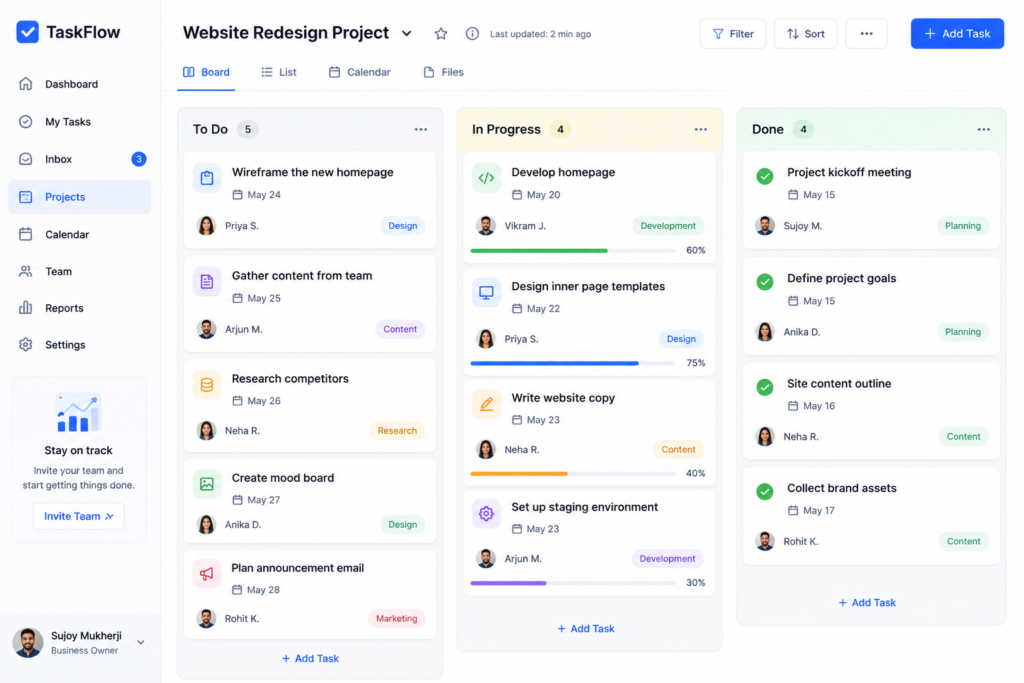
When you’re wearing every hat in the business, tasks live in your head, your notes app, and three different sticky notes. A project management tool gets everything out of your head and into one visual board, so nothing gets forgotten.
What to look for:
- Simple boards or lists you can set up in minutes
- Due dates and reminders
- Easy sharing if you work with contractors, a VA, or a small team
Trello and similar drag-and-drop tools are popular precisely because they require zero training to start using.
6. Explainer & Marketing Video Creation — InstaDoodle
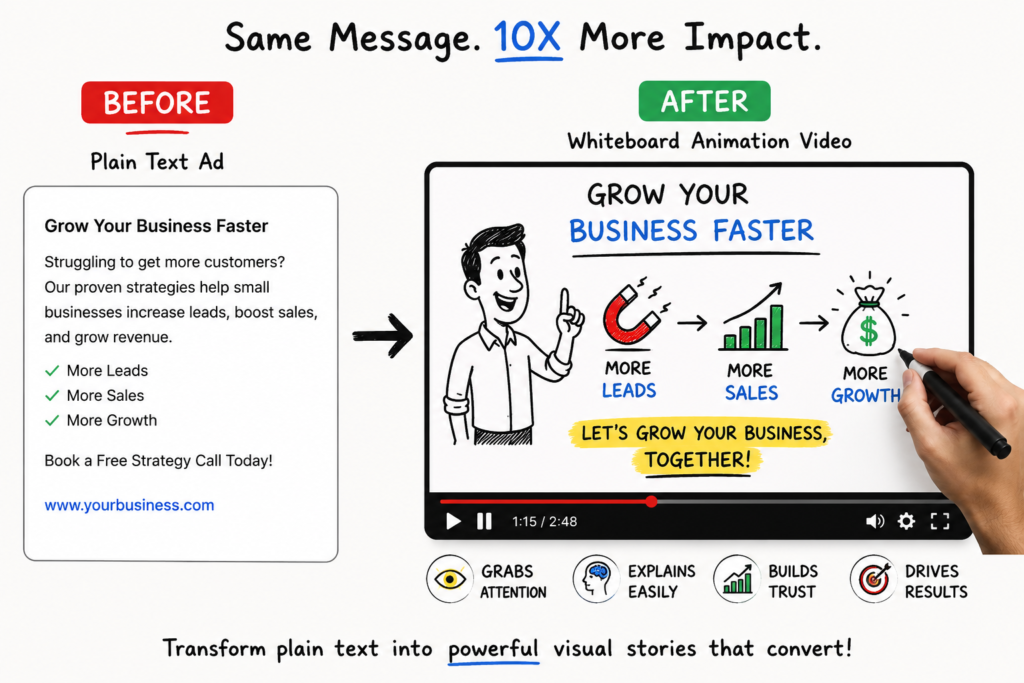
Video consistently outperforms text and static images for engagement, but most small business owners assume they need expensive software, a camera crew, or editing skills they don’t have. That’s exactly the gap a tool like InstaDoodle fills.
InstaDoodle is a whiteboard and doodle-style video creator built for people with no design or editing background. Instead of hiring a video agency or spending hours in complicated editing software, you pick a template, add your script, and InstaDoodle animates it into a polished, attention-grabbing explainer or promo video.
Why it’s worth adding to your toolkit:
- Turns a plain product description or offer into an engaging animated video in minutes
- No filming, no voiceover talent, and no editing experience required
- Great for social ads, sales pages, email campaigns, and “how it works” explainers
- Helps small businesses compete visually with bigger brands on a fraction of the budget
If you’ve been putting off video marketing because it felt too technical or too expensive, this is the kind of tool that removes both excuses.
👉 Check out InstaDoodle here to see how quickly you can create your first explainer video.
7. An AI Writing & Content Assistant
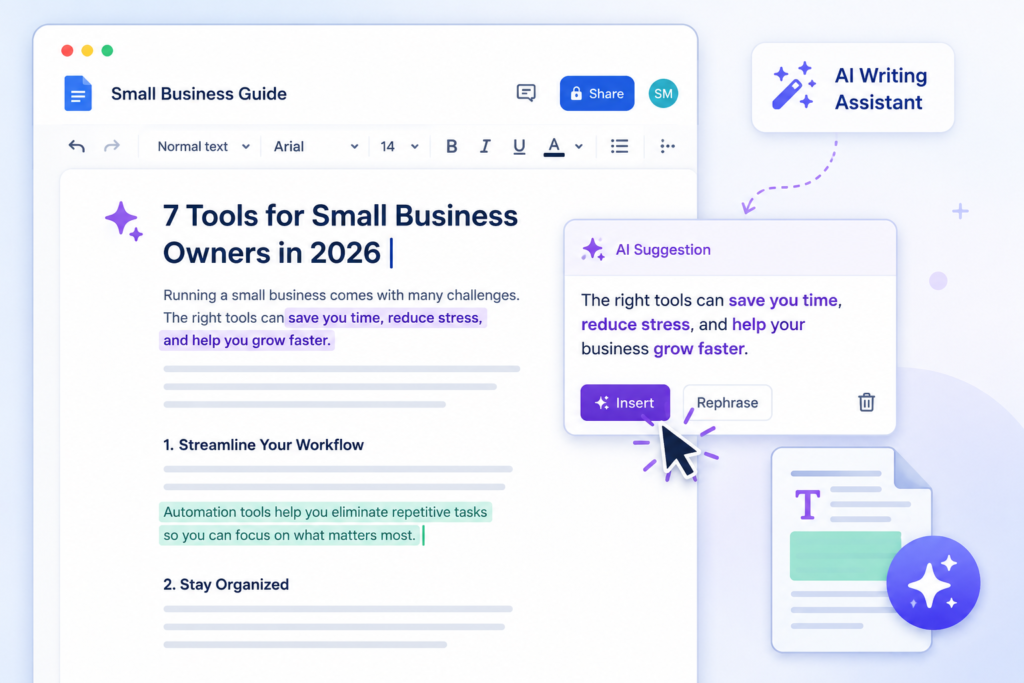
Content — website copy, product descriptions, social captions, emails — used to eat entire afternoons. AI writing assistants don’t replace your voice, but they cut first-draft time dramatically, which matters most when you’re a team of one.
Practical uses:
- Drafting blog posts, product descriptions, and ad copy
- Rewriting or shortening text for different platforms
- Brainstorming subject lines, headlines, and captions when you’re stuck
Used well, an AI assistant works like a fast first-draft writer that you edit and personalize, not a replacement for your brand voice.
Conclusion
Running a small business in 2026 doesn’t mean doing everything by hand anymore — and it definitely doesn’t mean spending a fortune on software to get organized. From accounting and CRM to video creation and AI-assisted writing, the seven tools for small business owners covered here each solve one specific bottleneck: time, money, visibility, or all three.
You don’t need to adopt all seven at once. Start with whichever pain point is costing you the most hours right now — for most owners, that’s either bookkeeping or marketing content — get comfortable with it, then add the next tool as your business grows. Even swapping out one manual, time-consuming task for the right tool this month can free up hours you can put straight back into serving customers and growing revenue.
If video marketing is your gap, that’s the easiest place to start today — try InstaDoodle and have your first explainer video ready in minutes, no design skills required.
Which of these tools are you already using, and which one are you adding next? Let us know in the comments below.
Affiliate Disclosure: This article may contain affiliate links. If you purchase through these links, I may earn a commission at no additional cost to you. I only recommend tools and platforms I believe can provide value to my readers.