

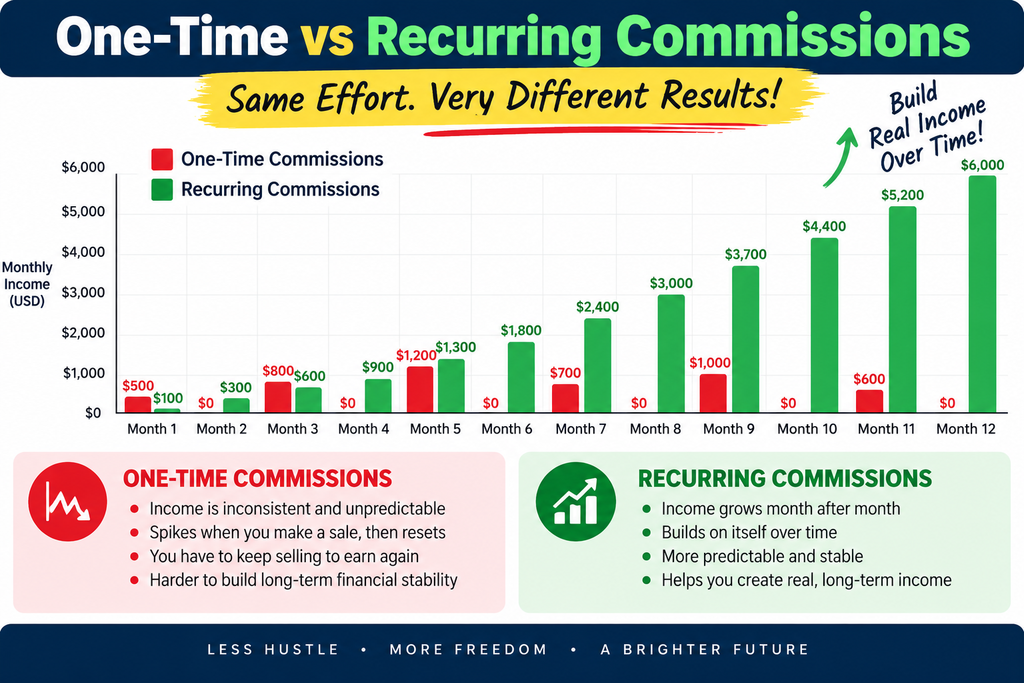
If you’re trying to decide where to put your promotion time and effort, understanding recurring commission affiliate programs versus one-time commission programs is one of the most important decisions you’ll make as an affiliate marketer. The commission structure you choose doesn’t just affect how much you earn per sale — it determines whether your income compounds over time or resets to zero every month.
In this article, we’ll break down exactly how each model works, the real pros and cons of both, and which one actually builds sustainable, long-term income.
Table of Contents
What Is a One-Time Commission Affiliate Program?
A one-time commission program pays you once for each sale you generate. You refer a customer, they buy, and you collect a single payout — whether that’s $20 or $2,000. After that, the transaction is closed. If the customer buys again next month, you typically don’t earn anything unless they click your link again.
Common examples include:
- Physical product affiliate programs (Amazon Associates, most e-commerce stores)
- One-time digital product launches (ClickBank and JVZoo courses, software bundles, ebooks)
- High-ticket one-off offers (coaching programs, done-for-you services)
The appeal is obvious: one-time commissions, especially on high-ticket offers, can pay out large sums immediately. A single $1,000+ commission check feels great. But the income stops the moment you stop promoting.

What Is a Recurring Commission Affiliate Program?
A recurring commission affiliate program pays you every time the customer you referred renews their subscription — monthly, quarterly, or annually — for as long as they stay a paying customer. Some programs even pay “lifetime” commissions, meaning you keep earning for the entire time that customer remains active, not just the first purchase.
This model is common with subscription-based software (SaaS) and services, including:
- Email marketing platforms (AWeber, GetResponse, ConvertKit)
- Funnel builders and CRM tools (ClickFunnels, HubSpot)
- Hosting and website tools (Kinsta, WP Engine)
- AI writing and content tools (Jasper, Writesonic)
Instead of one payout, you build a small monthly income stream from every single customer you refer. Refer 50 people to a tool paying $30/month in recurring commission, and even with some churn, you’re looking at a real, compounding income base — without doing any extra work after the initial referral.
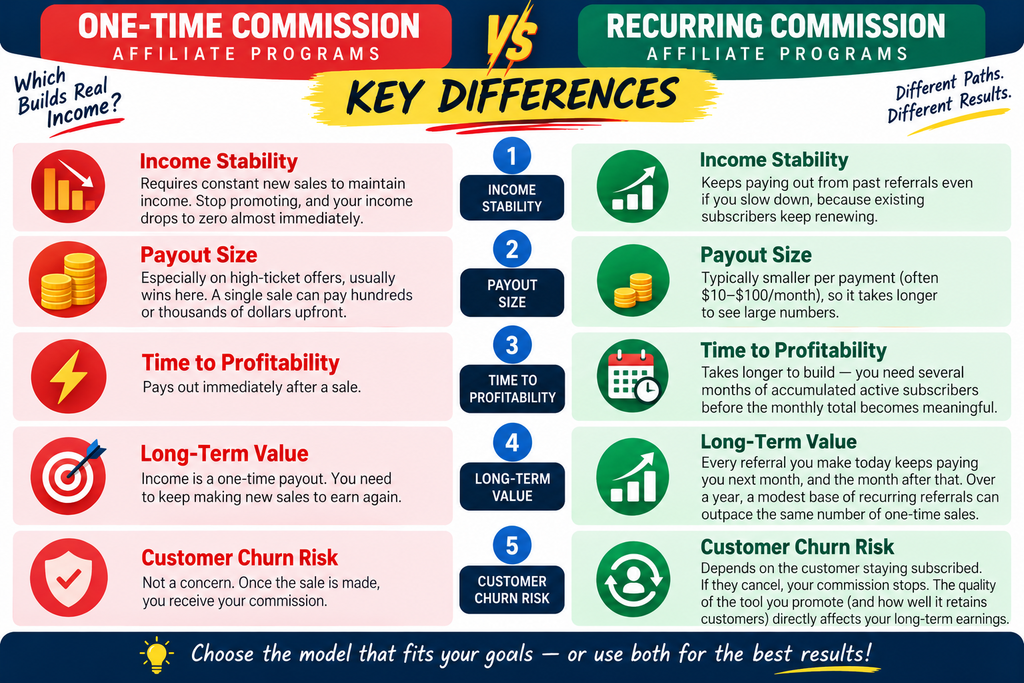
Recurring Commission vs One-Time Commission: Key Differences
1. Income Stability
One-time commissions require constant new sales to maintain income. Stop promoting, and your income drops to zero almost immediately. Recurring commissions keep paying out from past referrals even if you slow down, because existing subscribers keep renewing.
2. Payout Size
One-time commissions, especially on high-ticket offers, usually win here. A single sale can pay hundreds or thousands of dollars upfront. Recurring commissions are typically smaller per payment (often $10–$100/month), so it takes longer to see large numbers.
3. Time to Profitability
One-time commissions pay out immediately after a sale. Recurring commissions take longer to build — you need several months of accumulated active subscribers before the monthly total becomes meaningful.
4. Long-Term Value
This is where recurring commission affiliate programs pull ahead. Every referral you make today keeps paying you next month, and the month after that. Over a year, a modest base of recurring referrals can outpace the same number of one-time sales, because the income never fully resets.
5. Customer Churn Risk
Recurring commissions depend on the customer staying subscribed. If they cancel, your commission stops. This means the quality of the tool you promote (and how well it retains customers) directly affects your long-term earnings — something you don’t have to worry about with a one-time sale.
Which One Actually Builds Real Income?
The honest answer: it depends on your goal, but recurring commission affiliate programs build the more durable business.
- If you need cash flow now — to cover ads, tools, or bills — one-time high-ticket commissions can get you there faster.
- If you’re building toward a stable, growing income that doesn’t require you to hustle for a new sale every single day, recurring commission programs are the better long-term play.
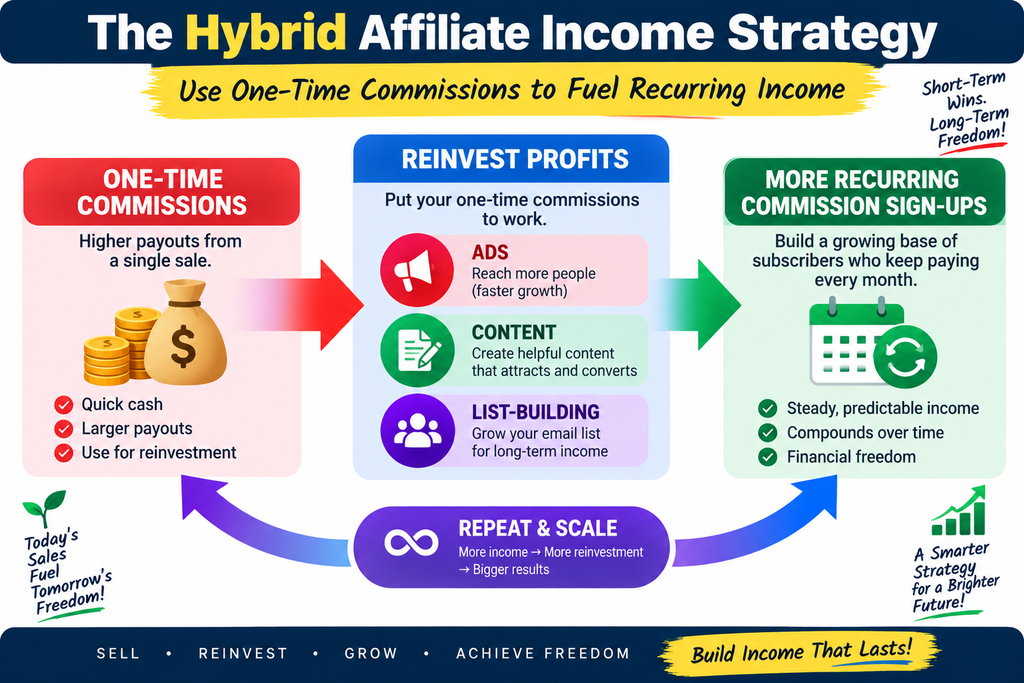
Most successful affiliate marketers don’t pick just one. They use one-time, high-ticket offers to generate quick cash flow and reinvest that money into content, traffic, and list-building — while steadily layering in recurring commission programs in the background, so their income base grows every month regardless of whether they make a new sale that day.
How to Choose the Right Recurring Commission Programs
When evaluating recurring commission affiliate programs, look at:
- Commission rate — 20–40% recurring is common and worth targeting.
- Cookie duration — longer cookies (90–365 days) mean more chances to get credit for a sale.
- Churn rate of the product — a great tool with low cancellations means your recurring income actually sticks around.
- Payment reliability — check payout thresholds and how consistently the program pays affiliates.
Final Takeaway
One-time commissions are great for quick wins. Recurring commissions are what actually compound into real, lasting income. If you’re serious about building affiliate income that keeps growing instead of resetting every month, it’s worth shifting at least part of your promotion strategy toward recurring commission affiliate programs — even if the individual payouts look smaller at first glance.







Pingback: 5 Affiliate Marketing Mistakes for Beginners (And What I Did Instead) - Your Small Business Solutions