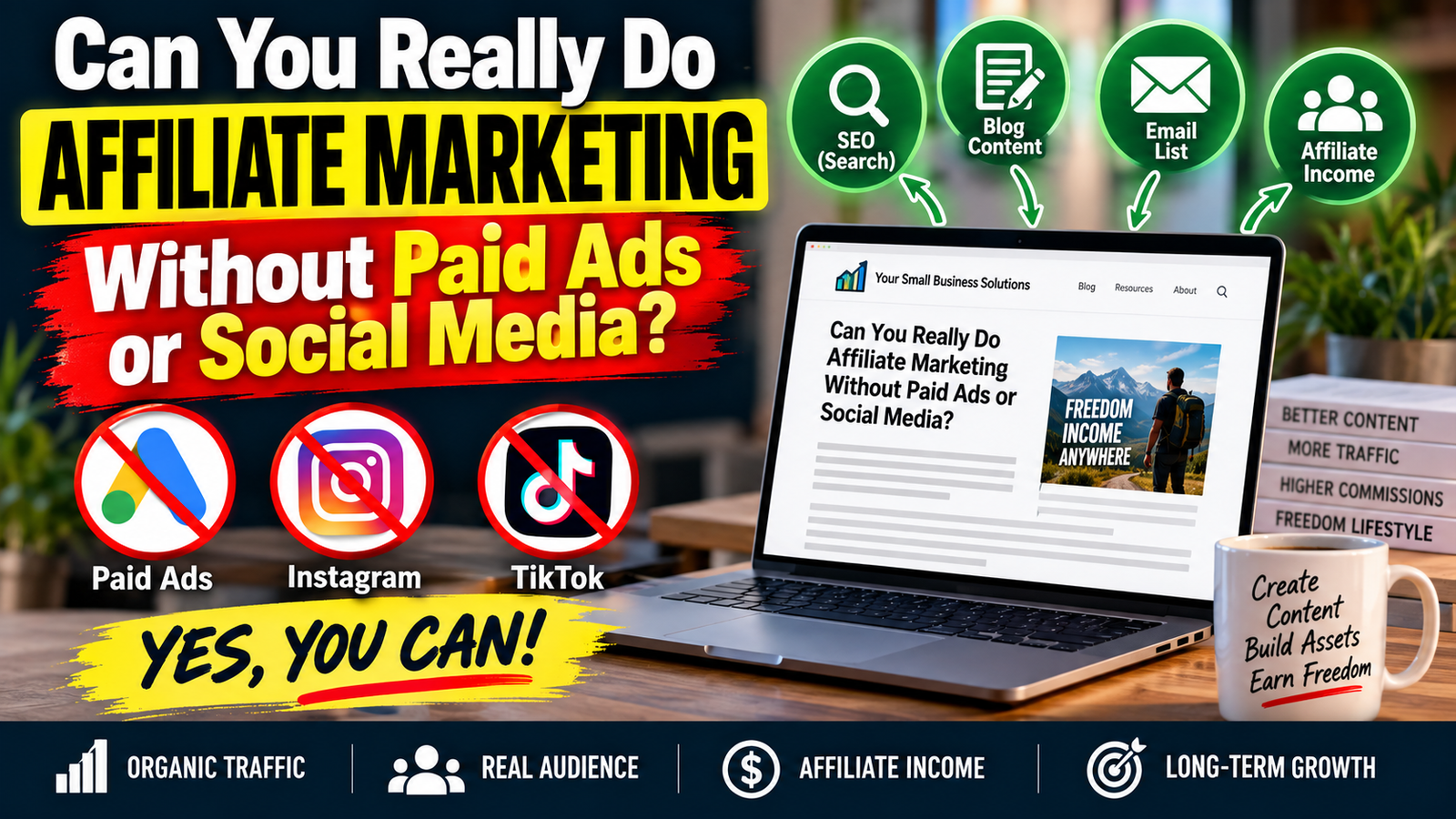
Yes — affiliate marketing without paid ads or social media is not only possible, it’s how a lot of affiliates built their income long before Instagram or TikTok existed. It just means trading speed for sustainability: instead of buying attention or chasing algorithms, you earn it through search engines, email, and content that keeps working long after you publish it.
If you’ve been putting off affiliate marketing because you don’t want to run ads or post daily on social platforms, here’s what actually works instead — and what to expect from each option.
Table of Contents
Why people assume you need ads or social media
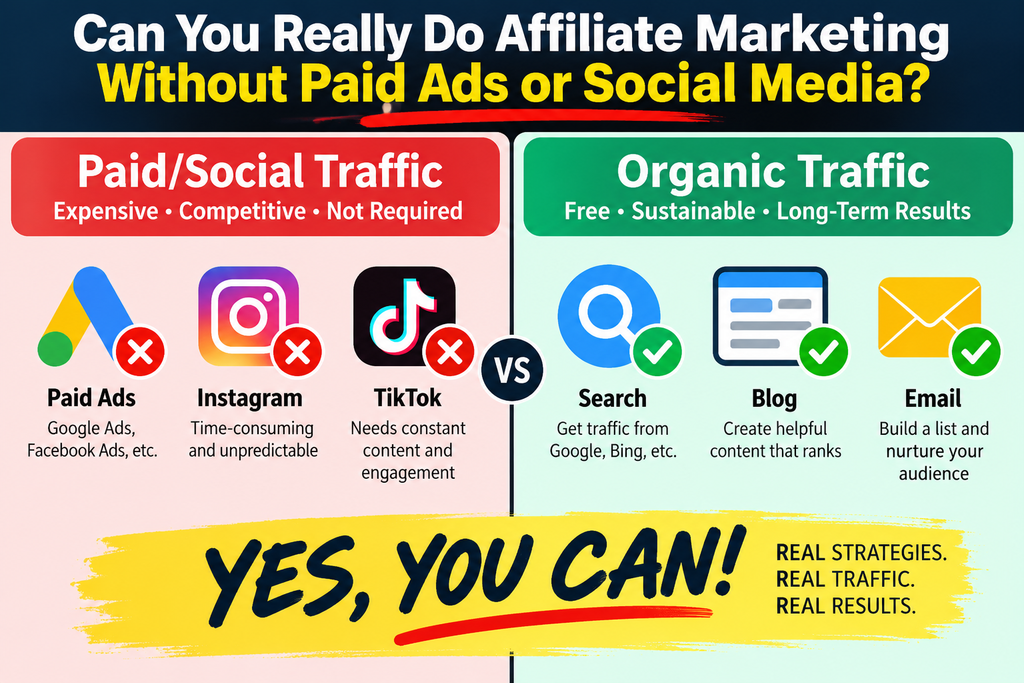
Most “how to start affiliate marketing” content online defaults to Instagram Reels, TikTok, or Facebook ads because those channels are fast and visible. But fast isn’t the same as sustainable. Paid ads stop working the moment you stop paying, and social platforms can throttle your reach overnight with an algorithm change. Neither of those risks is something you control.
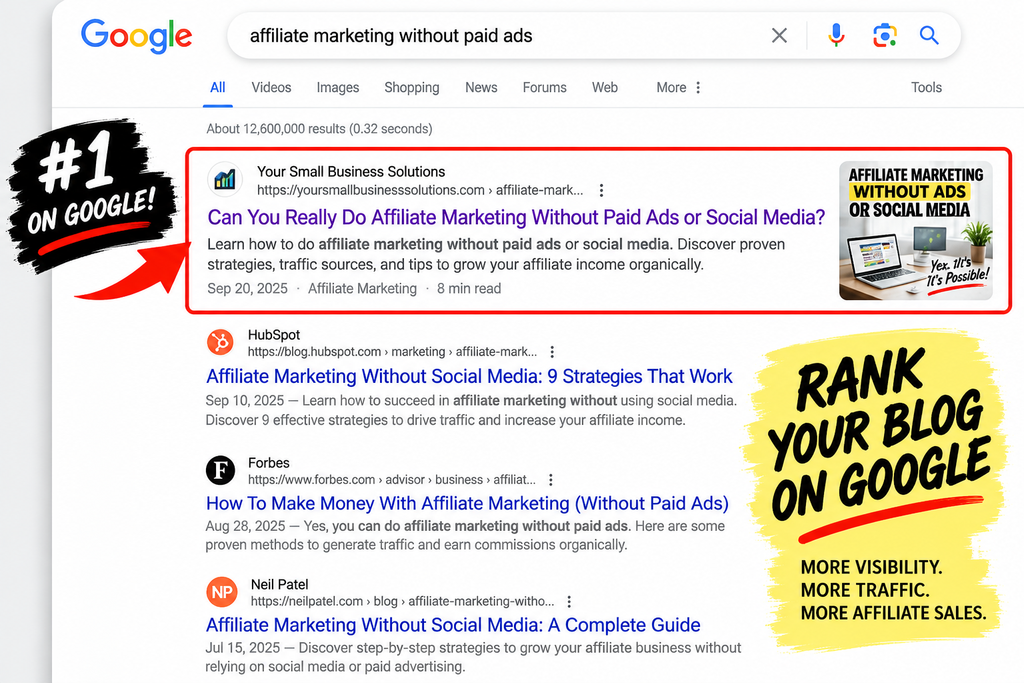
SEO-driven blog content
This is the backbone of affiliate marketing without paid ads or social media. You write content that answers questions people are already typing into Google — product reviews, comparisons, “how to” guides — and place your affiliate links naturally inside that content. Once a post ranks, it keeps sending you visitors for months or years without any extra spend.
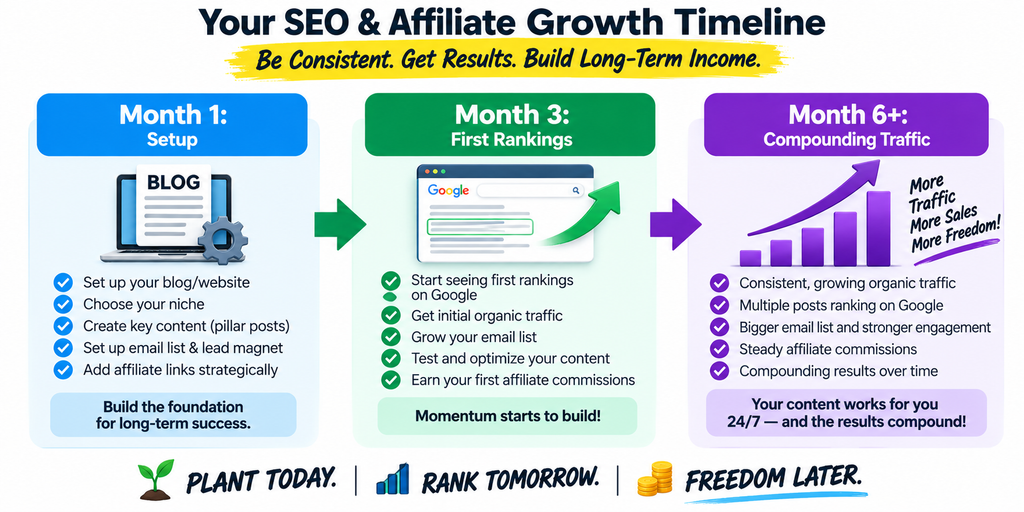
The tradeoff: it’s slow at first. Expect 3–6 months before a new blog post post gains real traction, especially on a newer site.
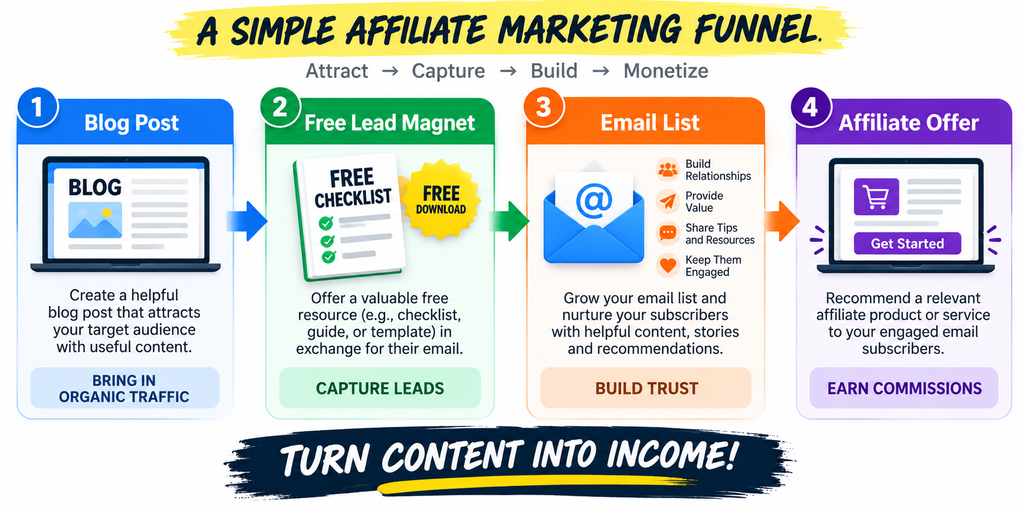
Email marketing
Once someone lands on your site, your job is to capture their email address before they leave — through a lead magnet, checklist, or free guide. From there, you build a relationship through regular emails and recommend affiliate offers directly to your list.
Email consistently converts better than social media because you’re reaching people who already opted in to hear from you, rather than hoping an algorithm shows them your post.
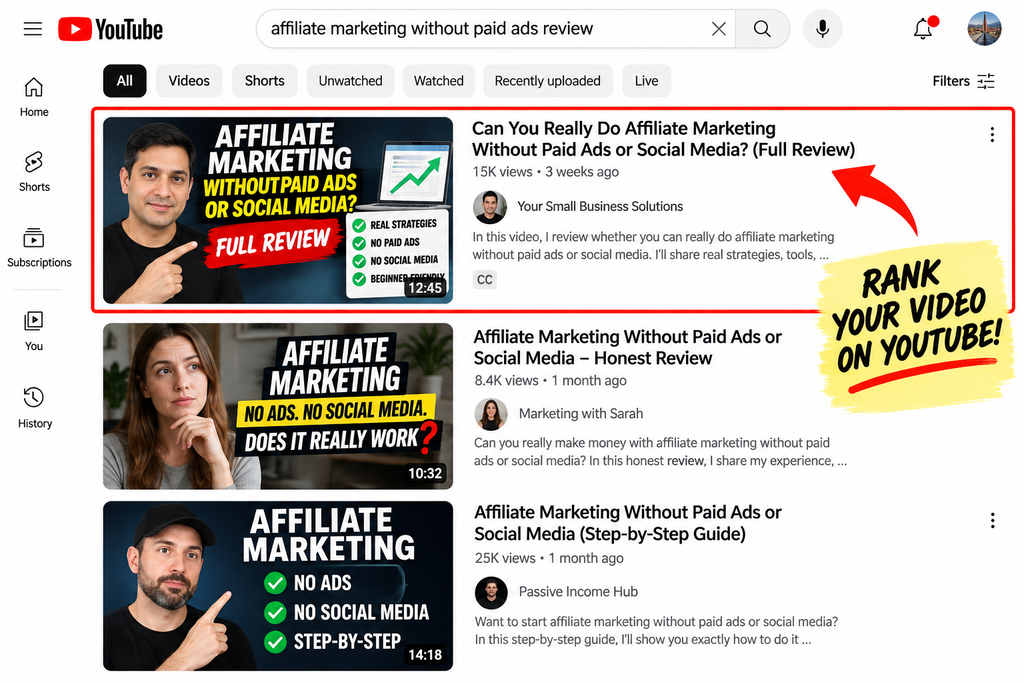
YouTube search traffic
YouTube is technically “social,” but it behaves more like a search engine than a social feed — most views come from people searching a specific term, not from followers scrolling a feed. Product reviews, tutorials, and comparison videos can rank in YouTube search and Google search at the same time, giving you two traffic sources from one piece of content.
Guest posts, forums, and communities
Answering questions on forums like Quora or Reddit or writing guest posts for other blogs in your niche, is a slower but genuinely free way to get in front of an audience that’s already interested in your topic — without needing your own following first.
So, does it actually work?
It does — but it rewards patience over speed. Affiliates who rely only on organic channels (SEO, email, and search-based video) often report slower first results but far more stable income once things start ranking, because they’re not dependent on ad spend or a platform’s mood that week. If your goal is a long-term, low-overhead income stream rather than a quick spike, this route fits that goal well.
The Bottom Line
You don’t need paid ads or a social media following to start affiliate marketing. What you do need is a channel that compounds over time — a blog with SEO-focused content, an email list, or search-driven video — and the patience to let it build. Pick one channel, get consistent with it, and expand once it’s working rather than trying to do everything at once.
Want a Proven System for This Exact Approach?
Everything covered in this article — building an email list, creating content that ranks, growing an audience without ad spend — is exactly what John Thornhill teaches inside his Online Success Coaching program. Instead of piecing together tips from different blog posts, you get a structured, step-by-step system built specifically around the organic model: no paid traffic, no social media grind, just a repeatable process for building an audience and turning it into income.
If you want to see how it works before committing to anything, John runs a free live webinar that walks through the entire framework. 👉 Reserve your seat here