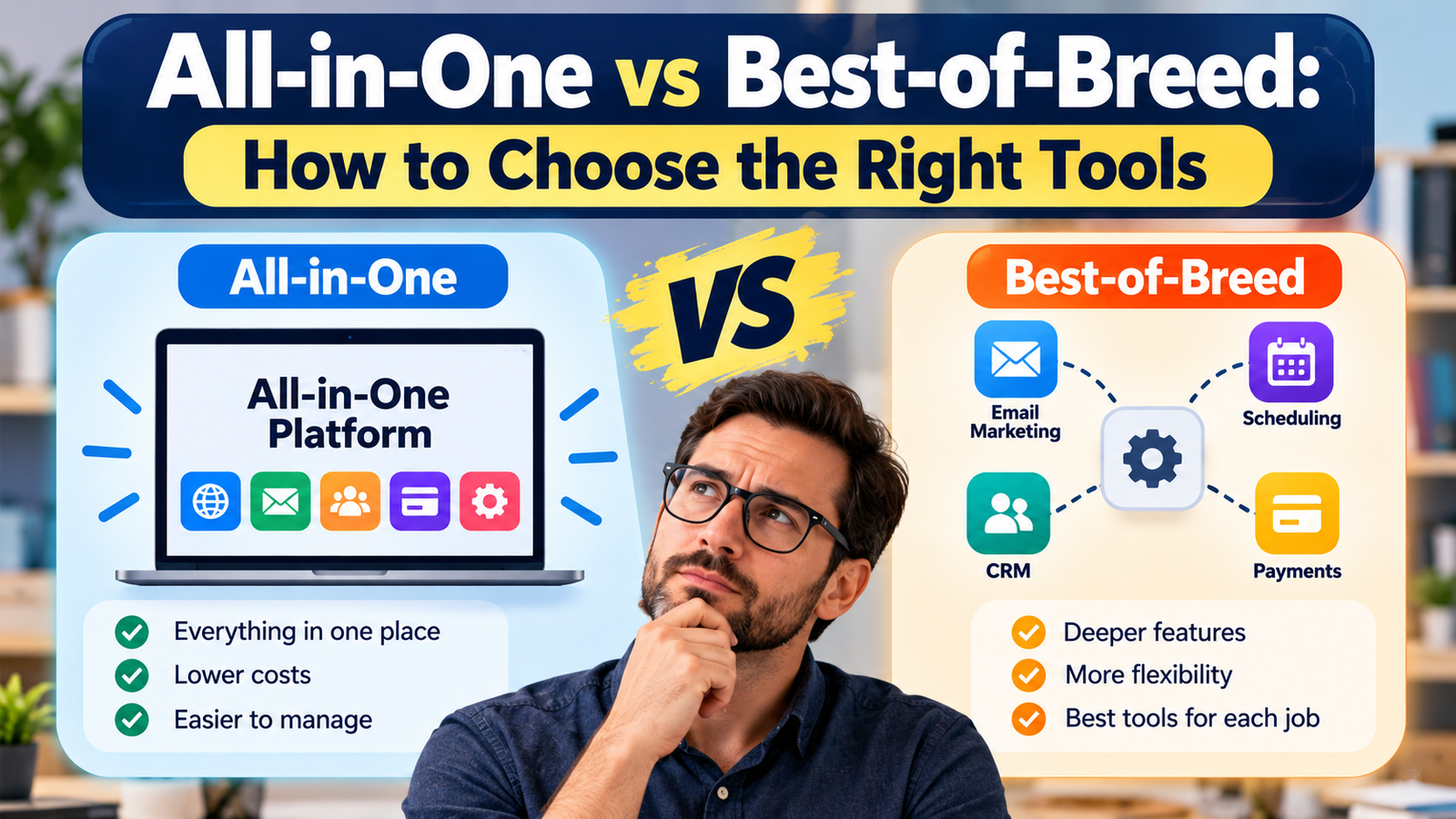
All-in-one vs best-of-breed is one of the first software decisions a small business owner has to make, and it shapes your budget, your daily workflow, and how easily you can grow. One path gives you a single platform that handles many jobs. The other lets you pick the strongest tool for each job and connect them yourself.
Neither option is right for everyone. The better choice depends on your team size, your budget, and how specialized your work is. In this all-in-one vs best-of-breed guide, you’ll learn what each approach means, where each one wins, and five simple questions that help you decide.
Table of Contents
What Is an All-in-One Platform?
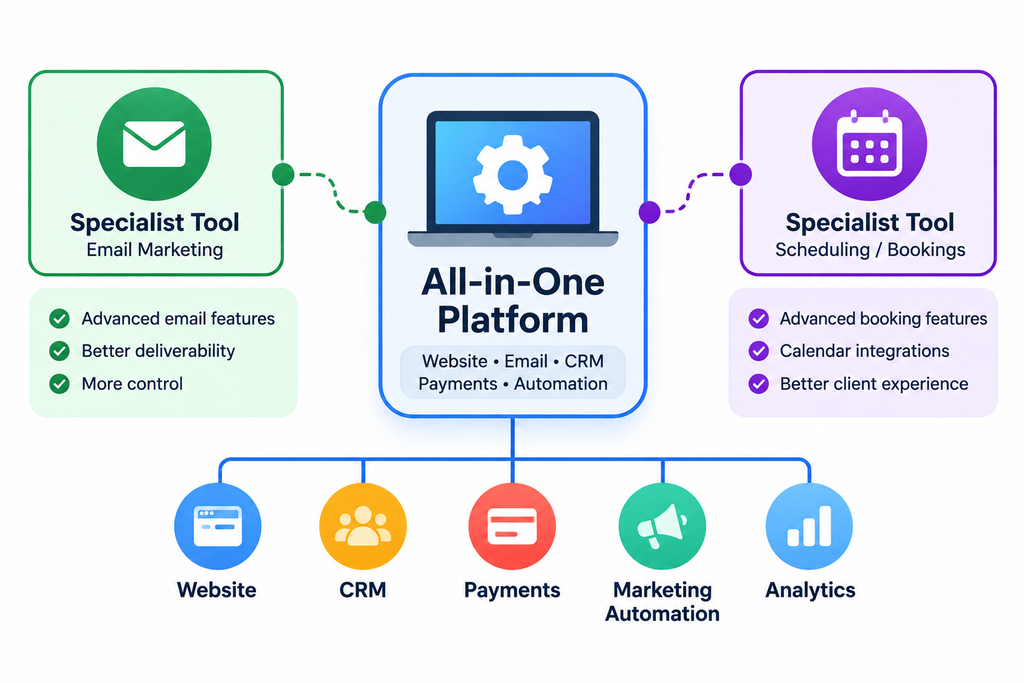
An all-in-one platform bundles several business functions into one product. Depending on the platform, that can include a website or funnel builder, email marketing, a CRM, scheduling, payments, and reporting. You get one login, one bill, and one support team.
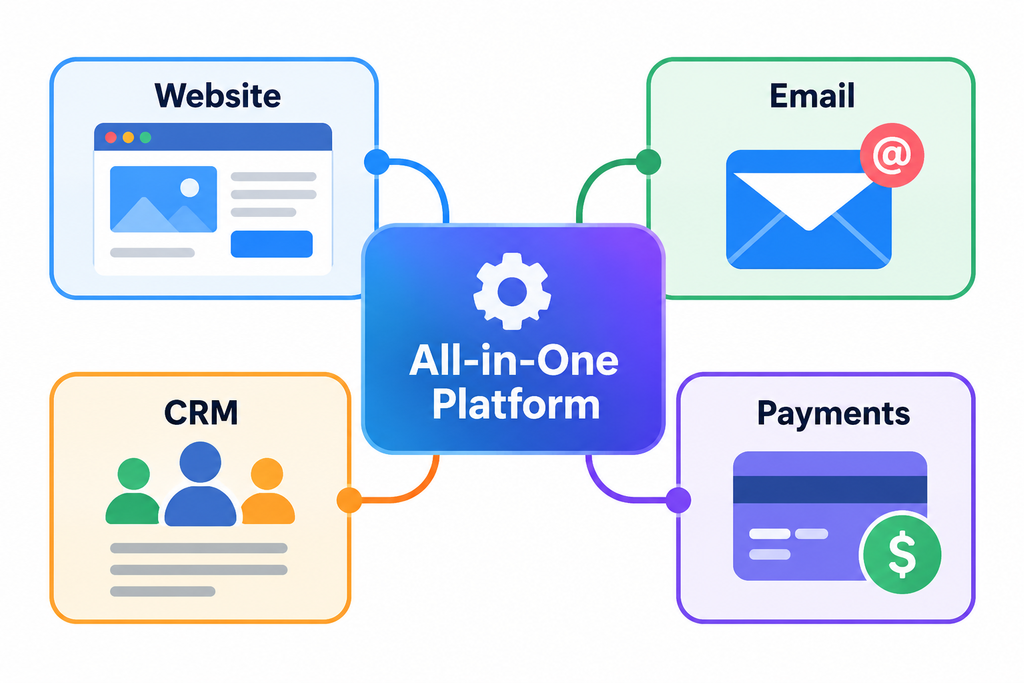
Where an all-in-one platform helps:
- Simplicity. You learn one system instead of five or six.
- Lower cost to start. One subscription is usually cheaper than several separate ones.
- Connected data. Your contacts, sales, and campaigns live in the same place, so you don’t have to sync them.
- Faster setup. Nothing needs to be wired together before you can launch.
Where it falls short:
- Shallower features. A platform that does everything rarely does each task as well as a specialist tool.
- Lock-in. Once your data and automations live in one place, moving away takes real effort.
- One weak link. If a single module disappoints you, you can’t swap it out without leaving the whole platform.
Funnel builders like ClickFunnels are a good example of this model, since pages, email, and checkout sit under one roof. If you’re still comparing options, our guide on whether you need a funnel builder or just a website is a useful companion read.

All-in-One vs Best-of-Breed: 5 Questions to Help You Choose
When weighing all-in-one vs best-of-breed, don’t ask which approach is better. Ask which one fits your business right now. These five questions get you to an answer quickly.
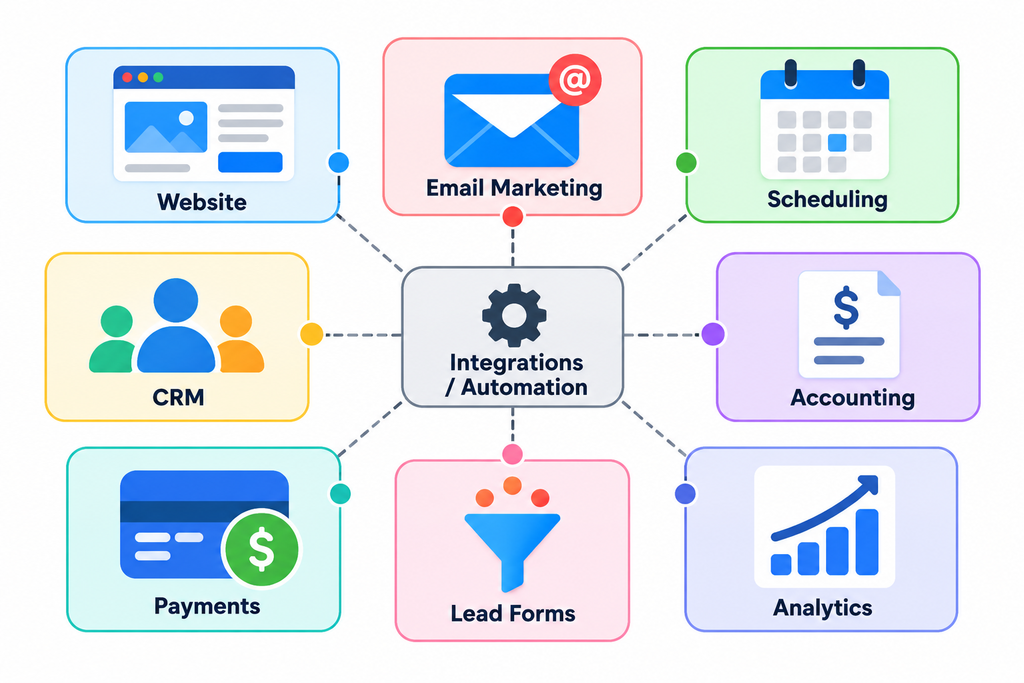
Where best-of-breed tools help:
- Deeper features. Each tool is built around one task, so it usually offers more control and better performance.
- Flexibility. If one tool stops working for you, you can replace it without rebuilding everything else.
- Faster improvement. Specialist vendors tend to put all their development effort into one product.
- Less risk in one place. A problem with one vendor doesn’t take down your whole business.
Where they fall short:
- More logins and bills. Costs and admin time add up as your stack grows.
- Integration work. Tools don’t always talk to each other cleanly, and broken connections can cost you leads or data.
- Scattered data. Customer information can end up split across several systems.
- A steeper learning curve. Every new tool means another interface to learn.
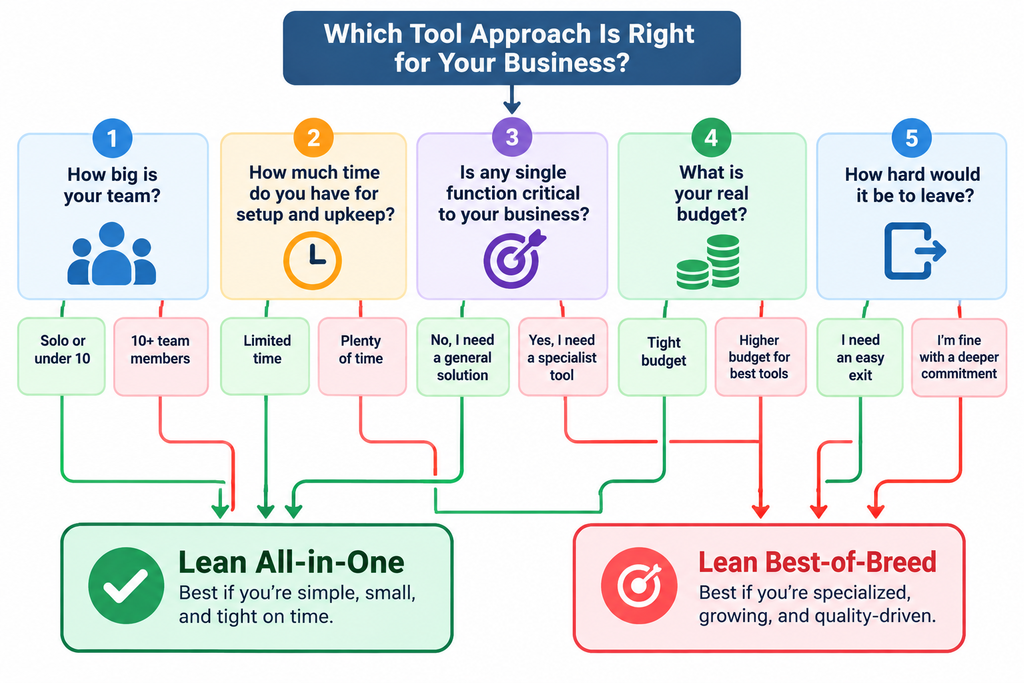
5 Questions to Help You Choose
Instead of asking which approach is better, ask which one fits your business right now. These five questions get you to an answer quickly.
- How big is your team? Solo owners and teams of under ten usually benefit from an all-in-one platform, because there’s no one to manage a complicated stack.
- How much time do you have for setup and upkeep? If you can’t spend hours maintaining integrations, fewer tools means fewer things to break.
- Is any single function critical to your business? If email, bookings, or inventory drives most of your revenue, a specialist tool for that function is often worth the extra cost.
- What is your real budget? Add up the full monthly cost of each option, including add-ons and integration tools, not just the headline price.
- How hard would it be to leave? Check whether you can export your contacts, content, and data. If leaving would be painful, be sure about the platform before you commit.
If you answered “simple, small, and tight on time” to most of these, lean all-in-one. If you answered, “specialized, growing, and quality-driven,” lean best-of-breed.
The Hybrid Approach: A Middle Ground in the All-in-One vs Best-of-Breed Debate
You don’t have to pick one side forever. Many small businesses run an all-in-one platform as their core and add one or two specialist tools where the platform is weak. For example, you might run your pages, CRM, and checkout in one system and keep a dedicated email tool or accounting app alongside it.
A simple way to start:
- Just launching: Choose an all-in-one platform and keep your costs and learning curve low.
- Growing steadily: Keep the platform, but replace the one feature that holds you back with a specialist tool.
- Established and specialized: Build a best-of-breed stack, and use automation tools to connect the pieces.
The goal is to add a new tool only when a real gap costs you time or money, not because a tool looks impressive.
Audit Your Stack Before You Add or Replace Anything
Before you settle the all-in-one vs best-of-breed question, write down what you use today. List each tool, what it costs, and which task it handles. You’ll often find overlap, such as two tools that both send email, or a paid feature you never open.
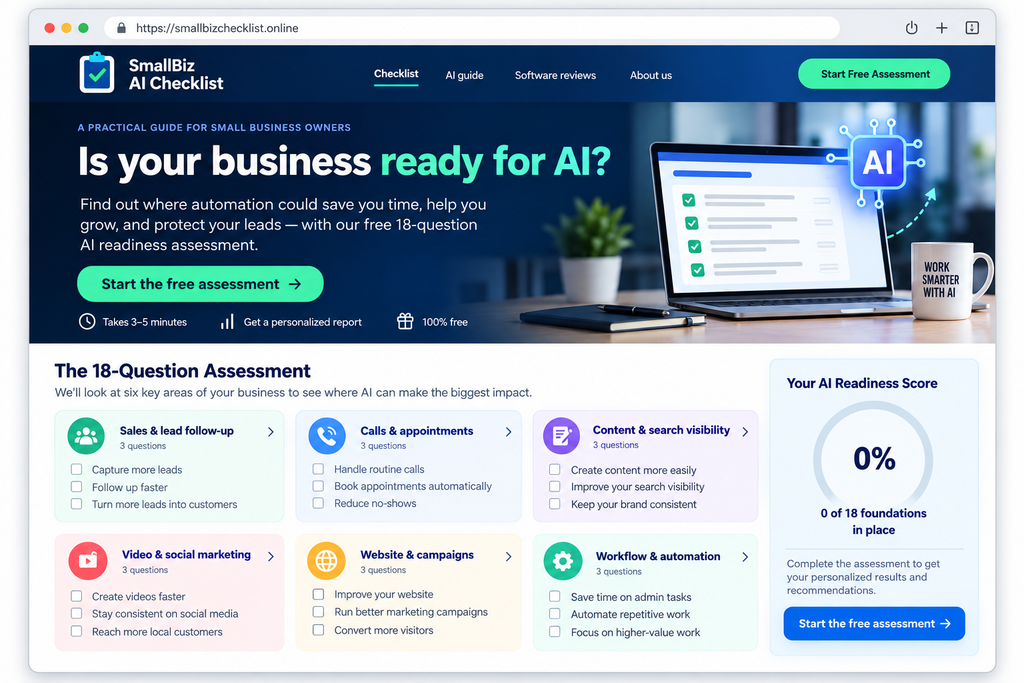
AI and automation now make this decision more important. Many platforms bundle AI features, and many specialist tools add them too, so it pays to know which of your tasks could be handled by something you already own. If you want a structured way to do this, the SmallBiz AI Checklist is a simple resource for small business owners who want to sort out where AI and automation fit into their daily operations before spending more on software.
Conclusion
The all-in-one vs best-of-breed question has no universal winner. An all-in-one platform gives you simplicity, a lower starting cost, and connected data. Best-of-breed tools give you depth, flexibility, and control. Most small businesses do best by starting simple, then adding a specialist tool only when a clear gap appears.
If your all-in-one vs best-of-breed decision leans toward the all-in-one route for funnels, pages, and email, ClickFunnels’ trial offer is an easy way to test the approach before you commit long term. Whichever way you go, review your stack regularly and cut anything you don’t use.
Frequently Asked Questions
Q. Is an all-in-one platform cheaper than best-of-breed tools?
A. Usually, at the start. One subscription typically costs less than several separate ones. Costs can change as you add extras, so compare the full monthly price of each setup.
Q. Can I mix both in an all-in-one vs best-of-breed setup?
A. Yes. A hybrid stack, with an all-in-one core and one or two specialist tools, is common and works well for many small businesses.
Q. What does best-of-breed mean in software?
A. It means choosing the top tool for each individual task instead of using one product for everything.
Q. When should a business switch from all-in-one to best-of-breed?
A. Switch when a specific limitation in your platform costs you time, sales, or customers, and no workaround solves it.