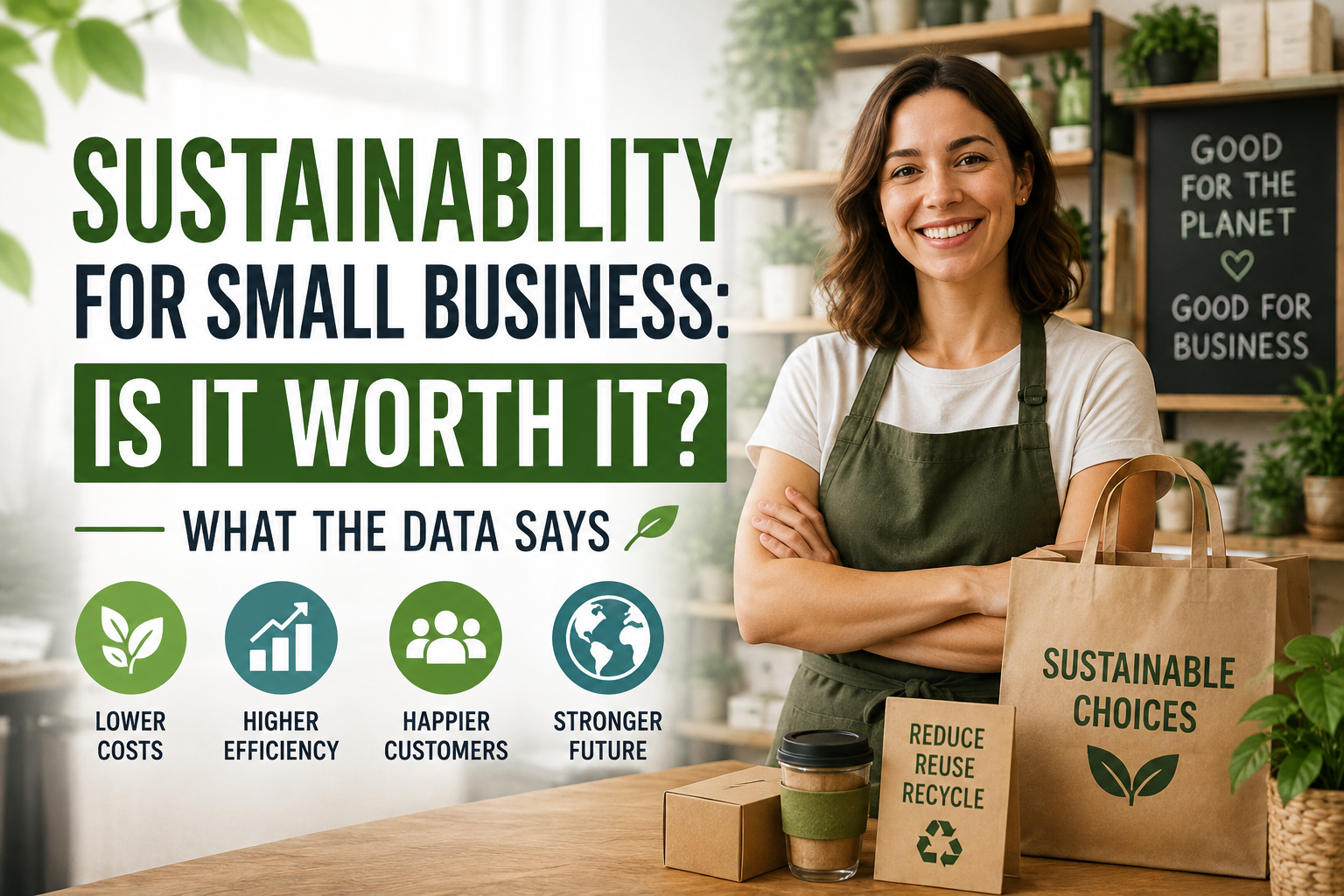
Is sustainability for small business actually worth the money, or is it just a nice-sounding idea that only big corporations can afford? It’s a fair question. Sustainability gets talked about like a moral obligation, but small business owners have to think in dollars and cents. So instead of opinions, let’s look at what the data actually says about the costs, the payback, and whether it moves the needle for a business your size.
Quick answer: For most small businesses, sustainability pays off — but only the practical, operational kind (energy, waste, sourcing), not full corporate ESG reporting. The data below shows where the real returns are.
Table of Contents
What “Sustainability” Actually Means for a Small Business
Big companies think about sustainability in terms of emissions disclosures, ESG scorecards, and investor reporting. None of that applies to a 5-person business.
For a small business, sustainability usually means three things:
- Using less energy, water, and materials to run daily operations
- Sourcing supplies, packaging, and inventory more responsibly
- Communicating those choices to customers who care
That’s it. It’s not about hitting climate targets — it’s about running a leaner, lower-waste operation that happens to also be better for the planet.
The Cost Side: What Sustainability Actually Costs a Small Business
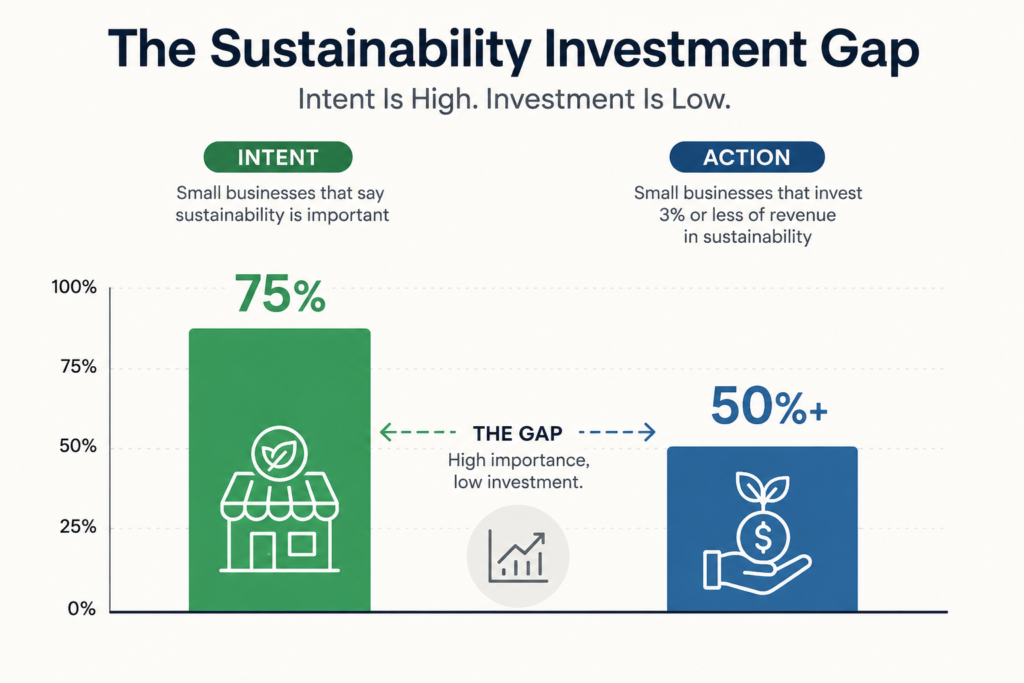
Here’s the uncomfortable part first. A global DHL Express survey of more than 5,000 small and mid-sized business decision-makers found that 75% called sustainability “very” or “extremely” important to their business — but more than half were putting 3% or less of their operating budget toward it. That gap is telling. Owners believe in it but hesitate to spend on it, usually because the return isn’t obvious upfront.
That hesitation is reasonable. Some sustainability investments — solar installation, full supply chain audits, certifications — do require real capital and take years to pay back. If you’re a small business with tight cash flow, jumping into the expensive end of sustainability first is a mistake.
The Return Side: What the Data Actually Shows
This is where it gets more encouraging. The cheapest, most accessible sustainability moves tend to have the fastest payback.
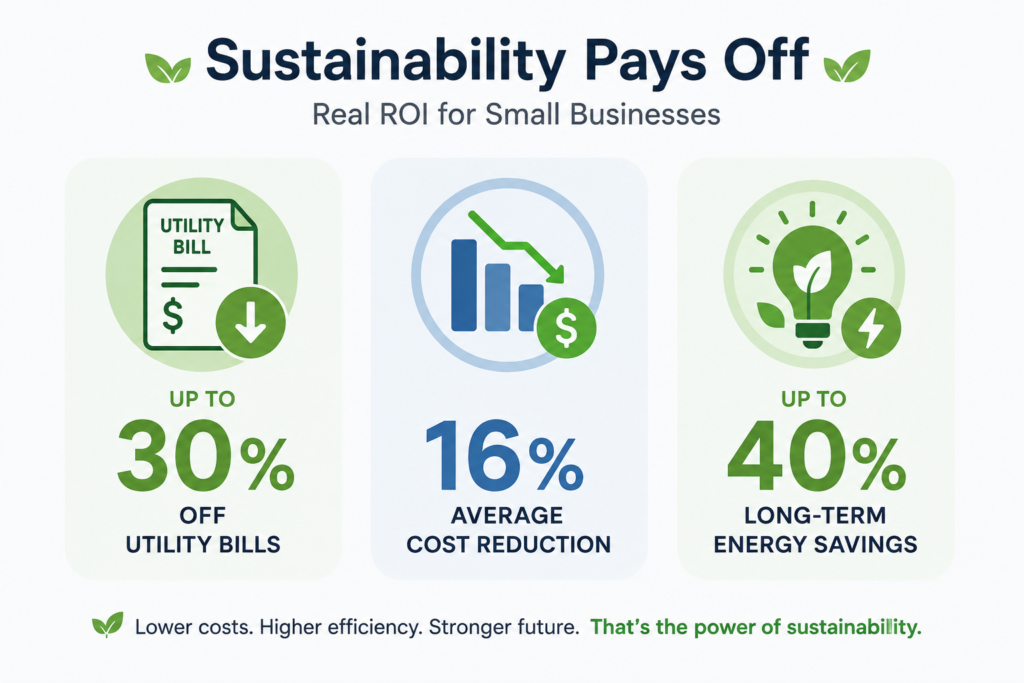
- Energy efficiency: ENERGY STAR data shows small businesses can cut utility costs by up to 30% through basic efficiency upgrades — better lighting, smarter HVAC scheduling, sealing air leaks. Energy is typically a small business’s third-biggest expense after labor and rent, so a 30% cut is not a small number.
- Operational efficiency overall: McKinsey research found businesses that adopt sustainable practices cut operating costs by an average of 16%, largely through less waste and more efficient use of materials.
- Renewable energy, longer term: The International Energy Agency estimates renewable energy investments can save businesses up to 40% on energy costs over time — though this one has a longer payback window and makes more sense once you’ve already captured the cheaper efficiency wins.
The pattern in the data is consistent: the sustainability practices with the fastest, clearest ROI are the boring operational ones — not the ones that make headlines.
What Customers Actually Do (Not Just Say)
Owners often assume “eco-friendly” is a nice-to-have that customers say they want but don’t act on. The data pushes back on that.
- 66% of U.S. customers say sustainability is a priority when deciding where to spend money, and shoppers report being willing to spend meaningfully more per month to support local, sustainable businesses.
- Across broader consumer research, shoppers say they’ll pay roughly 12% more on average for sustainable products — and Gen Z and Millennial customers show the highest willingness of any generation to factor sustainability into a purchase.
- A large share of consumers also say they’ll actively stop buying from a business they see as environmentally careless.
For a small, local business competing against bigger players with lower prices, this is one of the few areas where you can genuinely win on values instead of price.

Where the Fastest Payback Actually Is
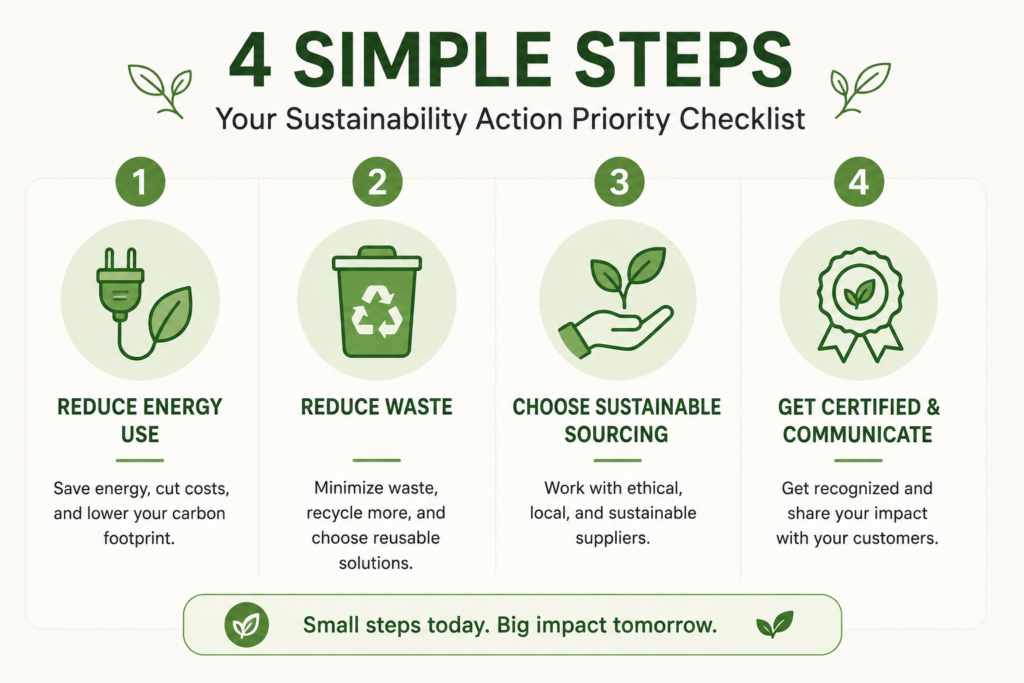
If you’re deciding where to start, the data points to a clear order of priority:
- Certifications and reporting last, if ever. For most small businesses, formal sustainability certifications aren’t worth the cost unless a specific client or contract requires one.
- Energy first. Lighting, HVAC settings, and equipment upgrades usually pay for themselves within 1–3 years and often come with local utility rebates that shorten that window further.
- Waste and materials second. Reducing packaging, buying only what you need, and reusing materials cuts costs immediately with almost no upfront spend.
- Sourcing third. Switching to local or lower-impact suppliers where the price difference is small — this is more about customer perception and supply chain resilience than direct savings.
Where It’s Not Worth It (Yet)
To be fair to the skeptics: not every sustainability investment makes sense for a small business right now.
- Full carbon accounting and ESG disclosure frameworks are built for companies with revenue thresholds most small businesses will never hit.
- Expensive certifications with little brand recognition in your local market often cost more than the customer goodwill they generate.
- Chasing sustainability marketing without real changes behind it — commonly called greenwashing — tends to backfire once customers notice the gap between claims and reality.
The data is clear that sustainability pays off when it’s tied to real operational savings or real customer trust. It doesn’t pay off when it’s treated as a checkbox.
How to Decide If It’s Worth It for Your Business
A simple way to test this without overthinking it: look at your last 12 months of utility bills and your biggest recurring waste (packaging, unsold inventory, unused subscriptions). If either number is significant, sustainability improvements there will likely pay for themselves within a year or two. If neither is significant, the value shifts more toward customer perception than direct savings — still worth doing, just budgeted differently.
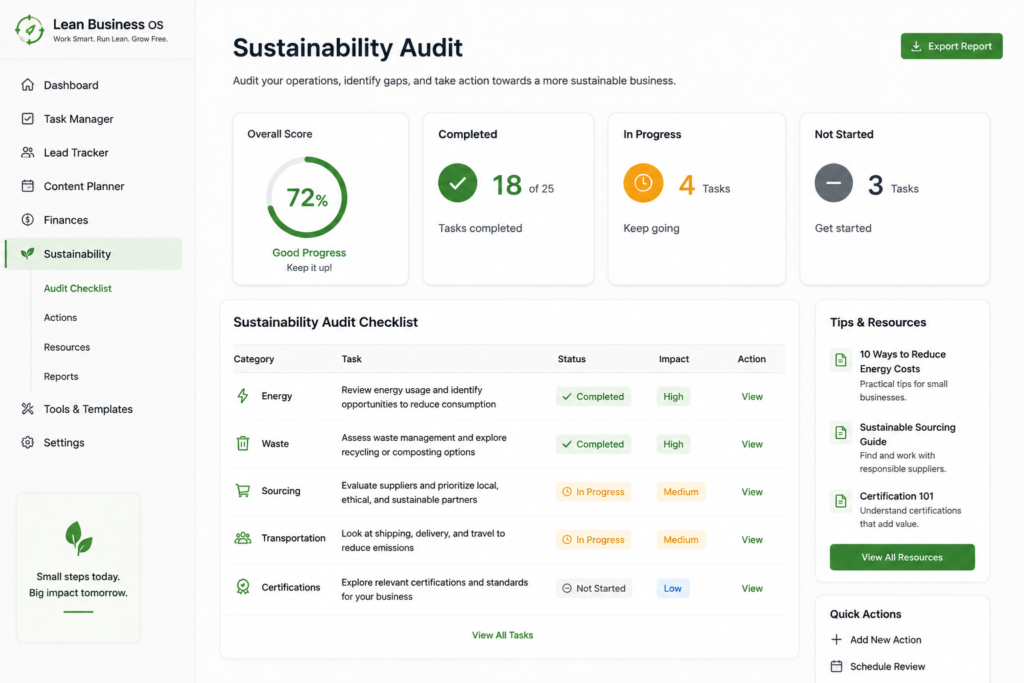
This is also where tightening up the rest of your operations helps. A lot of the “waste” in a small business isn’t environmental — it’s operational: redundant software subscriptions, manual tasks eating up hours, tools that overlap in what they do. If you’re looking to free up budget before investing in sustainability upgrades, it’s worth auditing your tech stack first. Lean Business OS is a useful starting point for this — it’s a checklist-based system built specifically to help small businesses consolidate overlapping software and automate manual work, which is its own form of lean, lower-waste operating. The money saved from cutting SaaS bloat is often exactly the budget owners need to fund the energy and sourcing changes covered above.
The Bottom Line
Based on the data, sustainability for small business is worth it — but selectively. Energy efficiency and waste reduction pay back fast and consistently. Customer-facing sustainability builds real loyalty, especially with younger shoppers. Full corporate-style ESG programs, on the other hand, usually aren’t worth it for a business your size. Start with the operational wins, let the data guide the next step, and treat sustainability as a cost-saving strategy first — the goodwill is a bonus, not the main event.