
Your Q4 Checklist for Small Business Success
Every small business owner knows the feeling: summer winds down, and suddenly Q4 is staring you in the face. A Q4 checklist for small business owners isn’t just a nice-to-have — it’s the difference between coasting into the holidays reactively and closing out the year with momentum you can carry into January.
The fourth quarter brings higher customer demand, tighter deadlines, and more moving parts than almost any other stretch of the year — which is exactly why a solid Q4 checklist for small business owners matters more than a vague to-do list.
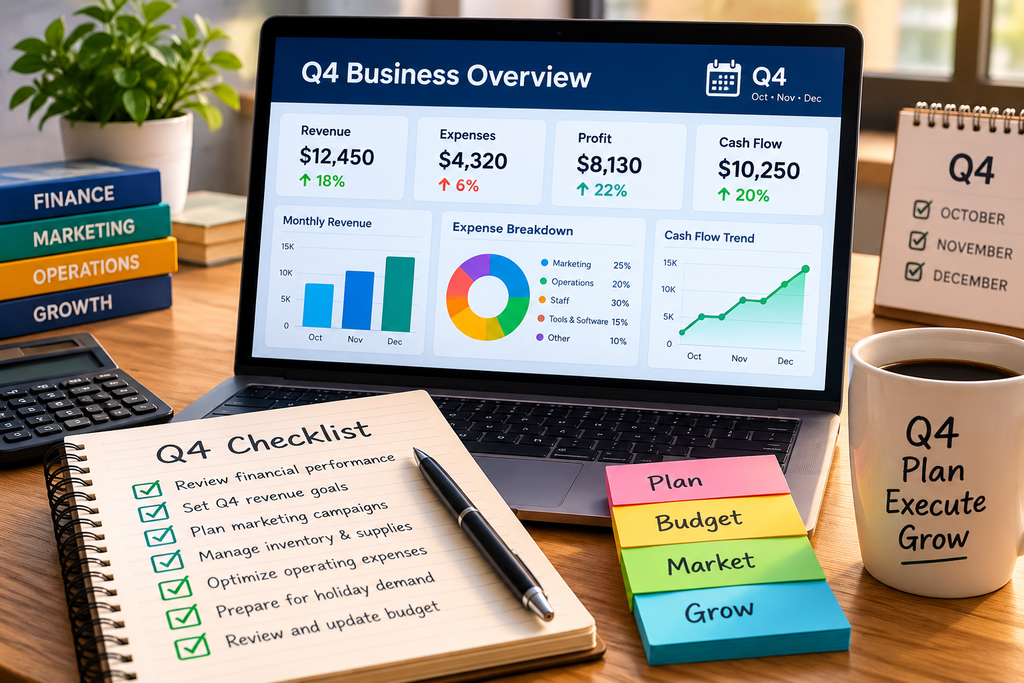
Below is a practical, no-fluff checklist to help you get your business Q4-ready — covering finances, marketing, operations, and systems.
Table of Contents
1. Review Your Q3 Numbers Before You Plan Q4
You can’t plan where you’re going if you don’t know where you stand. Start by pulling your year-to-date numbers:
- Revenue vs. your original 2026 goals
- Profit margins by product or service line
- Top-performing marketing channels
- Any recurring cash flow gaps
This quick audit tells you what to double down on and what to cut before Q4 spending ramps up.
2. Get Your Finances in Order
Q4 often brings uneven cash flow — bigger holiday sales, but also bigger expenses (inventory, ads, seasonal staff). A few things worth doing now:
- Forecast Q4 cash flow month by month, not just for the quarter as a whole
- Set aside a buffer for slower weeks or unexpected costs
- Review outstanding invoices and follow up on anything overdue
- Check in with your accountant or bookkeeper about estimated taxes before year-end
3. Audit Inventory and Supplier Timelines
If you sell physical products, Q4 delays can sink an otherwise great quarter. Shipping carriers and suppliers slow down as holiday volume spikes, so:
- Reorder key products earlier than you think you need to
- Confirm supplier lead times in writing
- Identify your top 20% of SKUs (the ones driving most of your revenue) and protect their stock first
Service-based businesses aren’t exempt either — “inventory” here might mean software licenses, contractor availability, or booking capacity.
4. Revisit Your Marketing Calendar
This is where a strong Q4 checklist for small business marketing often separates the businesses that win the quarter from the ones that just survive it.
- Key dates (Black Friday, Cyber Monday, any industry-specific peaks)
- Email and social content planned at least 2–3 weeks ahead
- Any seasonal offers, bundles, or limited-time promotions
- A plan for re-engaging existing customers, not just chasing new ones

5. Optimize Your Website and Digital Presence
Q4 traffic tends to spike, and a slow or clunky site costs you sales. Before the rush hits:
- Test your site speed and mobile experience
- Make sure your checkout or contact process has as few steps as possible
- Update your Google Business Profile and any local listings
- Double-check that your most important pages are indexed and ranking well
6. Strengthen Customer Service Capacity
More orders and inquiries mean more pressure on support. Ask yourself:
- Can your current team handle a 20–30% increase in questions or orders?
- Do you have FAQs, auto-responders, or chatbots in place to handle repetitive questions?
- Is your return/refund policy clear and easy to find?

7. Review Staffing and Team Bandwidth
Burnout hits hardest in Q4. Take stock of:
- Whether you need seasonal or part-time help
- Who’s covering what during the busiest weeks
- Any training gaps that need to be closed before demand peaks
8. Tidy Up Your Systems and Automation
This is the part most owners skip — and the part that saves the most time. Before Q4 gets hectic, it’s worth tightening up the backend of your business: your task lists, your recurring admin work, and the small, repeatable things that eat hours every week.
If you haven’t already systemized this, it’s worth grabbing something simple you can run through once and reuse all quarter. I put together the SmallBiz AI Checklist for exactly this — a quick way to spot where AI tools can take repetitive tasks off your plate so you’re not doing everything manually heading into your busiest stretch.

9. Build (or Top Up) Your Cash Flow Buffer
Rising costs and uneven Q4 income make a buffer non-negotiable. Even a small reserve — covering 2–4 weeks of core expenses — gives you breathing room if sales dip or a big expense lands unexpectedly.
10. Set the Stage for a Strong Year-End Close
Finally, don’t let Q4 planning stop at “survive the holidays.” Use this quarter to:
- Set preliminary goals for next year based on what’s working now
- Document what processes worked (and didn’t) so you’re not relearning lessons in January
- Schedule time in December to actually review the quarter, not just react to it

Q4 rewards businesses that prepare early rather than react late. Working through this checklist now — finances, inventory, marketing, support, and systems — puts you in a much stronger position than scrambling in November.
Conclusion
Q4 doesn’t have to feel like something that happens to your business — it can be something you walk into prepared for. Working through this Q4 checklist for small business owners now, rather than in the middle of the holiday rush, gives you room to fix small issues before they become expensive ones: a cash flow gap, a slow website, an understaffed support inbox.
The businesses that come out of Q4 strongest aren’t necessarily the ones with the biggest budgets — they’re the ones that got organized early, automated what they could, and left themselves a buffer for the unexpected. Start with one or two items from this list today, tackle the rest over the next couple of weeks, and you’ll head into the new year with momentum instead of a mess to clean up.
This quick audit is the foundation of any useful Q4 checklist for small business owners — you can’t prioritize the rest of the list without it.