
The John Thornhill Ambassador Program gets talked about a lot in affiliate marketing circles, but most of what you’ll find online is either a glowing sales pitch or a one-star complaint with no real detail in between. So instead of adding another vague opinion piece, this post walks through exactly what the first 30 days inside the program looked like — day by day where it matters, week by week overall — so you can decide if it fits your own goals before you commit any time or money.
Table of Contents
What Is the John Thornhill Ambassador Program?
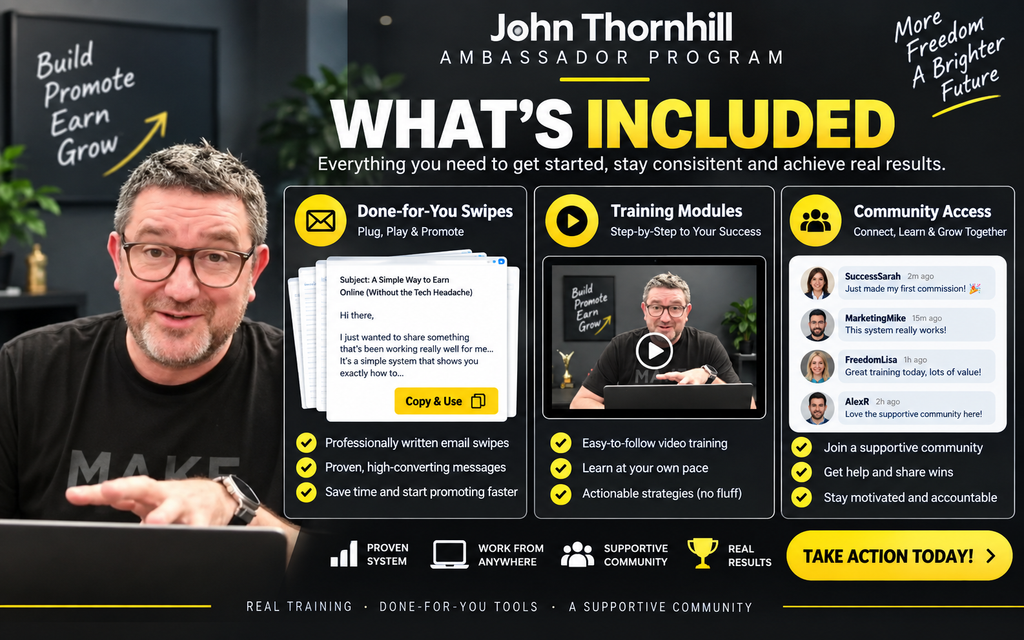
At its core, the John Thornhill Ambassador Program is an affiliate and mentorship offer built around promoting John Thornhill’s suite of “make money online” products, including his flagship Online Success Coaching (OSC) training. Instead of just handing you an affiliate link, the program is structured to walk newer marketers through:
- Setting up the tools needed to promote as an affiliate (autoresponder, landing pages, tracking)
- Access to done-for-you email swipes and promotional material
- A recommended daily/weekly action plan for driving traffic
- Direct access to Thornhill’s team and community for support
The pitch is simple: follow the plan, promote the products you’re given, and earn commissions while you learn the broader skill of affiliate marketing.
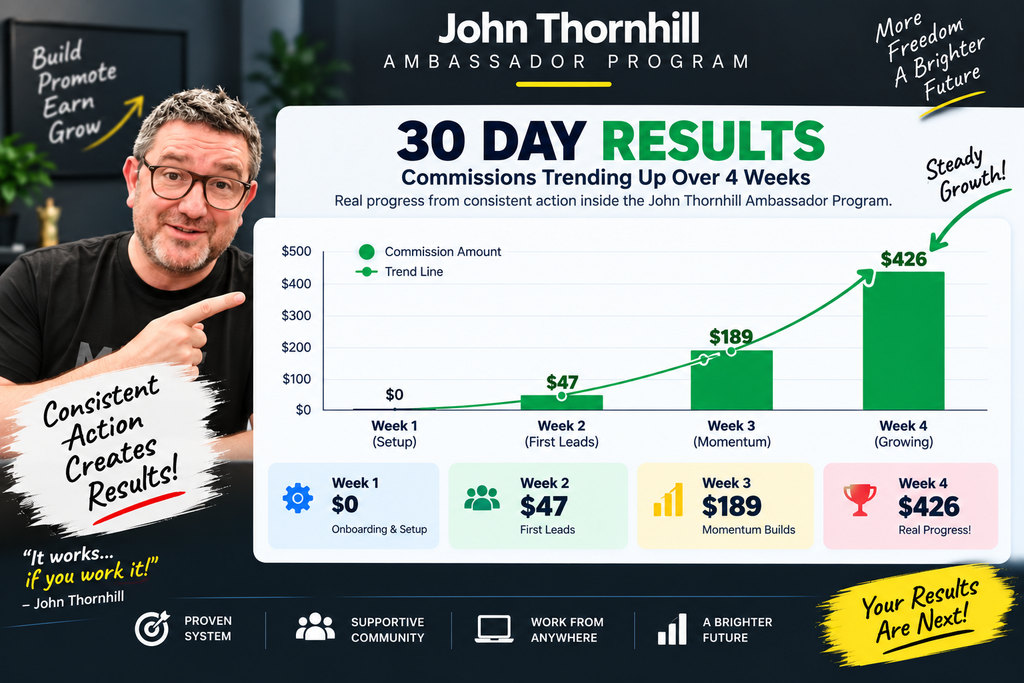
Week 1: Onboarding and Setup
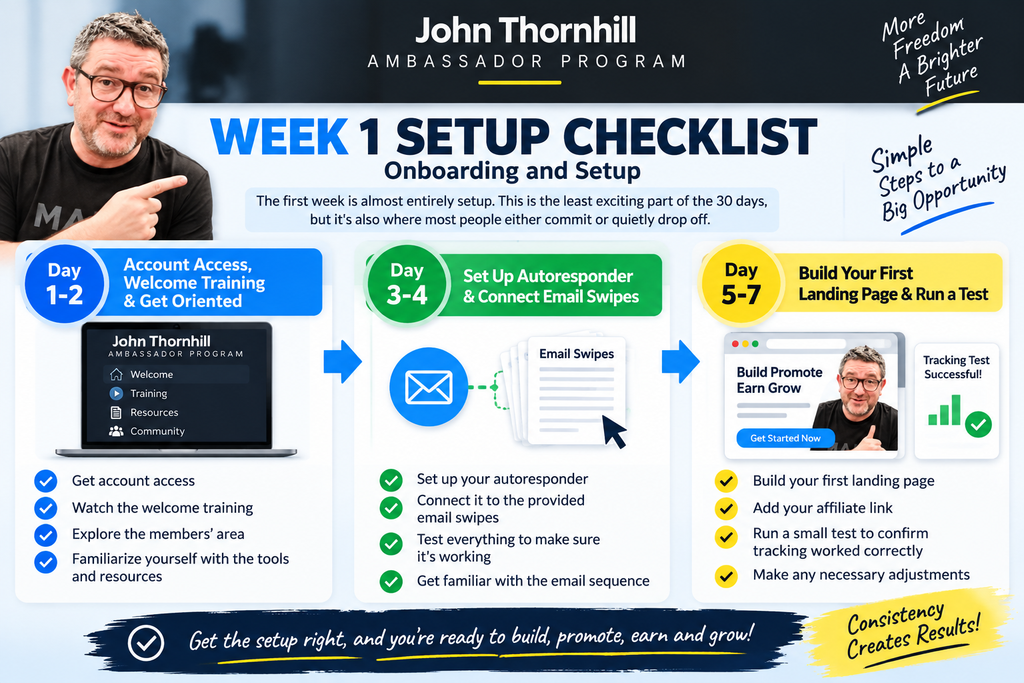
The first week is almost entirely setup. This is the least exciting part of the 30 days, but it’s also where most people either commit or quietly drop off.
Here’s what week one actually involved:
- Day 1-2: Account access, welcome training, and getting oriented inside the members’ area
- Day 3-4: Setting up an autoresponder and connecting it to the provided email swipes
- Day 5-7: Building the first landing page and running a small test to confirm tracking worked correctly
No commissions yet — and that’s expected. Anyone promising results in the first week of any affiliate program, including this one, is setting unrealistic expectations.
Week 2: First Traffic, First Data
Week two is where the actual affiliate marketing work starts. With the setup finished, the focus shifted to sending traffic using the methods recommended inside the program — a mix of free traffic strategies and, for anyone willing to spend, paid options.
Key takeaways from this week:
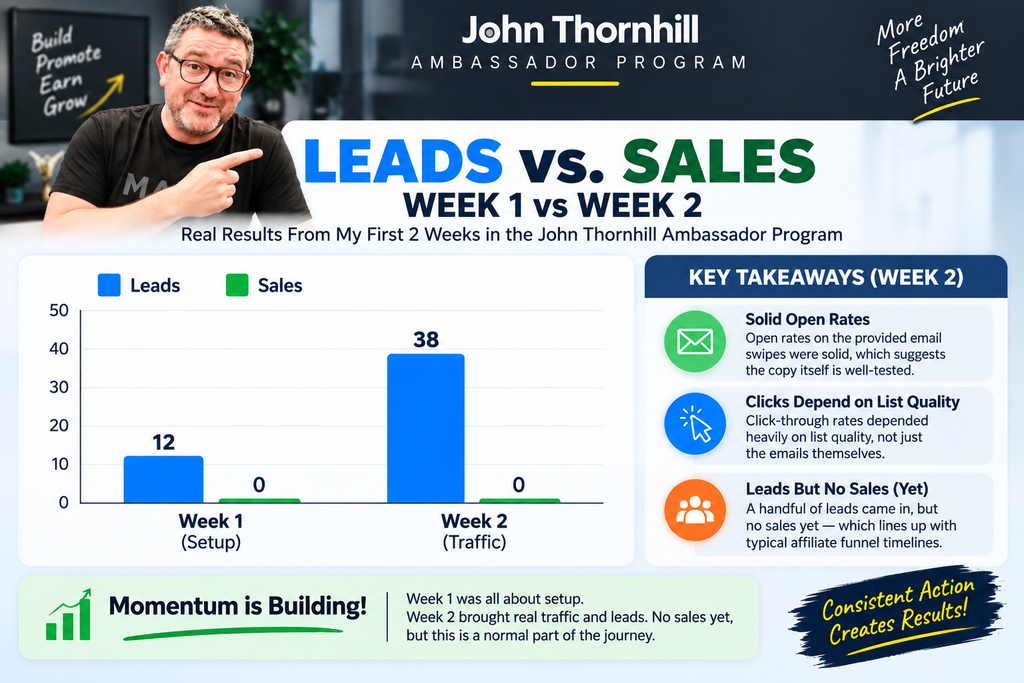
- Open rates on the provided email swipes were solid, which suggests the copy itself is well-tested
- Click-through rates depended heavily on list quality, not just the emails themselves
- A handful of leads came in, but no sales yet — which lines up with typical affiliate funnel timelines
This is usually the point where people compare their numbers to the income claims they saw in the sales pitch and start to get discouraged. Realistically, two weeks is far too early to judge any affiliate program.
Week 3: The First Commission
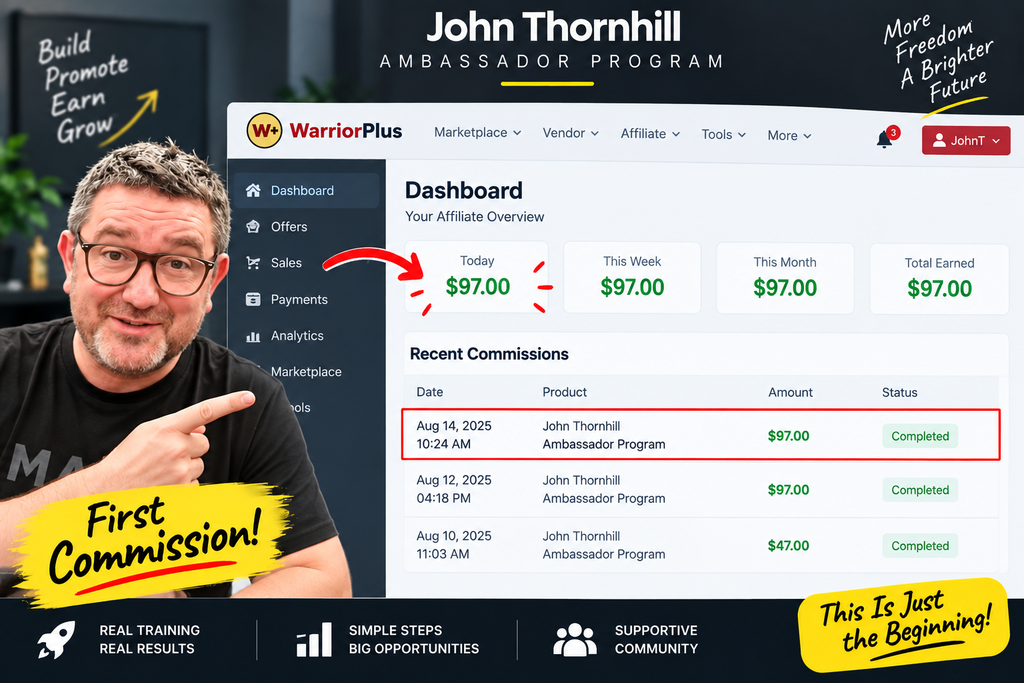
Week three is when things started to turn — the first commission came in. It wasn’t life-changing money, but it validated that the funnel, the swipes, and the traffic source were all working together.
A few things stood out during this stretch:
- Consistency mattered more than any single “hack” or tactic
- The community/support access was genuinely useful when troubleshooting a broken tracking link
- Follow-up emails (not just the first send) accounted for most of the conversions
This is also the week where it became clear that the program rewards people who treat it like a real business — sending traffic daily, tracking numbers, and adjusting — rather than people looking for a passive, set-and-forget system.
Week 4: Building Momentum
By the final week, the process had become far more routine. Instead of learning new tools, the daily work looked like:
- Sending 1-2 promotional emails per day using the swipe file, lightly edited
- Testing a second traffic source alongside the first
- Reviewing which subject lines and offers performed best
Commissions were still modest after 30 days, but the trend line was pointing up, not flat. That trajectory — not the raw dollar figure — is really the most useful data point from the first month.
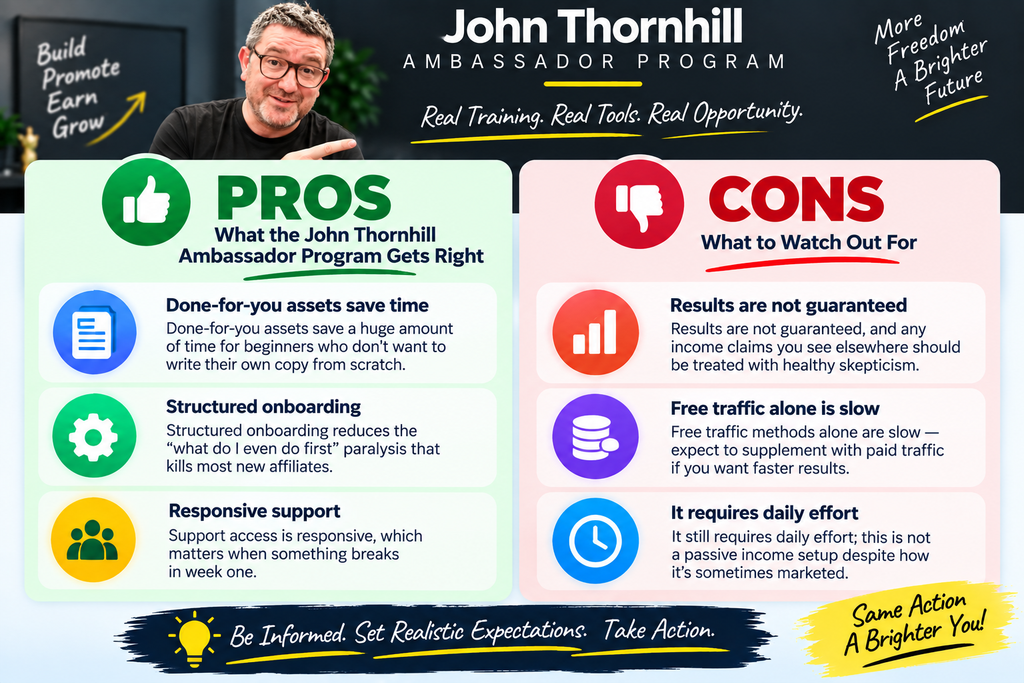
What the John Thornhill Ambassador Program Gets Right
- Done-for-you assets save a huge amount of time for beginners who don’t want to write their own copy from scratch
- Structured onboarding reduces the “what do I even do first” paralysis that kills most new affiliates
- Support access is responsive, which matters when something breaks in week one
What to Watch Out For
- Results are not guaranteed, and any income claims you see elsewhere should be treated with healthy skepticism
- Free traffic methods alone are slow — expect to supplement with paid traffic if you want faster results
- It still requires daily effort; this is not a passive income setup despite how it’s sometimes marketed
Is the John Thornhill Ambassador Program Worth It?
Based on this 30-day run, the program is best suited for beginners who want a structured starting point rather than for experienced affiliates looking for something groundbreaking. The done-for-you materials remove a major barrier to entry, but the results still depend entirely on how consistently you show up and send traffic.
If you’re expecting fast, guaranteed income, this isn’t that. If you’re looking for a guided way to learn the fundamentals of affiliate promotion while working toward your first commissions, the first 30 days here suggest it can genuinely deliver that.

Frequently Asked Questions
How much does the John Thornhill Ambassador Program cost?
Pricing has varied over time and is best confirmed directly on the official signup page before joining.
Do I need an email list to get started?
No — the program includes guidance for building traffic and a list from scratch, though having one already speeds up the early weeks.
How soon can I expect my first commission?
Based on this experience, the first commission came in during week three, though this will vary by effort and traffic source.