Knowing how to choose affiliate software to promote is the difference between a blog readers trust and one they scroll past. Most affiliate offers fail for one simple reason: the product was a poor fit, not because the traffic was bad.
I review and promote software on this blog, so I run every tool through the same checks first. Below is my full process for how to choose affiliate software to promote: the seven criteria I use, the red flags that make me skip a product, and how I put it all together.
If you promote software too, you can copy this process. If you are simply buying software for your business, the same checks will help you avoid expensive mistakes.
Table of Contents
Why I Don’t Start With the Commission
A high payout is nice, but it is one of the last things I check. A product that does not fit your audience earns nothing, no matter how big the commission is.
Readers can tell when a recommendation is only about money. If they stop trusting one review, they stop trusting the rest. So the first rule of how to choose affiliate software to promote is to start with the reader and work back to the payout.
How to Choose Affiliate Software to Promote: My 7 Criteria
Here is how to choose affiliate software to promote in practice. Each point is a simple yes or no question.
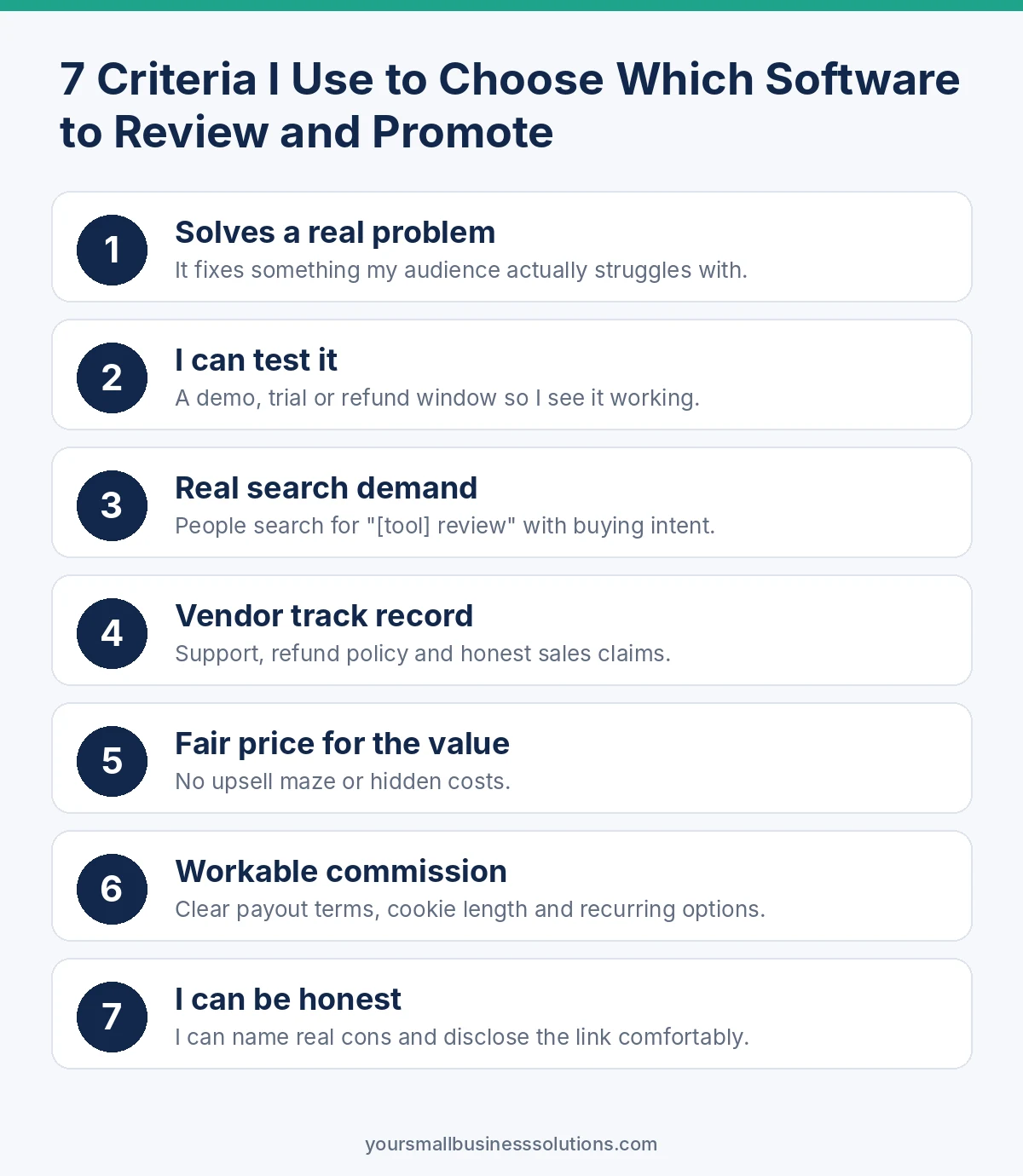
1. Does It Solve a Real Problem for My Audience?
My readers are small business owners and beginner online marketers. A tool has to fix something they actually struggle with, like getting leads, saving time or creating content.
If I cannot explain the problem in one sentence, I do not review the tool.
2. Can I Actually Test It?
I do not review software I cannot see working. Before I write anything, I look for at least one of these:
- A free trial or a live demo
- A money-back guarantee long enough to test the tool properly
- A real walkthrough of the dashboard, not just mockups
A sales page alone is not enough. If the only proof is hype, I move on.
3. Is There Real Search Demand?
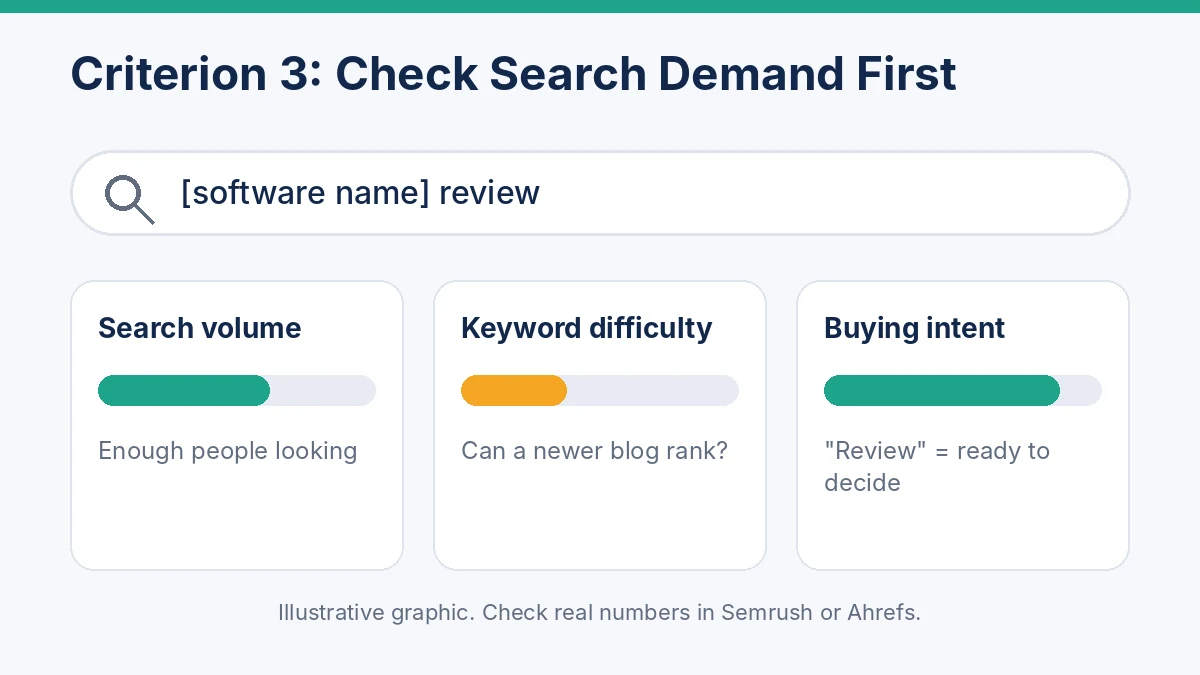
A review only helps if people search for it. I use Semrush or Ahrefs to see how many people look up “[tool name] review” and how hard it would be to rank. I check three things:
- Search volume: are enough people looking?
- Keyword difficulty: can a newer blog realistically rank?
- Buying intent: does the search include words like review, worth it or bonus?
People who search for a review are usually close to buying. That is why I prefer a low-volume review keyword over a broad topic that is hard to rank for.
4. Does the Vendor Have a Good Track Record?
I look at the company behind the product, not just the product. Is there a named team? Is support easy to reach? Do the sales page claims match what the software really does?
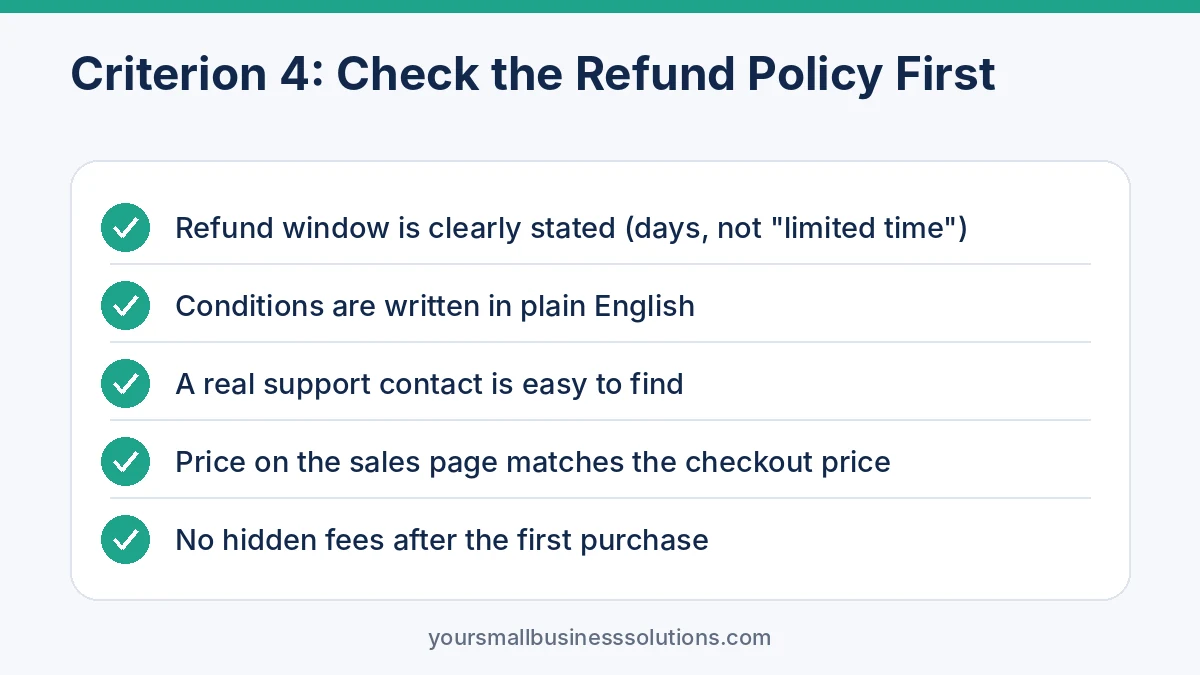
The refund policy is the first thing I read. A clear refund window tells me the vendor expects the product to hold up. A good refund policy:
- States the number of days clearly
- Explains the conditions in plain English
- Gives a real support contact
5. Is the Price Fair for What It Does?
I add up the full cost, not just the front-end price. Many launches include upsells you need to get the results shown on the sales page. I check:
- The front-end price versus what is needed to get real results
- Whether it is a one-time payment or a monthly subscription
- Extra costs such as credits, add-ons or other tools
If the real cost is far above the advertised price, I say so in the review or I skip the product. I also ask whether a premium plan makes sense for a beginner. I cover that in my post on whether premium AI tools are worth it when you are just starting out.
6. Are the Commission and Payout Terms Workable?
Now I look at the money. A fair affiliate offer has clear terms. I check:
- The commission rate and how long the cookie lasts
- When I get paid and which payout methods are offered
- Whether the commission is recurring or one-time
I like recurring commissions because one sale keeps paying. I compare both models in recurring commission affiliate programs vs. one-time commissions.
7. Can I Be Honest About It?
This is the final test. Could I name real downsides and still feel fine recommending the tool? If not, I skip it.
I also disclose affiliate links. The FTC expects clear disclosure when you earn money from a recommendation, so every review should say so in plain words.

Red Flags That Make Me Skip a Product
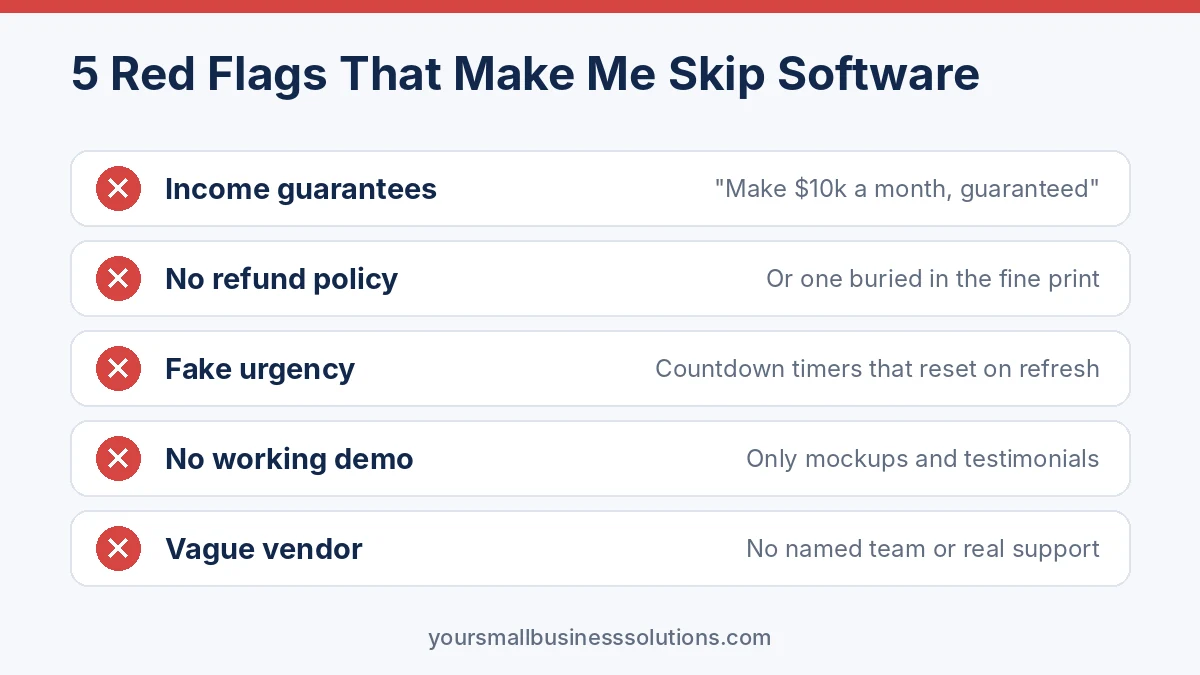
Part of knowing how to choose affiliate software to promote is knowing what to avoid. These are the warning signs that make me walk away:
- Income guarantees such as “make $10k a month, guaranteed”
- No refund policy, or one buried in the fine print
- Fake urgency, like countdown timers that reset when you refresh
- No working demo, only mockups and testimonials
- A vague vendor with no named team or real support
Launch pages use these tactics all the time. I explain how to spot them in my guide on telling hype from a genuinely good software launch.
How I Put the Criteria Together
Knowing how to choose affiliate software to promote does not mean chasing a perfect score, but some rules are not up for negotiation:
- Criteria 1, 2 and 7 must pass: a real problem, something I can test, and something I can be honest about
- A product needs at least 5 of the 7 criteria to pass
- Any red flag from the list above means I skip it
When a product passes, I write a full review. You can see the process in action in my Hooked AI review and my BuzzFarmsAI review.
Choosing Software for Your Own Business? Use the Same Checks
The logic behind how to choose affiliate software to promote works just as well when you are the buyer. Before you pay for any tool, ask whether it solves your problem, whether you can test it first and what it really costs.
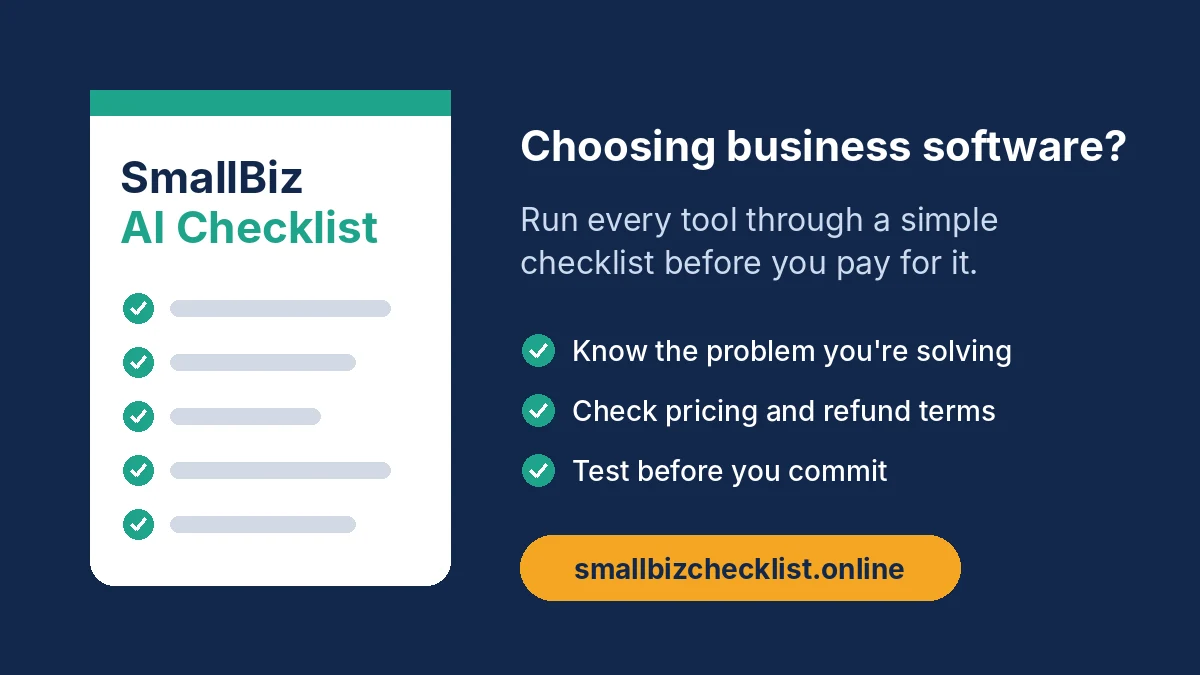
To make this easier, I put together the SmallBiz AI Checklist. It walks you through the questions to ask before you commit to a tool, so you can avoid paying for software you will not use.
If you are also deciding between one platform and several separate tools, read all-in-one vs. best-of-breed: how to choose the right tools.
Frequently Asked Questions
Do you only promote software you have tested?
I only promote software I can test or see working properly first. If I cannot verify it through a trial, a demo or a refund window, I do not promote it.
Does the commission affect your reviews?
The commission decides whether I can earn from a review, but it does not decide the verdict. A product that fails these checks gets skipped, even if it pays well.
How do I find software worth reviewing?
When you are working out how to choose affiliate software to promote, start with your audience’s problems, then look at what they search for. Use a keyword tool to find “review” searches, and browse affiliate marketplaces like ClickBank and JVZoo for products in your niche.
Do I need to disclose affiliate links?
Yes. In the US, the FTC expects a clear disclosure whenever you earn a commission. Put it near the top of the post, in plain words.
Final Thoughts
Learning how to choose affiliate software to promote comes down to one idea: put the reader first and the commission second. Run each tool through these seven checks, skip anything with red flags and be honest about the downsides.
Want a simple way to apply this to your own tool decisions? Grab the SmallBiz AI Checklist and use it before your next purchase.