
Why Solo Marketers Are Switching to AI Agent Tools
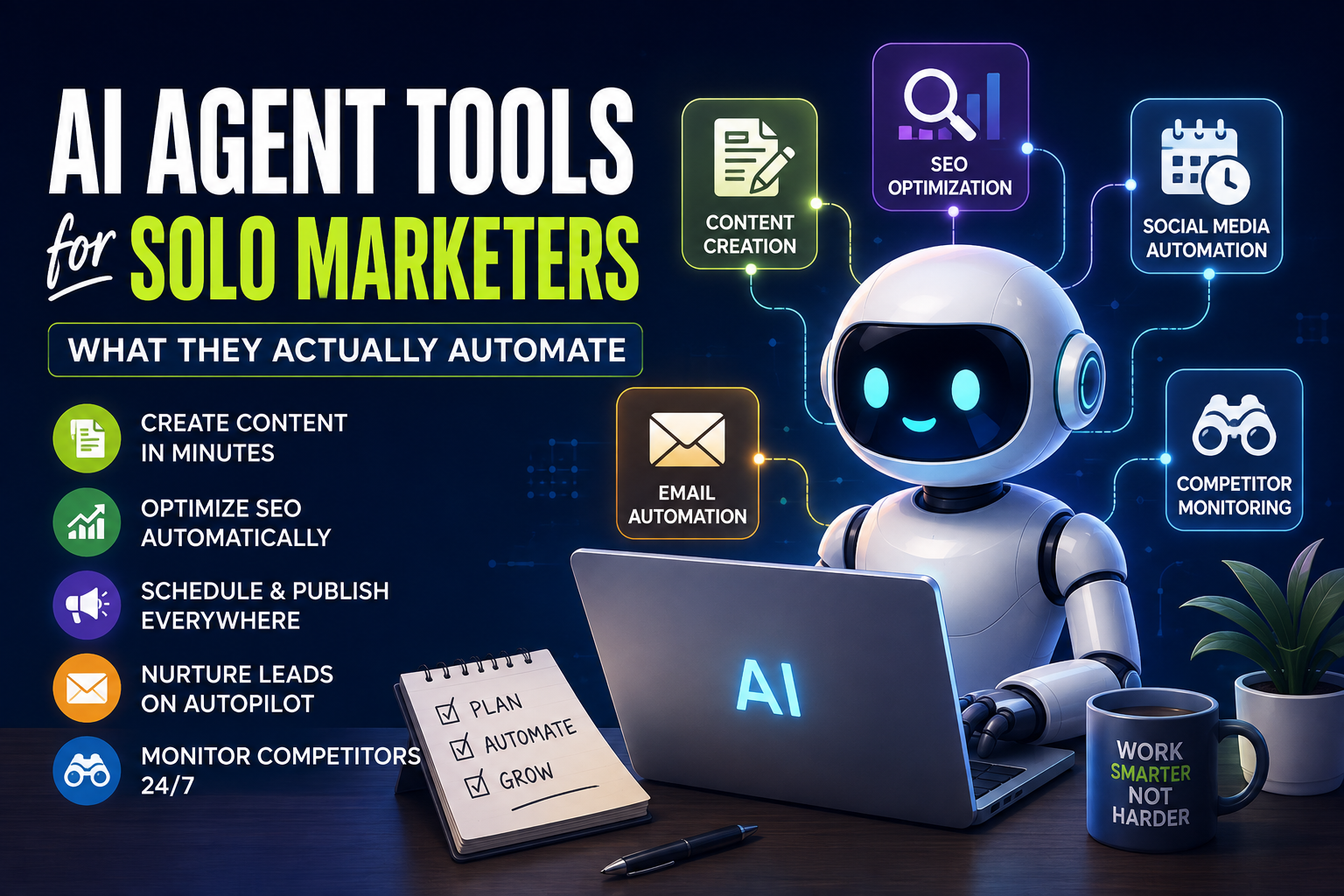
If you’re running marketing solo, you’ve probably noticed the term “AI agent” everywhere — and probably wondered if it’s just a rebrand of the chatbot you already pay for. AI agent tools for solo marketers are different from a plain AI writing assistant: instead of waiting for you to ask a question and copy-paste the answer, an agent can carry out a multi-step task on its own — research a topic, draft the content, schedule it, and check the results — with far less babysitting. This guide breaks down exactly what these tools automate, what they still can’t do, and how to build a lean stack without drowning in subscriptions.
Table of Contents
What Makes Something an “AI Agent” (Not Just a Chatbot)
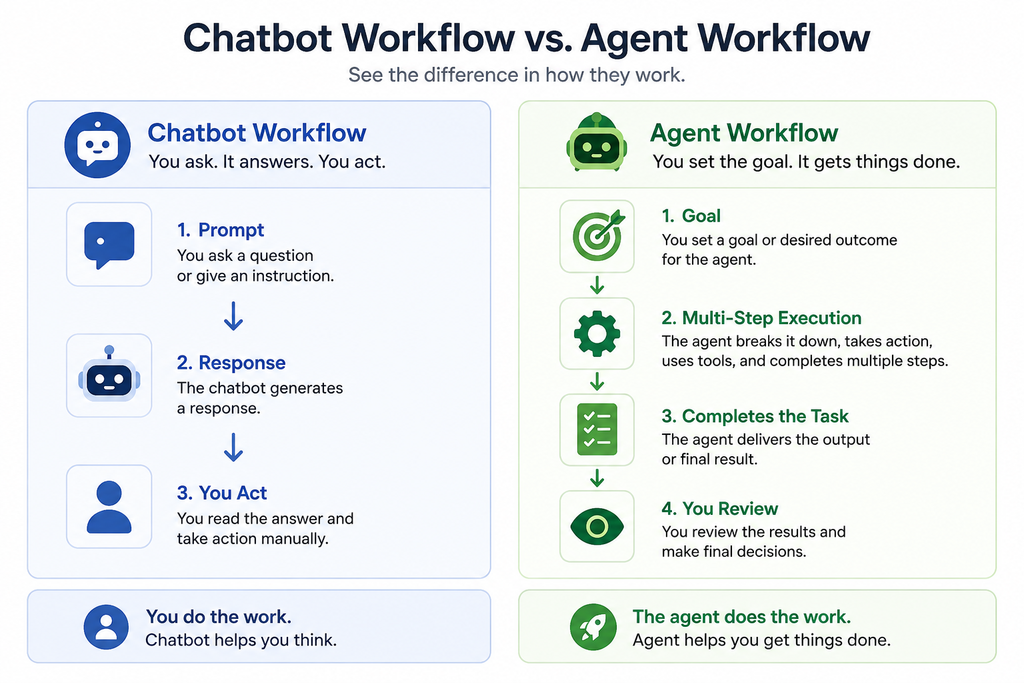
A chatbot answers one prompt at a time. You ask, it responds, you decide what to do next. An agent is built to complete a goal across several steps without you approving every single move.
For example, instead of asking a chatbot “write me a social caption,” an agent can be told “publish three posts this week promoting our new product” — and it will research angles, draft the copy, pick images, and schedule the posts, checking in only when something needs your judgment.
That distinction matters because it changes what solo marketers can realistically hand off. A chatbot saves you typing time. An agent saves you decision time — which is the scarcer resource when you’re a one-person marketing department.
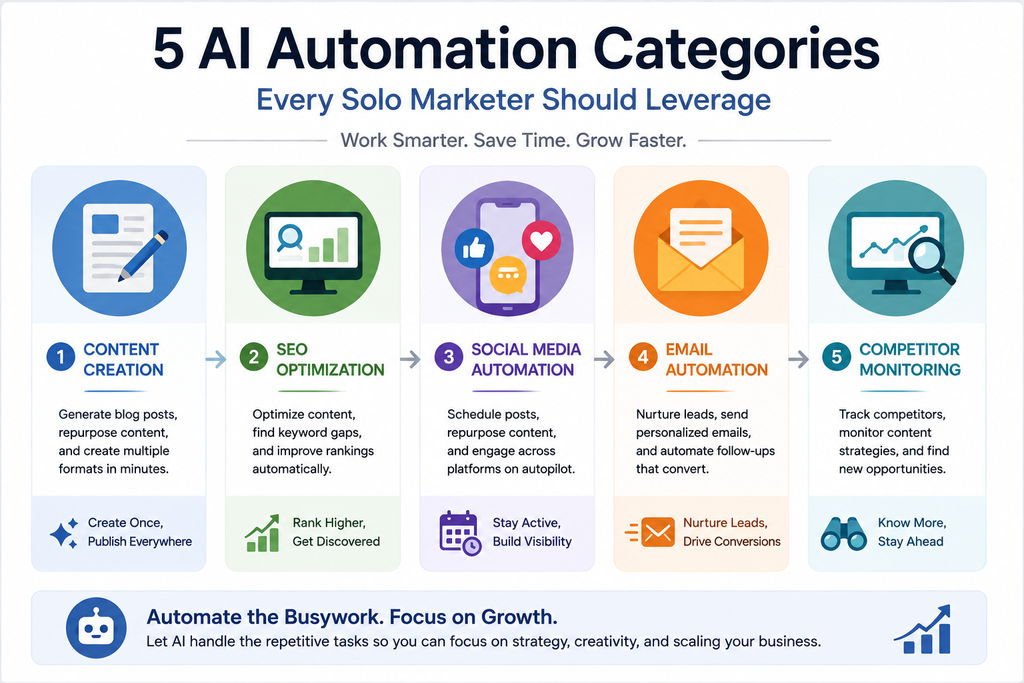
1. Content Drafting and Repurposing
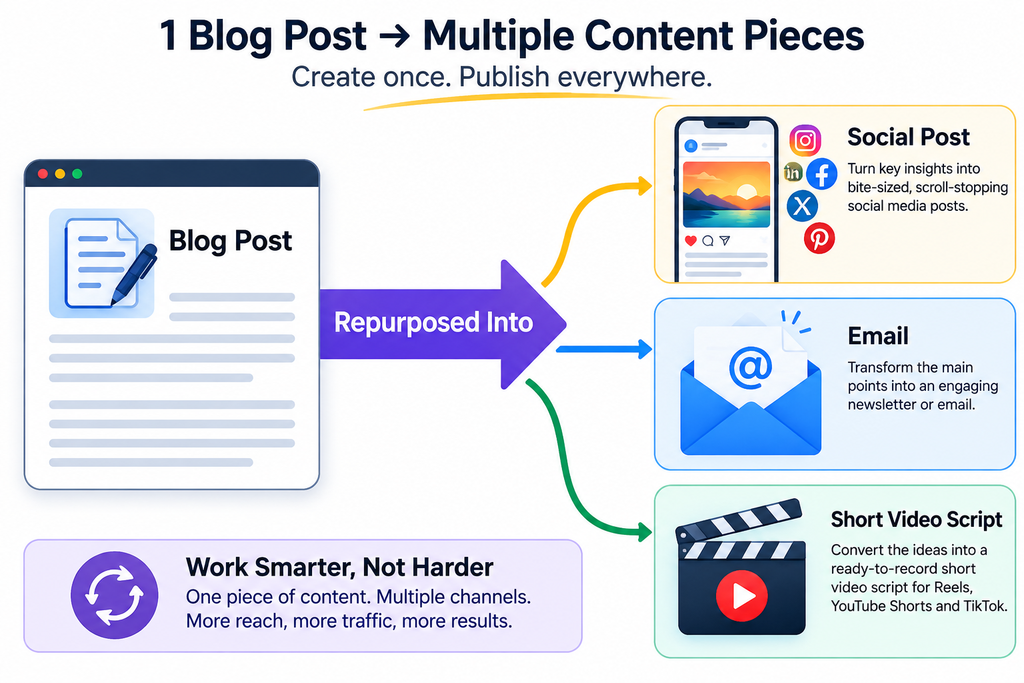
This is the most mature use case, and the one most solo marketers already lean on. Content agents can:
- Turn one blog post into five social captions, an email, and a short video script
- Convert a YouTube video or podcast transcript into a written article
- Generate first-draft outlines based on what’s already ranking for a topic
- Match a saved brand voice so the output doesn’t read like generic AI copy
What they don’t do well: original insight, a genuine point of view, or the personal stories that make content trustworthy. Treat the draft as a starting point, not a finished asset — the editing pass is still yours.
2. SEO Research and On-Page Optimization
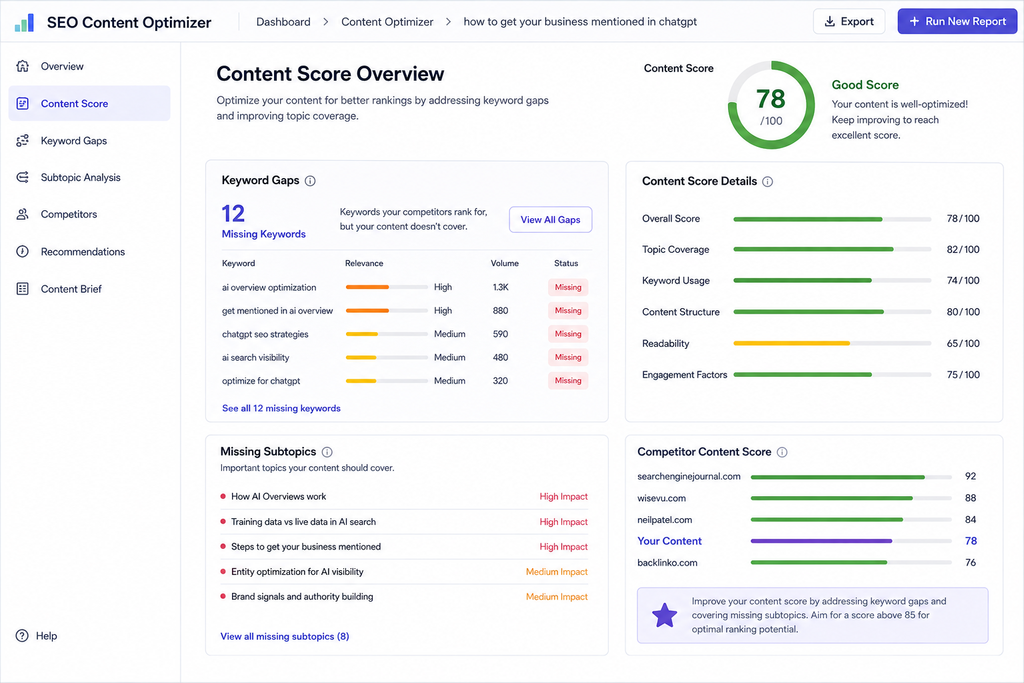
SEO agents pull data from sources like Semrush or Ahrefs and turn it into usable direction instead of a spreadsheet you have to interpret yourself. Typical tasks include:
- Keyword clustering and content-gap analysis against competitor pages
- Suggesting missing subtopics so an article covers a topic as thoroughly as what’s already ranking
- Structural on-page checks — headings, meta description, internal linking
- Flagging technical issues like broken links or missing alt text
Some of the more advanced tools go a step further and make the on-page edits directly, rather than just handing you a report. Either way, the keyword and competitor research still needs a human sanity check — automated suggestions can drift toward keyword stuffing if you let them run unsupervised.
3. Social Media Scheduling and Variation Testing
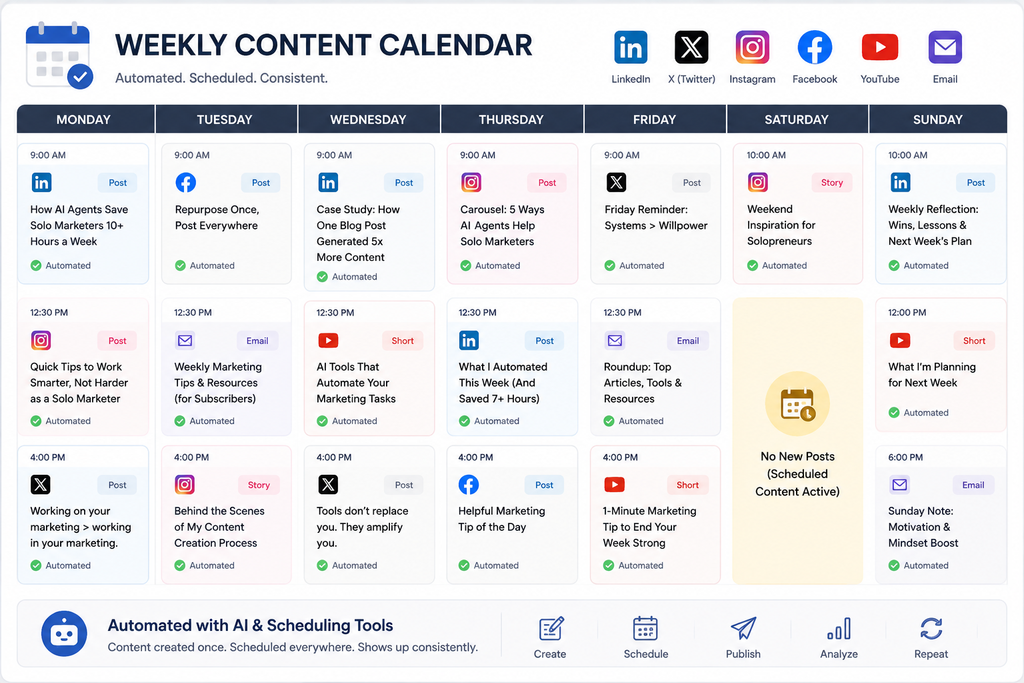
For solo marketers, the manual grind isn’t writing one caption — it’s writing ten variations, picking images, and posting at the right time across three or four platforms. Agents built for this handle:
- Generating multiple caption variations for A/B testing
- Reformatting one piece of content for each platform’s format and character limits
- Scheduling posts at times historically shown to perform best
- Basic performance monitoring, flagging what’s underperforming
4. Email Automation and Sequencing
Email is one of the areas where agents move from “helpful draft” to genuinely running a process. They can:
- Write and send welcome or nurture sequences triggered by a signup
- Segment a list based on behavior (opens, clicks, purchases)
- Adjust subject lines and send times based on past performance
- Flag inactive subscribers for a re-engagement sequence
This is one of the highest-leverage automations for a solo marketer because email doesn’t require constant manual attention once the sequence is built and reviewed.
5. Competitor and Market Monitoring
Instead of manually checking competitor sites, agents can run scheduled scans that:
- Detect pricing changes, new landing pages, or messaging shifts
- Summarize what changed and why it might matter
- Track keyword ranking movement over time
- Pull together a short report instead of raw data you’d have to interpret
This kind of monitoring used to require either a paid tool subscription per competitor or hours of manual checking — it’s now one of the more genuinely time-saving automations available to a one-person team.
What AI Agent Tools Still Can’t Automate
It’s worth being direct about the limits, because overselling this is how solo marketers end up with a stack of subscriptions and no better results:
- Strategy and prioritization. Agents execute a plan; they don’t reliably decide which plan is worth running for your specific business.
- Brand judgment. Knowing when a draft “sounds like you” versus generic AI output still takes a human pass.
- Original data and experience. Case studies, client stories, and firsthand results can’t be generated — they have to come from your actual work.
- Full autonomy without oversight. Even the more advanced execution agents perform best with checkpoints, not a fully hands-off setup.

Building a Lean AI Agent Stack Without Overspending
The easiest trap for a solo marketer is tool bloat: signing up for a content agent, a separate SEO tool, a social scheduler, and an email platform, then spending more time managing the stack than actually marketing. Before adding another subscription, it helps to work from a single checklist that covers the operational basics of running a small business — content, systems, and follow-through — rather than bolting on tools one at a time.
That’s exactly the gap the Lean Business OS checklist is built to close. It’s a practical, no-fluff framework for small business owners and solo marketers to keep their core operations — marketing included — organized without needing a full team or a dozen disconnected apps. Working through it before you add another AI agent to your stack is a good way to make sure the tool actually fills a real gap, instead of adding to the clutter.
Getting Started: A Realistic First Step
You don’t need to automate everything at once. A reasonable order for a solo marketer:
- Start with one repetitive task that eats the most hours each week — usually content repurposing or social scheduling.
- Pick one tool built specifically for that task rather than an all-in-one platform, at least initially.
- Run it with checkpoints for two to four weeks before trusting it unsupervised.
- Only add a second agent once the first is genuinely saving time, not just producing more output to review.
AI agent tools for solo marketers aren’t a replacement for strategy or judgment — they’re a way to reclaim the hours currently spent on repetitive execution so you can spend more of your limited time on the decisions that actually move the business forward.

Conclusion
AI agent tools for solo marketers aren’t a replacement for strategy or judgment — they’re a way to reclaim the hours currently spent on repetitive execution so you can spend more of your limited time on the decisions that actually move the business forward. Content drafting, SEO research, social scheduling, email sequencing, and competitor monitoring are all genuinely automatable today, but strategy, brand judgment, and original insight still need you in the loop.
Start small: pick the one task eating the most hours, automate that first, and only expand the stack once it’s actually saving time rather than adding more to review. And before adding another tool, run your operations through a checklist like Lean Business OS — it’s a faster way to spot where automation will actually help than trial-and-error with subscriptions.






Pingback: Claw AI Army Review: Is the Full Bundle Really Worth $347? - Your Small Business Solutions