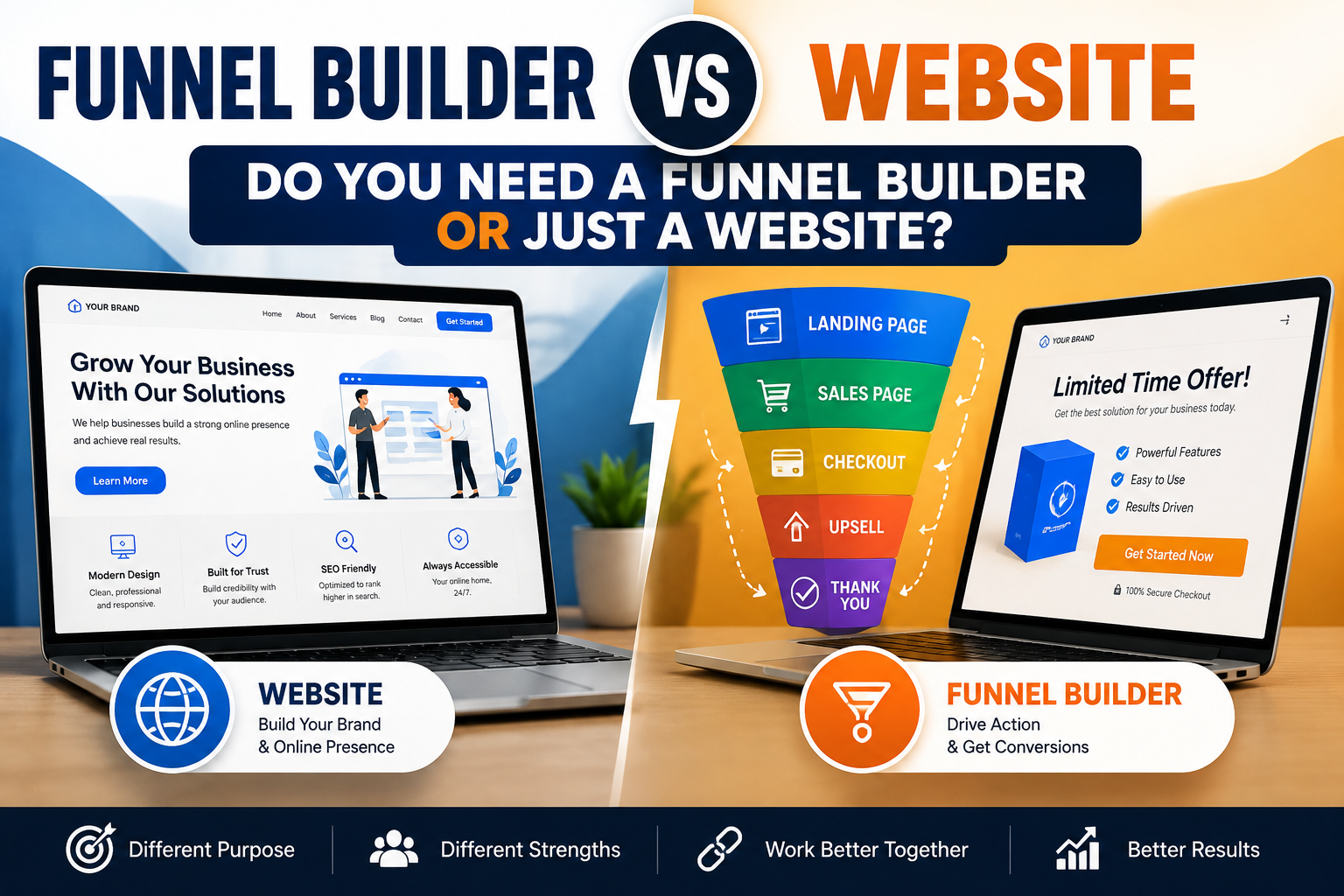
If you’re stuck comparing a funnel builder vs website for your business, you’re not alone. This is one of the most common questions new business owners and marketers ask before they spend a single dollar on tools or design. The truth is, both serve different purposes — and picking the wrong one can slow down your growth instead of speeding it up.
In this post, we’ll break down exactly what each option does, when you need one over the other, and how to decide which is right for your business right now.
Table of Contents
What Is a Website?
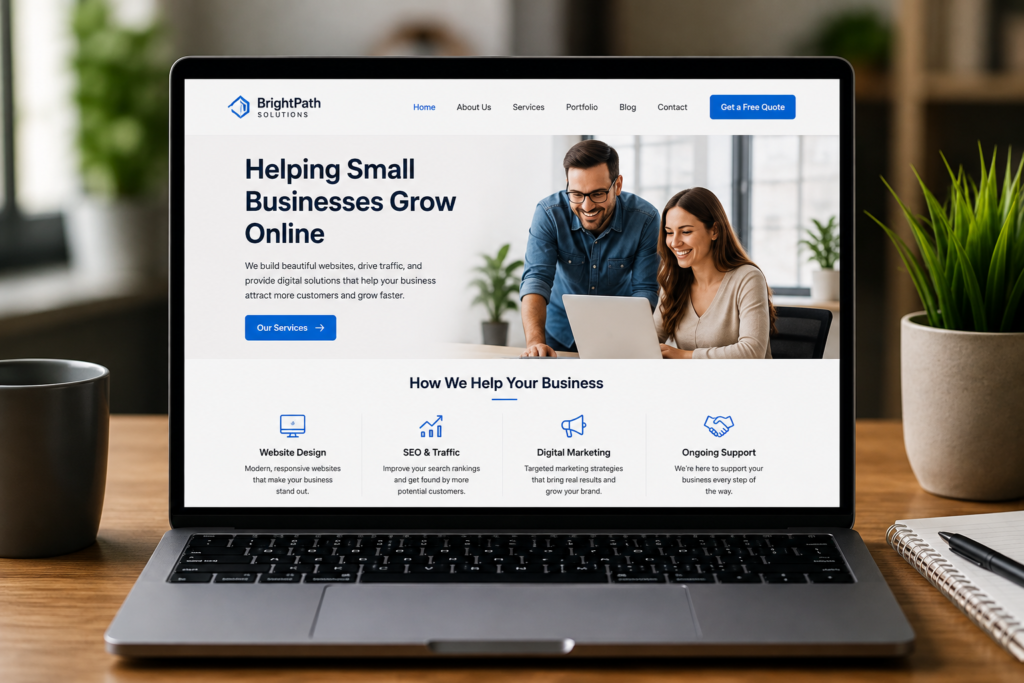
A website is your business’s digital home. It usually includes multiple pages — a homepage, an About page, a services or products page, a blog, and a contact page. Visitors can move around freely, explore whatever interests them, and leave whenever they want.
Websites are built to:
- Establish credibility and brand trust
- Share information about your products, services, or story
- Attract organic (SEO) traffic over time
- Give visitors multiple ways to explore your business
Most websites are built on platforms like WordPress, Wix, or Squarespace, and they’re designed for browsing, not necessarily for converting.
What Is a Funnel Builder?
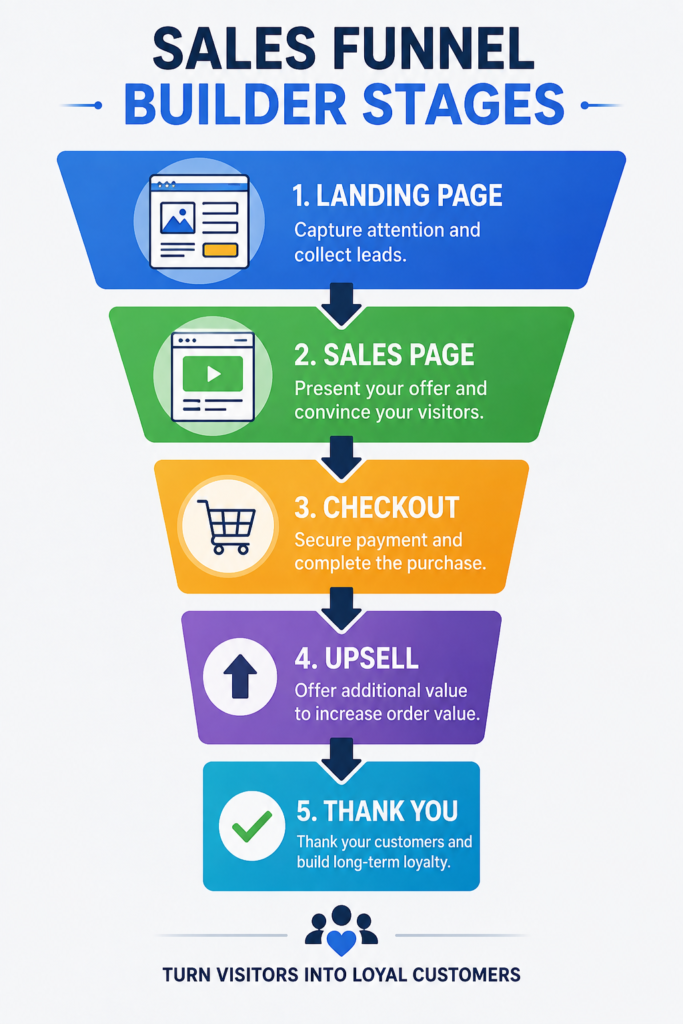
A funnel builder is a tool used to create a step-by-step sequence of pages designed to guide a visitor toward one specific action — buying a product, booking a call, or signing up for a webinar. Unlike a website, a funnel has no distracting navigation menu, no extra links, and no competing calls to action.
Every page in a funnel exists to move the visitor to the next step, such as:
- A landing page that captures an email address
- A sales page that presents an offer
- An order/checkout page
- An upsell or thank-you page
Popular funnel builders include ClickFunnels, Kartra, and GoHighLevel, and they’re built specifically for conversions, not general browsing.
The Core Difference: Browsing vs. Converting
The real difference in the funnel builder vs website debate comes down to intent:
- A website is built for exploration. Visitors can go anywhere, read anything, and leave through any door.
- A funnel is built for action. Visitors are guided down a single path with one clear next step at every stage.
This is why websites tend to have lower conversion rates than dedicated funnels — a website is competing for attention with menus, blog links, and social icons, while a funnel removes every distraction except the offer.
When You Just Need a Website
A website is usually the better fit if:
- You’re a local business (restaurant, salon, law firm, contractor) where people search for you by name or location
- Your goal is brand awareness, credibility, and long-term SEO traffic
- You sell a wide range of products or services that people need to browse and compare
- You want a home base to publish blog content, portfolios, or case studies
- Most of your customers come from referrals, Google search, or word-of-mouth rather than paid ads
When You Need a Funnel Builder
A funnel builder makes more sense if:
- You’re launching a specific offer, product, or promotion and want to maximize conversions
- You’re running paid traffic (Facebook, Google, or Instagram ads) and need a focused landing page
- You want to build an email list quickly with a lead magnet or free giveaway
- You’re selling a course, coaching program, or digital product with upsells
- You need to test an offer fast without waiting on a full website redesign
Funnel builders like ClickFunnels also come with built-in tools for email automation, order bumps, and upsells — things a standard website usually can’t do without extra plugins or developers.
Can You Use a Funnel Builder and a Website Together?
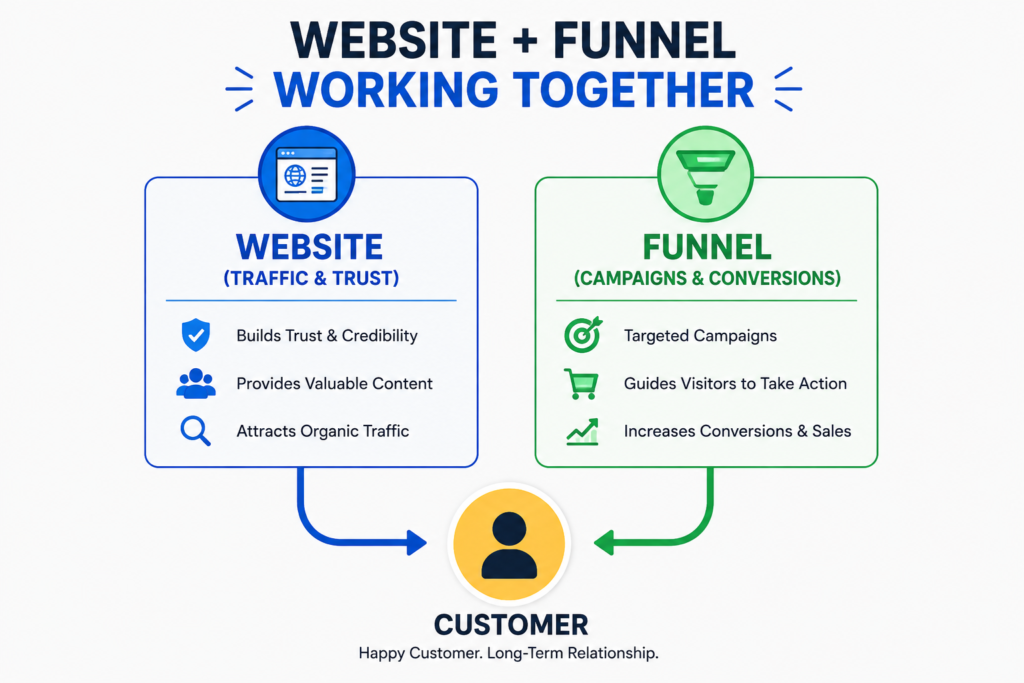
Yes — and for most growing businesses, this is actually the best approach. Your website becomes the long-term foundation for your brand, SEO, and content, while your funnels handle specific campaigns, product launches, and lead generation.
For example, you might keep your main website for blog content and general information but send all your paid traffic and promotions to a dedicated funnel built for one goal: converting that visitor into a lead or a sale.
How to Decide: A Quick Checklist
Ask yourself these questions:
- Do I need people to browse and learn about my business? → Start with a website.
- Do I need people to take one specific action right now? → Build a funnel.
- Am I running paid ads or promoting a single offer? → Use a funnel.
- Am I building long-term brand authority and SEO traffic? → Use a website.
- Do I need both eventually? → Most businesses do, but you don’t have to build both on day one.
If you’re just starting out and want to validate an offer quickly, a funnel builder often gets you results faster and with less upfront work than a full website build.
Ready to Build Your First Funnel? Try ClickFunnels Risk-Free
If your goal is to turn visitors into leads and customers — not just get them to browse — a funnel builder is the fastest way to get there. ClickFunnels is one of the most trusted platforms for building high-converting funnels, even if you’ve never built a page in your life. No coding, no developers, no guesswork — just proven templates you can customize in minutes.
Right now, you can try ClickFunnels for 3 months for just $99 and start building your first funnel today.
👉 Start Your ClickFunnels 3-Month Trial for $99 Now
Stop wondering whether you need a funnel or a website — start testing what actually converts.
Affiliate Disclosure: This article may contain affiliate links. If you purchase through these links, I may earn a commission at no additional cost to you. I only recommend tools and platforms I believe can provide value to my readers.