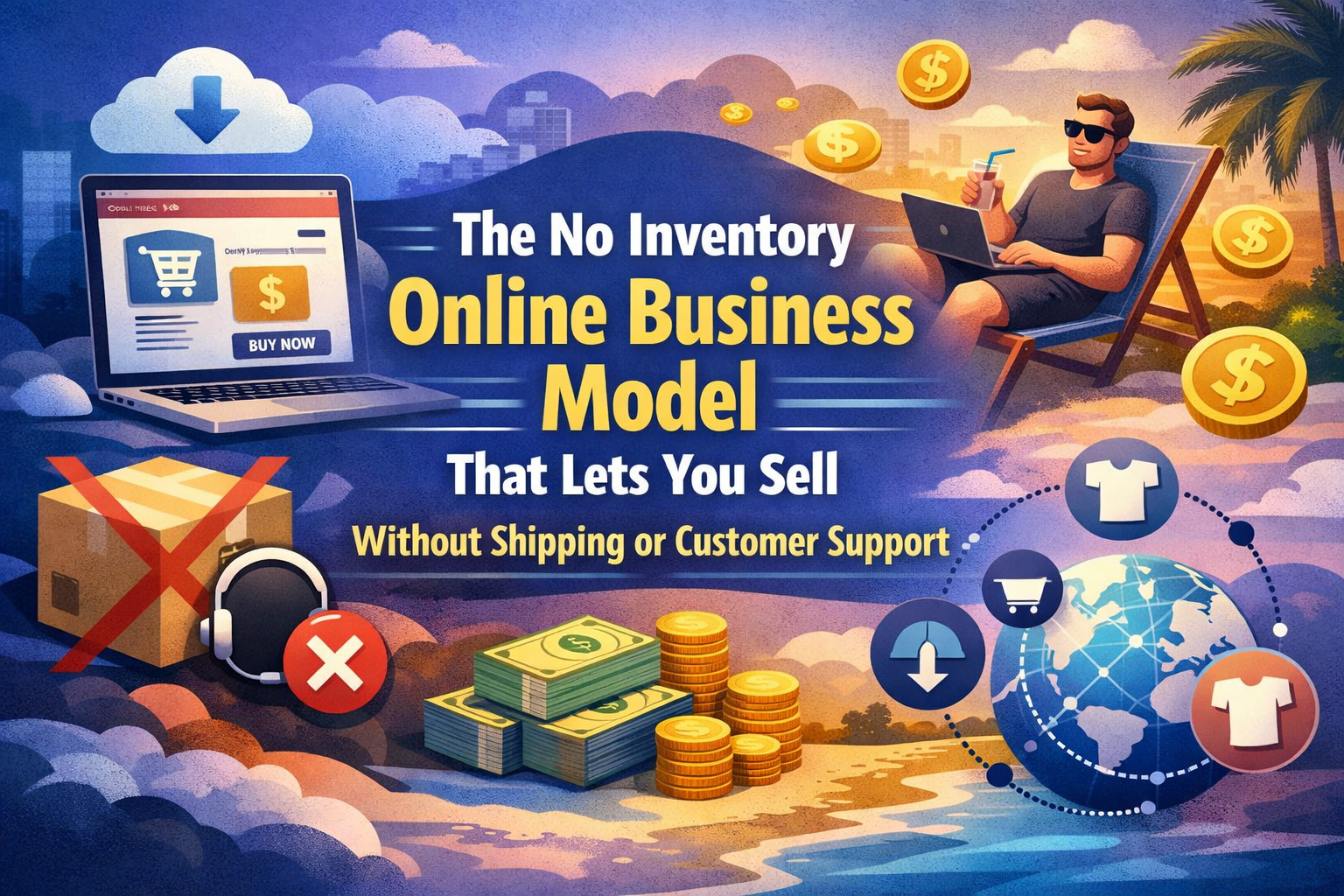
For most people, starting a no inventory online business still feels unfamiliar—because we’ve been conditioned to believe business requires inventory, shipping, and customer support.
That model worked in the past. Today, it’s becoming inefficient.
In 2026, the no inventory online business model is gaining momentum by removing operational complexity and replacing it with leverage. Instead of building products and managing backend systems, individuals are focusing on what actually drives revenue: attention, trust, and strategic promotion.
This shift isn’t just making entrepreneurship more accessible—it’s redefining what it means to run an online business in the digital age.
Table of Contents
The Evolution of Online Business Models
Let’s break down the progression:
Traditional Commerce
- Buy inventory
- Store products
- Handle fulfillment
Ecommerce (Dropshipping Era)
- No inventory upfront
- Still responsible for suppliers, shipping issues, refunds
Modern Digital Partnership Model
- No inventory
- No shipping
- No customer service
Instead, your role is simple:
Connect the right audience to the right offer.
What This Model Actually Looks Like
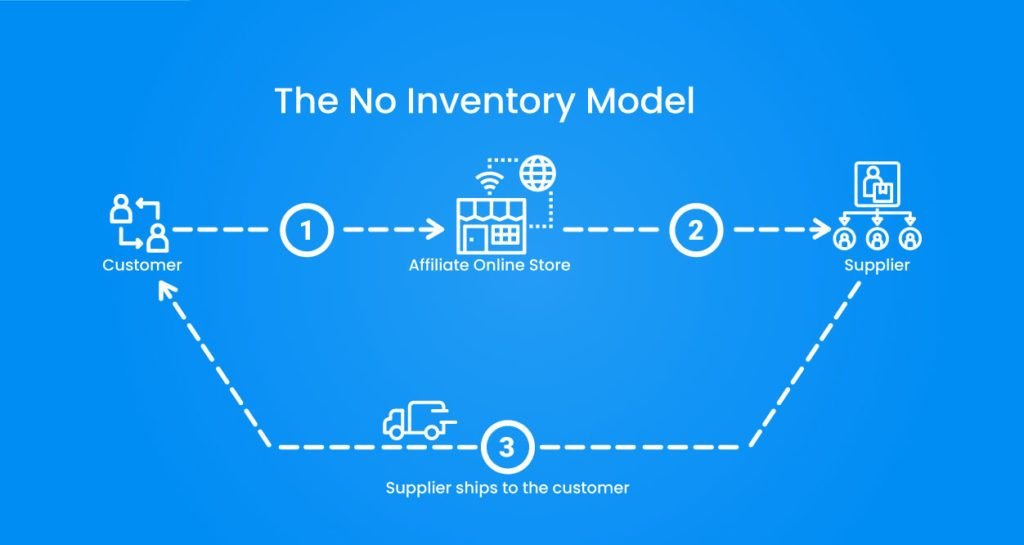
At its core, this business model is built on leveraging existing digital products and systems.
You:
- Promote a proven offer
- Drive targeted traffic
- Let the backend systems handle everything else
The product owner handles:
- Delivery
- Customer support
- Payment processing
- Technical infrastructure
This creates a clean separation between marketing and operations.
Why This Is So Powerful
1. Zero Operational Overhead
You don’t deal with:
- Shipping delays
- Refund requests
- Product defects
This allows you to focus entirely on growth activities.
2. Speed to Market
Traditional businesses take months (or years) to launch.
With this model, you can:
- Start immediately
- Use existing funnels
- Plug into ready-made systems
3. Scalability Without Complexity
Most businesses break when they scale.
This one doesn’t—because the infrastructure is already built.
You can increase traffic and conversions without worrying about backend bottlenecks.
The Real Skill: Attention and Trust
If you remove operations, what’s left?
Two things:
- Attention → Getting people to see your content
- Trust → Getting them to act on your recommendation
That’s it.
This is why content platforms like LinkedIn, Instagram, and YouTube are now central to this model.
They become your distribution engine.
Why High-Ticket Offers Fit This Model Best
Selling low-cost products requires volume.
Selling high-value offers requires precision.
With high-ticket digital products:
- You earn more per sale
- You need fewer conversions
- You can focus on quality content instead of constant promotion
This makes the entire system more efficient—and sustainable.
From Operator to Connector
In traditional business, you are the operator.
In this model, you become the connector.
You:
- Identify problems
- Share insights
- Introduce solutions
And when those solutions are already built, tested, and optimized, your role becomes far more strategic.

A Real-World Example of This Model
Programs like those created by John Thornhill are designed around this exact concept.
Instead of building everything yourself, you gain access to:
- Established digital products
- Done-for-you sales funnels
- Training on how to attract and convert the right audience
The Ambassador Program is structured to help individuals step into this connector role—without the traditional barriers of starting a business from scratch.
Why More People Are Choosing This Path in 2026
This model aligns perfectly with current trends:
- Remote work → Location-independent income
- Creator economy → Monetizing attention
- AI tools → Faster content creation and scaling
It’s not just easier—it’s more aligned with how the internet works today.
Final Thoughts
The old way of doing business required you to manage everything.
The new way requires you to focus on what actually drives revenue.
You don’t need inventory. You don’t need shipping. You don’t need customer support. This is what I call, “the no inventory online business model“.
You need:
- The right offer
- The right audience
- The right positioning
Everything else can be leveraged.
See the System Behind This Model
If you want to understand how this type of business actually works in practice, the next step is simple:
👉 Check out the free webinar workshop hosted by John Thornhill
Inside, you’ll discover:
- How this no-inventory online business model operates
- The systems behind Ambassador-style partnerships
- How beginners are getting started with leveraged online income
This is where you move from understanding the model—to applying it.
Affiliate Disclaimer: This post may contain affiliate links. I may earn a commission at no extra cost to you if you choose to make a purchase through my link.